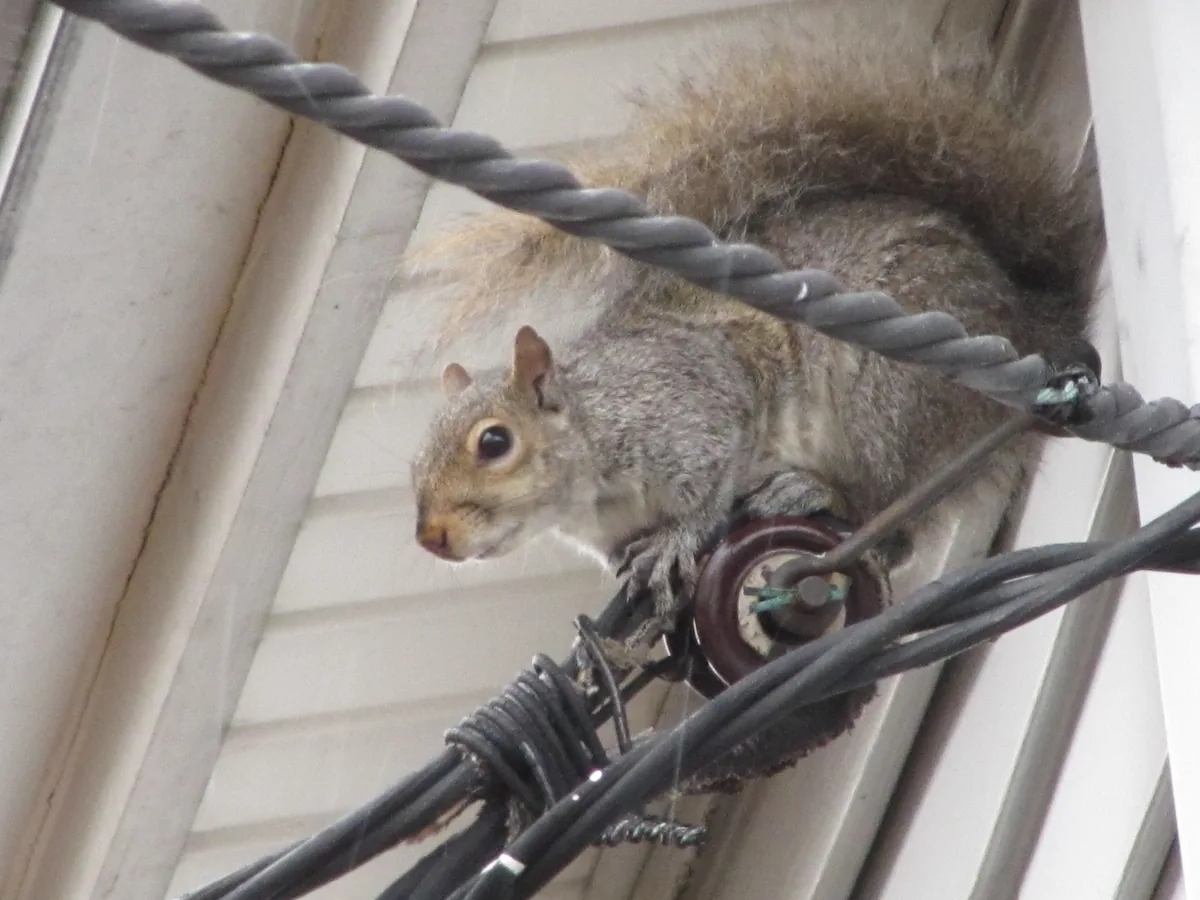
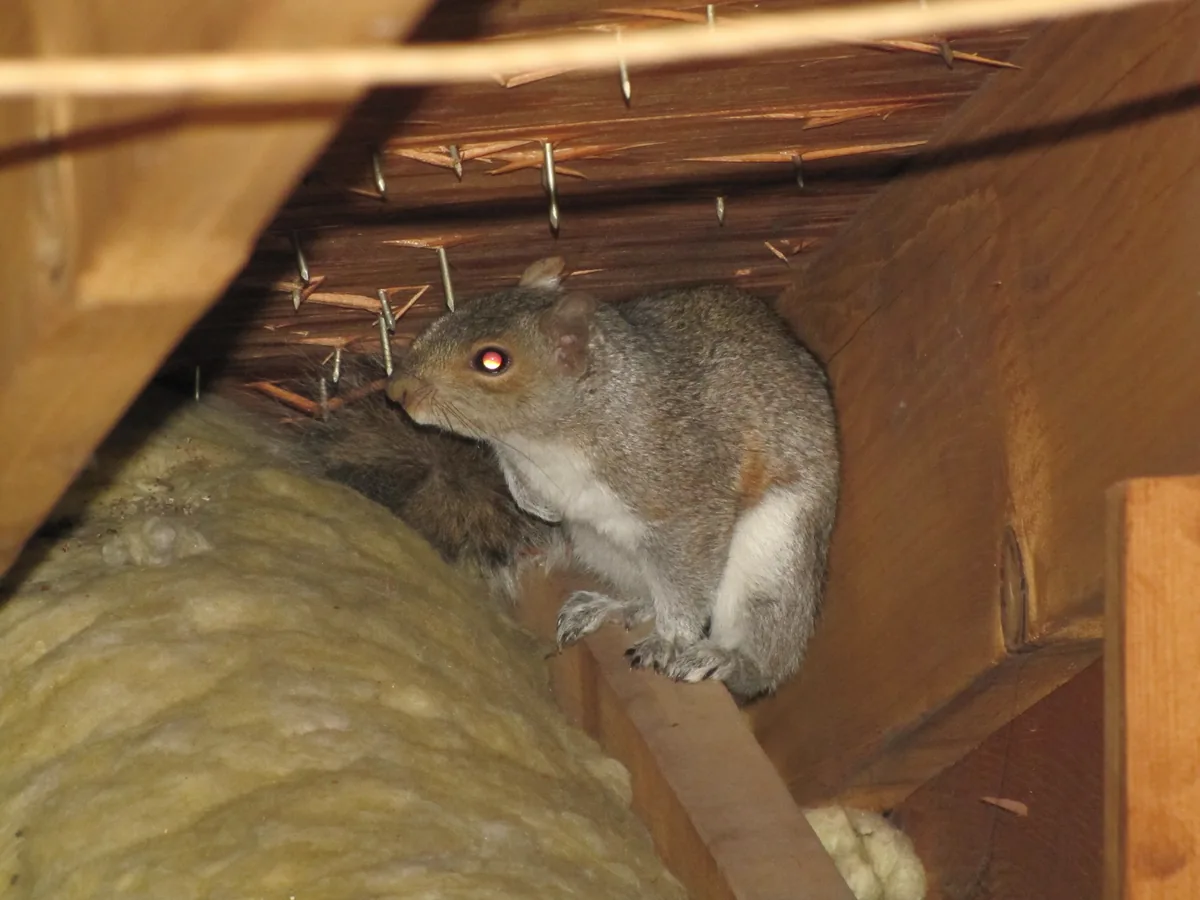
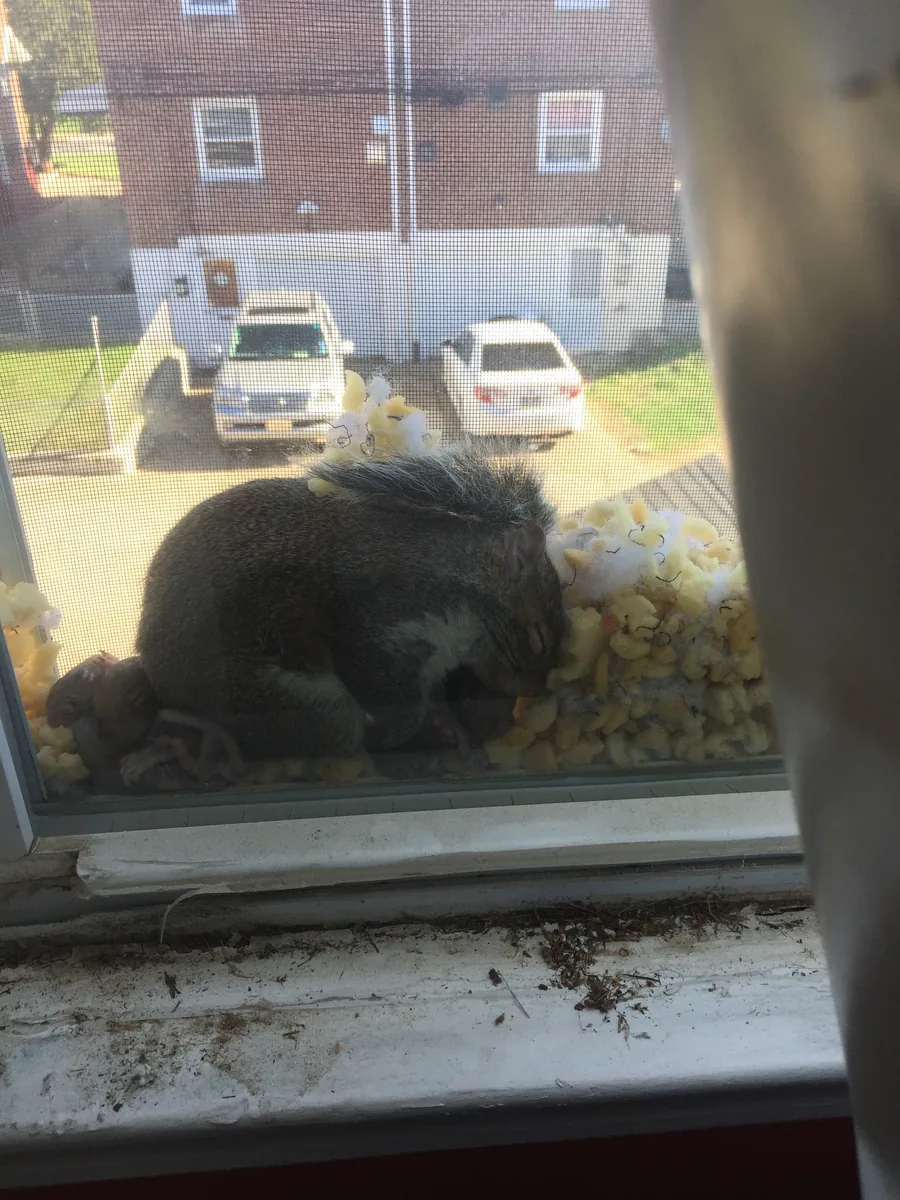
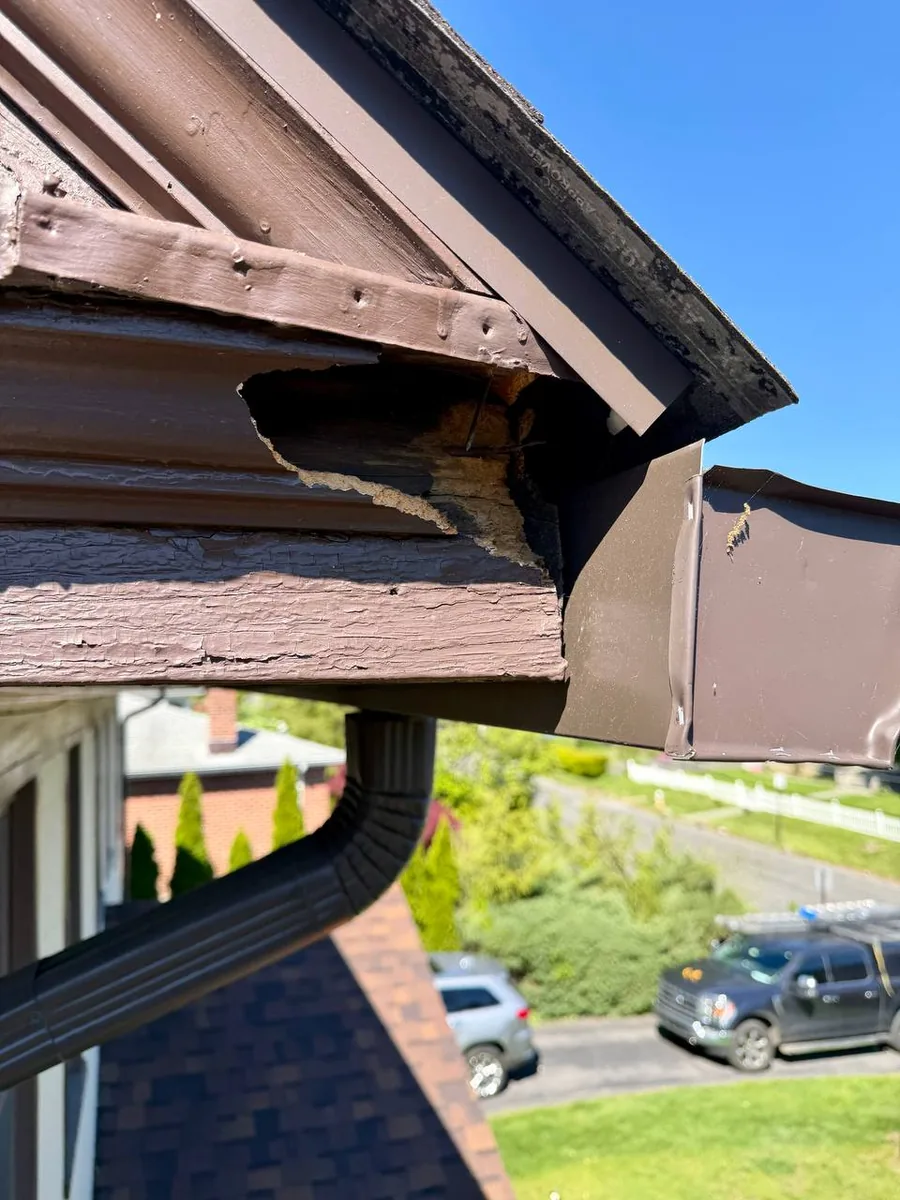
Squirrels are the most common attic call we get in Middle Tennessee. They chew through soffits, fascia, and vents to get in, and once inside they keep chewing on wiring, wood, and insulation. Nashville Wildlife Pros handles the entire problem the way our family has since 1998. We evict humanely, trap when necessary, keep nursing mothers with their litters, and rebuild every opening with materials squirrels can't chew through, backed by an industry-leading guarantee.
"The work looks great, and it's quiet again."
— Jodi G.
How We Work
Our Humane Squirrel Removal Process
1. Full inspection. Effective squirrel control starts with a close look at the whole building. We check the roofline, ridge and gable vents, soffit returns, fascia seams, gutters, dryer and bathroom vents, and the chimney. We identify the species, since gray squirrels and flying squirrels each call for a different plan. We consult the timing window for baby season, and make plans that take into consideration the welfare of the families that may be present.
2. Eviction. Eviction is always our first choice for solving squirrel problems. Squirrels have the highest chance of survival when they remain in the same territory. However, it is imperative that eviction not be utilized during baby season.
Once we have confirmed no babies are present, we begin by closing any holes that are not currently being used by the squirrels. This is so that they cannot immediately re-enter through these other areas once they are kicked out of their current entry points. After that, one-way exit devices are installed over the holes that they're using. Once we are confident they have all exited, these remaining holes are sealed as well.
It is important to not evict flying squirrels during the winter, since they are poorly adapted to the cold, and also store a significant amount of their food in the home. Gray squirrels can be evicted during the winter, outside of periods of harsh weather, since the majority of their food is stored outside and they are well adapted to the cold. However, it is always recommended to install a squirrel box to ensure they have a source of shelter.
3. Humane trapping and relocation. On some occasions relocation is determined to be a necessary course of action. When this is the case, squirrels are caught in live cage traps that are placed on their travel routes and checked daily. Captured squirrels are fed in the traps and relocated to areas carefully chosen to ensure ample food and shelter is available to increase their survival chances.
Every trapped squirrel is examined for signs of nursing or pregnancy. If a female is pregnant, or has babies in the building, we release her on site and delay trapping until the babies are fully grown.
We never relocate any type of squirrel during the winter. By winter, both gray squirrels and flying squirrels have stored their food for the season, and relocating is most often a death sentence since the food they survive on is no longer available for gathering.
4. Permanent sealing and exclusion. Every entry point that we seal gets rebuilt with materials designed to last. Some examples of the materials we use are fitted metal flashing, painted hardware cloth, copper mesh, trim screws, flexible sealants, and new wood where chewing has destroyed the original. The repairs are finished to match the house to the extent that is practical. Since flying squirrels can get into significantly smaller openings, more sealing work is typically required to effectively solve a flying squirrel problem.
5. Preventive Bolstering. In addition to the areas that are currently open, we offer additional bolstering services to preventively protect any other areas that are vulnerable to future squirrel chewing, even if they are not open at this time.
A homeowner had already paid another company to have the corner of her fascia repaired. The company had stuffed steel wool into the entry point and then used orange foam to fill the gaps. When gray squirrels easily chewed back in a year later, she called them and they told her that her guarantee had expired. She was livid and called us to come take a look. We found that the squirrels were nesting with babies. We discussed waiting until baby season was over to evict, and the client agreed. After camera monitoring to ensure that the babies were entering and exiting the hole and had grown to an appropriate age, we began the work to the home. We first sealed and bolstered all other vulnerable areas. We then left an eviction device in place for multiple nights and watched on camera to ensure the family had exited. After this we rebuilt the fascia corner using wood backed with metal. She has now been squirrel free for three years in a row.
Know Your Squirrels
Middle Tennessee Squirrel Species
The eastern gray squirrel is the most common squirrel in homes in Middle Tennessee. They are diurnal, active at first light and settling in to sleep as the sun is going down. They are smart and active animals, with teeth that never stop growing. They are persistent, effective chewers. The siding of most homes will not prevent them from entering. They will grind their teeth down by chewing on hard nuts and wood.
They produce two litters per year, one in the spring and one in the summer/early fall. Gray squirrels can show up in attics year round, whether it is a pregnant female seeking a place to give birth and raise her young, or a pack of squirrels seeking shelter from a harsh winter. Because they have two baby seasons per year, and because timing can vary according to weather, it is important to always assume babies might be present anytime near baby season.
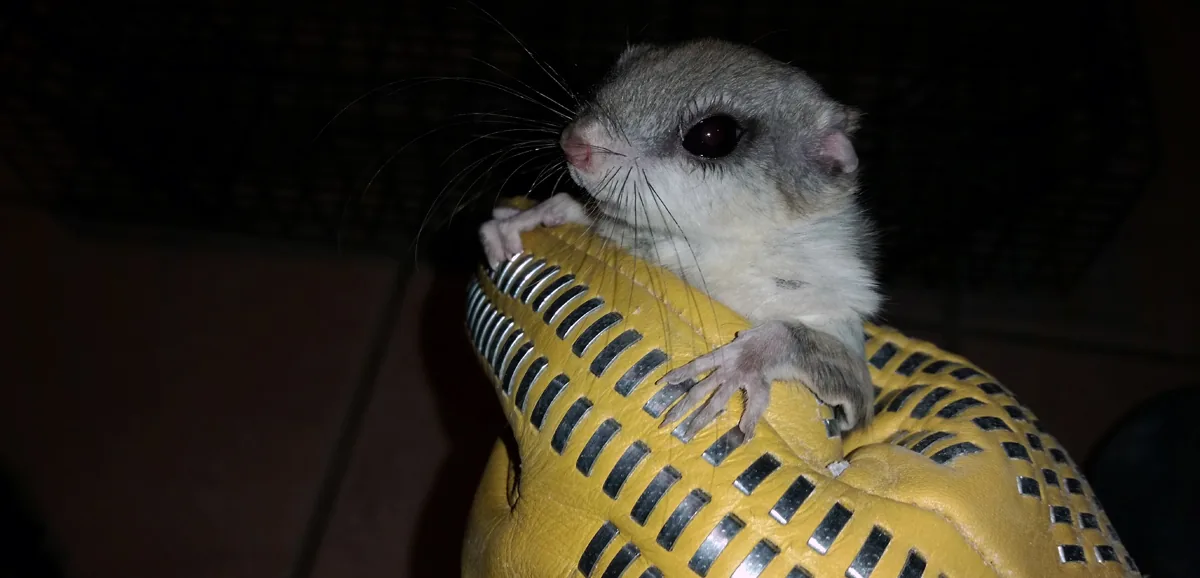
The southern flying squirrel is nocturnal, and barely bigger than a mouse. They are very social colony animals. A single attic can hold a dozen or more, entering through gaps the size of a quarter. They're common in wooded Middle Tennessee neighborhoods, and homeowners regularly mistake them for mice. Scratching and scurrying that you mostly hear after dark is a common sign of their presence. You may also hear faint bird-like chirping sounds coming from the wall at night. Flying squirrels will typically have a communal bathroom (latrine) area, so their droppings and urine tend to congregate in one section of a home.
Like the gray squirrel, they also produce two litters per year, one in the spring and one in the summer/early fall. They are most common in homes during the colder months. There is typically a fall influx, as the colonies move in seeking shelter. Solitary flying squirrels that appear in late winter/early spring, or mid-summer, can often be females that left the colony in search of an isolated space to give birth.
The fox squirrel is larger and features rusty-orange, yellowish, or reddish-brown fur mixed with black on their backs and bright rusty underparts. It is common across Middle Tennessee, especially on wooded lots and along fencerows toward the county edges. It keeps the same daytime habits as gray squirrels, but is rarely found inside homes.
Risks & Damage
Are Squirrels in Your Attic Dangerous? Fire, Insulation & Parasites
Chewed wiring. A squirrel's front teeth grow continuously, so it chews constantly, and attic wiring is a common target. Stripped copper resting against dry insulation can start an attic fire. Some electricians prefer not to work on attic wiring until the squirrels are confirmed gone, and we're happy to coordinate the wiring check with the exclusion work.
Damaged insulation. Nesting squirrels tunnel through, flatten, and contaminate insulation with urine and droppings, cutting its performance and leaving an odor that can linger after the squirrels are gone. Droppings can also carry salmonella and leptospirosis, which is why some severe infestations benefit from an attic cleaning after removal is complete. That work is covered on our Attic & Crawl Space Cleaning page.
Parasites. Fleas, ticks, and mites can ride in with squirrels. When the host animals are removed, the parasites look for new hosts, so in those cases a cleaning may also be recommended.
Long-Term Prevention
Removal Is Only Half the Job
Removing the squirrels you can hear is only part of the job. The openings they used still need to be dealt with. Every job we do ends with those openings repaired with chew-proof materials, and where the wood itself is destroyed beyond sealing, we replace the section rather than covering over the damage. If new animals test your house every season, our full house Wildlife Exclusion service protects the whole structure instead of sealing a few holes at a time.
What Customers Say
Squirrel Removal Reviews
"I hired Wildlife Pros for squirrel removal recently and they were terrific. The work looks great, and it's quiet again."
Jodi G.
"Austin helped us get the squirrels out of our attic. I highly recommend this company."
Donna Schultz
Case Study: Flying Squirrels Over the Nursery
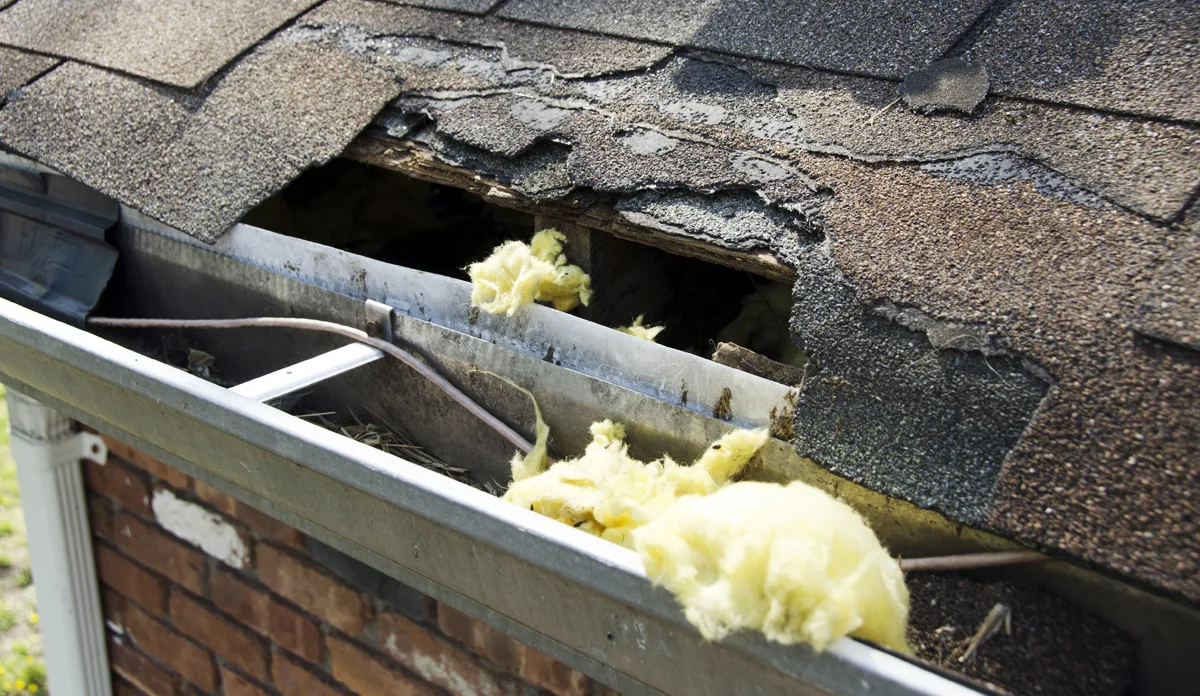
The first time our clients heard scampering in the attic was in the middle of the night when they went into the nursery to comfort their crying baby. They also heard what sounded like nuts rolling and falling down the wall. They had no idea what it was, and called immediately the next morning. We came out and found that a few flying squirrels had begun the process of storing food in their walls for the winter. Because this process had just begun, it was safe to evict them and they would have ample time to store food elsewhere before the seasons changed. We immediately started working on sealing the roof line vulnerabilities. The primary issue their roof had was the lack of any drip cap flashing behind the gutters. This flashing being absent meant that flying squirrels could sit in the gutter and push the shingle up just a bit and expose the large gap where the roof plywood ran short. We removed all the gutters and installed fresh drip cap flashing, as well as sealed off all the vents. We fortified the roof returns and replaced chewed soffits with metal versions that wouldn't be vulnerable in the future. After this work was completed we evicted the flying squirrels from their primary entry point. The clients were pleased to inform us after we finished that their baby was sleeping peacefully through the night again.
Common Questions
Squirrel Removal FAQ
Every job starts with a free quote before any work begins. The price depends on how many entry points the house has, which species is involved (flying squirrel colonies require a different approach than gray squirrels), whether babies are present, and how many areas require preventive bolstering. There are no hidden fees after a project begins, and the cost is locked in.
Have a licensed wildlife company either evict or trap to remove them, seal every opening, and fortify every area that is vulnerable to future chewing. Always make sure they check for babies during baby season, and have a detailed plan of action for when babies are present.
Since both animals tend to make noises at night, it can sometimes be difficult to discern through noise alone. However, mice will often persistently scratch in the same area over and over again. With flying squirrels a homeowner is more likely to hear scurrying, and even to hear nuts rolling on occasion. An attic inspection can settle it, and the answer is flying squirrels more often than most people expect.
If the entry points have been rebuilt properly, squirrels will not chew back in. We rebuild entry points with materials that prevent chewing, and the work carries our industry-leading written guarantee. If anything gets back in through a point we sealed, the return trip is free.
Spring and summer/early fall. Both gray squirrels and southern flying squirrels produce two litters a year, which is why attic calls spike twice a year instead of once. During either window, no reputable company should install a one-way door or seal a house without first confirming whether a litter is inside. It is also important to check for babies out of season as well, as unseasonable weather can alter the reproduction patterns of some animals.
The risk is real. Chewed wiring is a known cause of attic fires, and exposed conductors resting in dry insulation can ignite. After a significant infestation, we recommend an attic wiring inspection from a licensed electrician.
Trapping and relocation is never our first option, as it is less humane than eviction. However, when it is truly necessary we carefully select release sites to maximize their survival chances. We vary release sites so that one site doesn't get filled with more squirrels than the area has food and shelter to support. The safety and welfare of the animals is our top priority, and we take that responsibility seriously.
Close interior doors to contain it in one room, open a window or exterior door in that room, and give it space. A cornered squirrel can panic and cause damage. If it doesn't leave on its own quickly, call us at (615) 422-5923 for further guidance.
More than 25 years of family experience across three regions of the country. Five stars on Google. Austin Jahner has been featured on CBS News in New York and ABC News in Philadelphia.
Craftsmanship
Methods created by a master carpenter. Lasting materials chosen for each home's aesthetics. Manufacturer-warranty of 50+ years on sealants.
Transparency
Up-front pricing. No additional costs or charges. Every client receives a detailed explanation of the steps required to solve their problem.
Guarantee
10-year written guarantee on our exclusion work. If an animal gets back in through something we sealed, we fix it free. Industry-leading guarantee length and scope.
Method
Humane eviction and exclusion is always the first option. Humane trapping when required. Mothers and their young stay together, orphans go to licensed wildlife rehabilitators. No poisons.