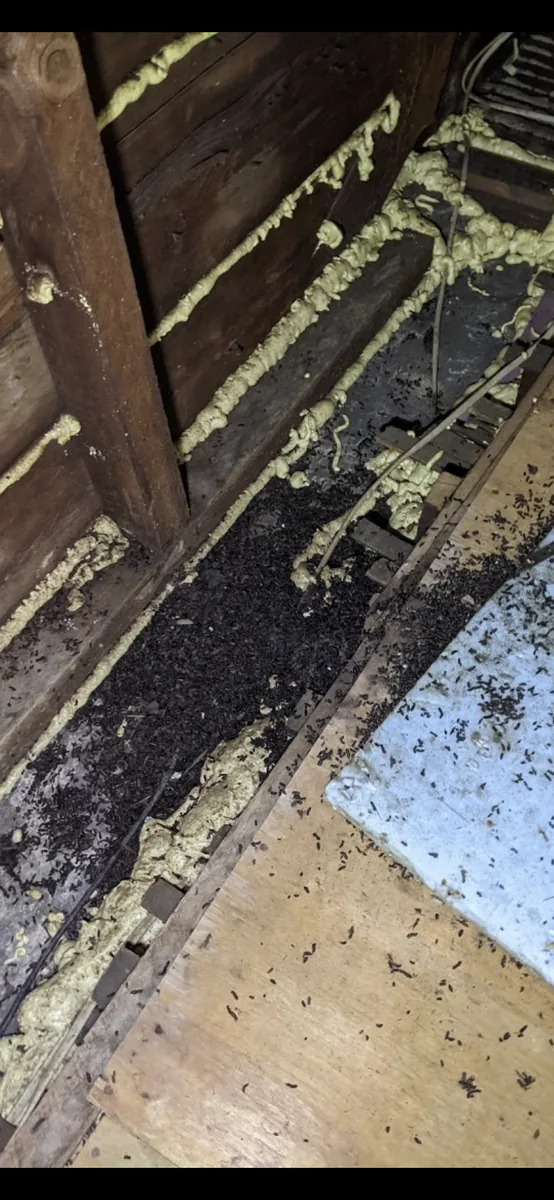
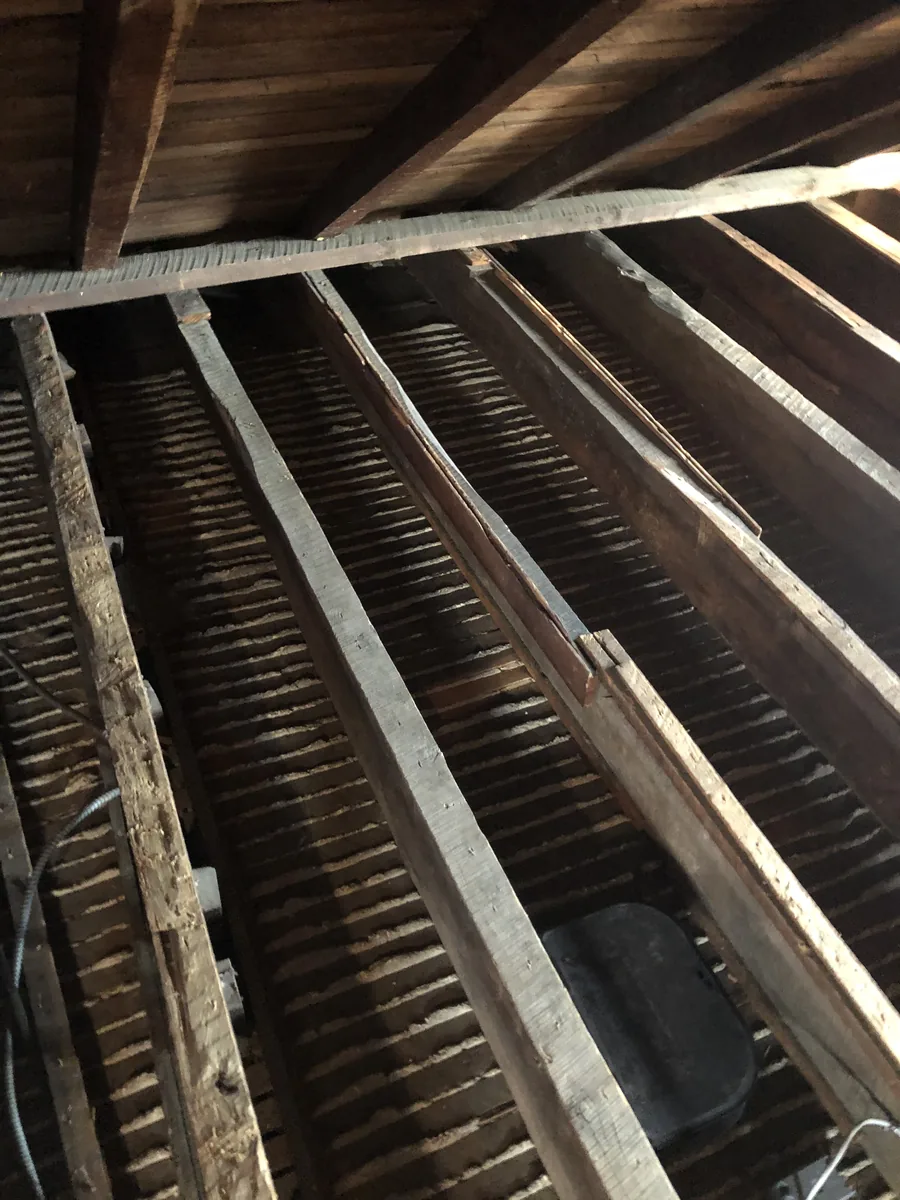
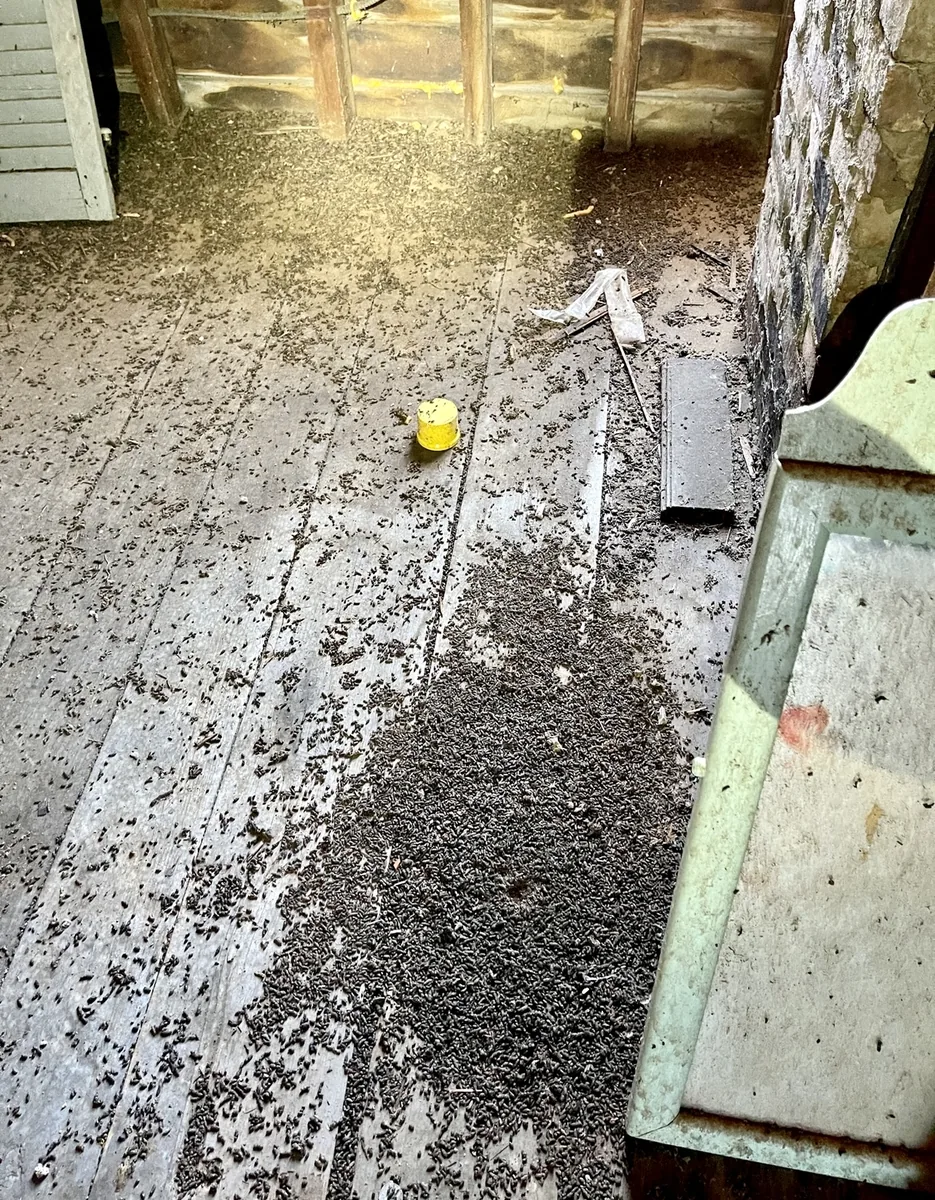
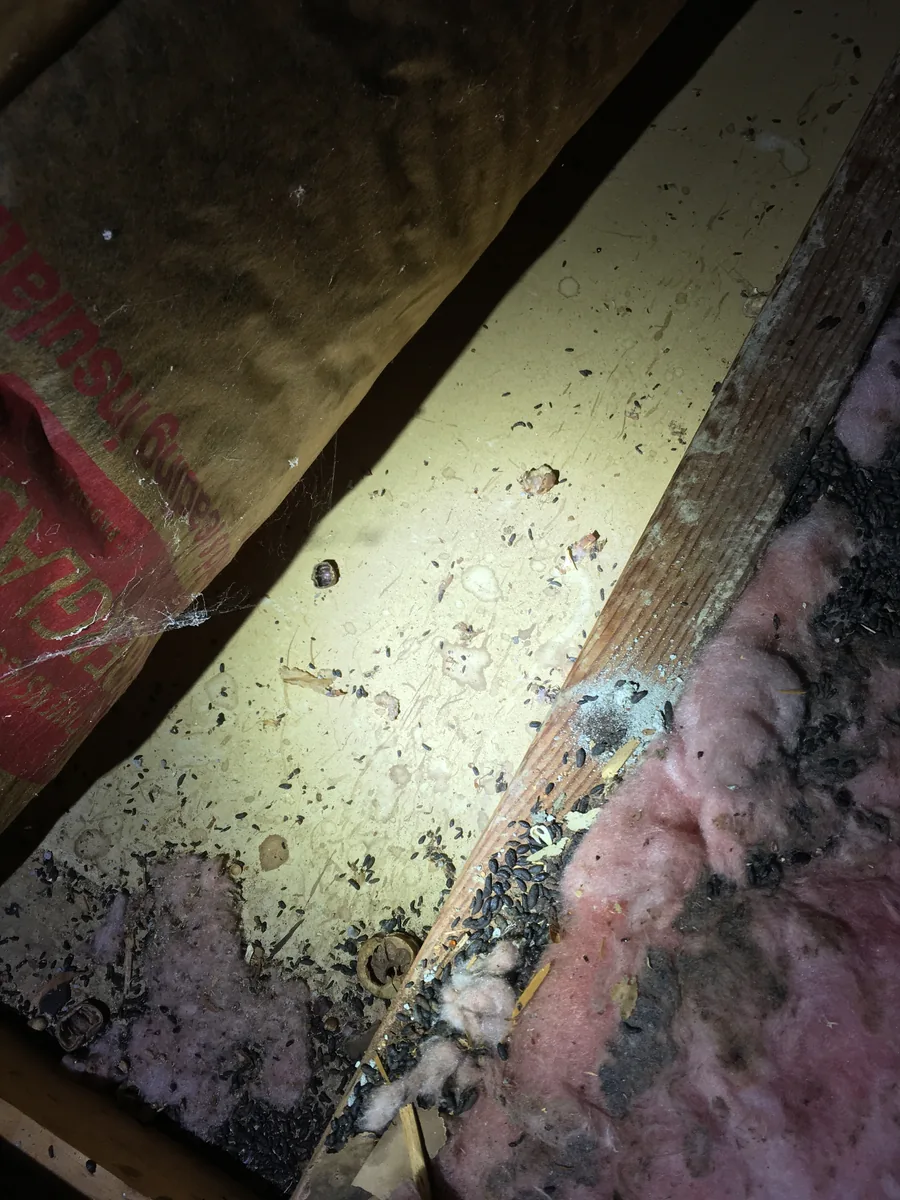
Removing the animals from an attic or crawl space is only half the job. The waste and bacteria they leave behind can create real hazards. Bat guano, rodent droppings, bird nesting, raccoon latrines, parasites and their eggs, and fungal spores can all stay in a structure until they are physically removed. Wildlife Pros uses cleaning methods that are carefully chosen to keep your home safe. Our goal is always to restore the attic or crawl space to the original condition it was in, before the animals took over. We handle homes, multi-family buildings, HOAs, and commercial structures across the six-county Nashville region. When the damage qualifies, we help you get every dollar from your homeowners insurance to cover it.
"Our insurance claim went through with their photos and paperwork, and the smell upstairs is completely gone."
— Mary G.
The Results
Before and After
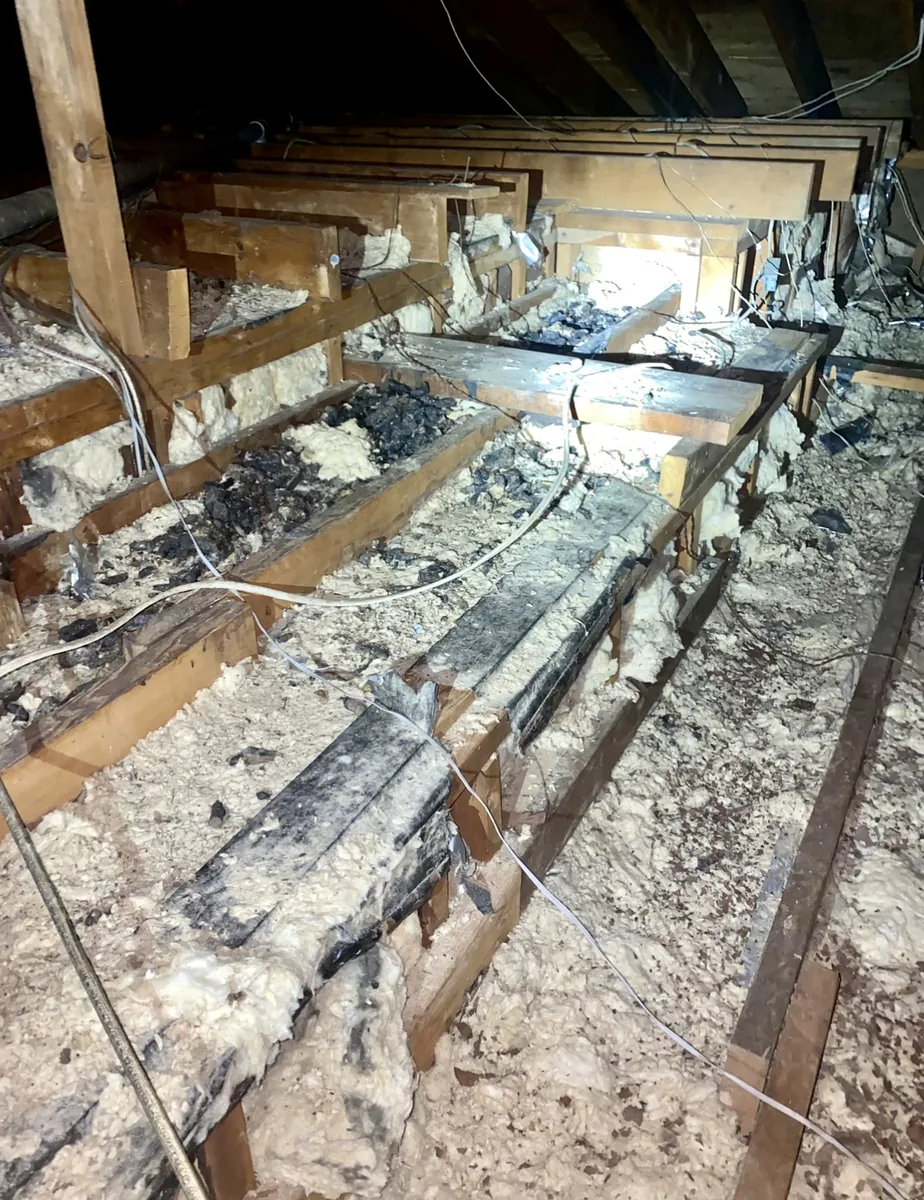
Before
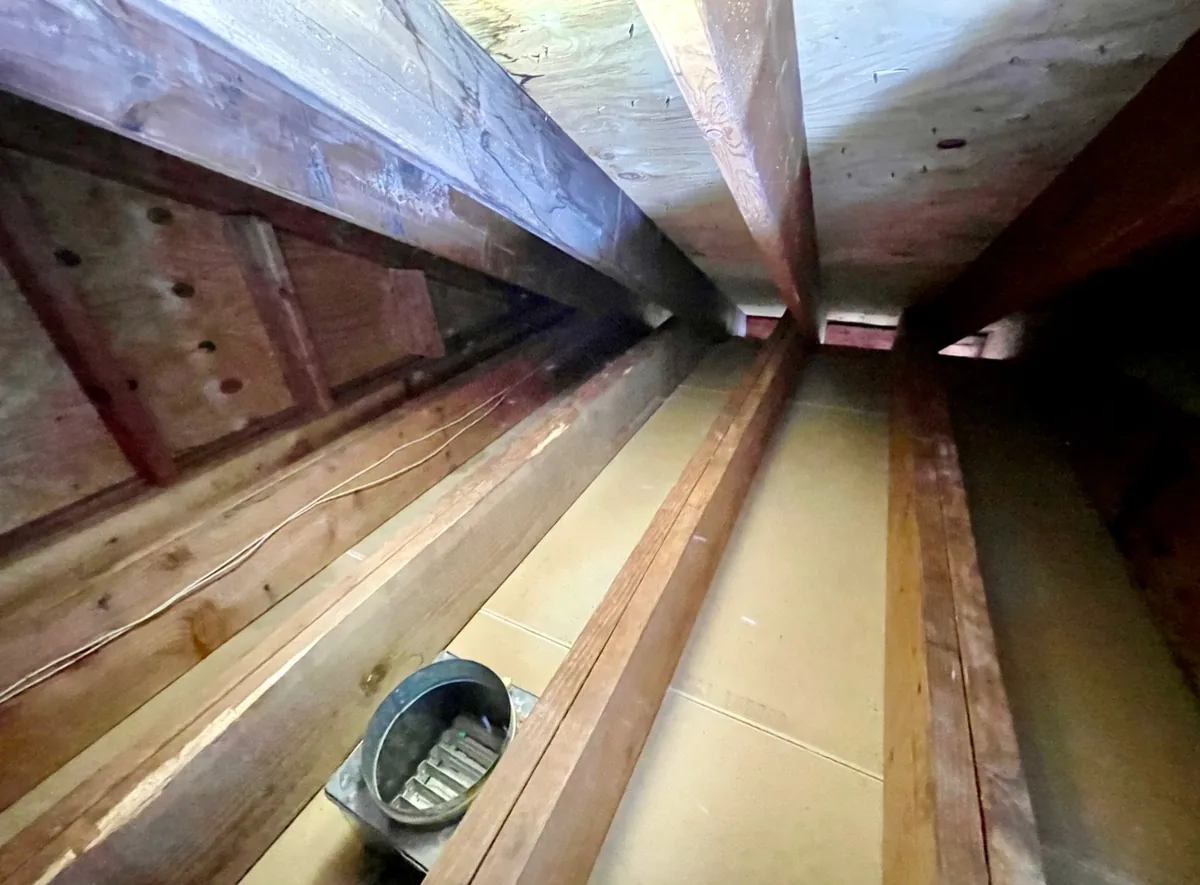
Raccoon contaminated attic
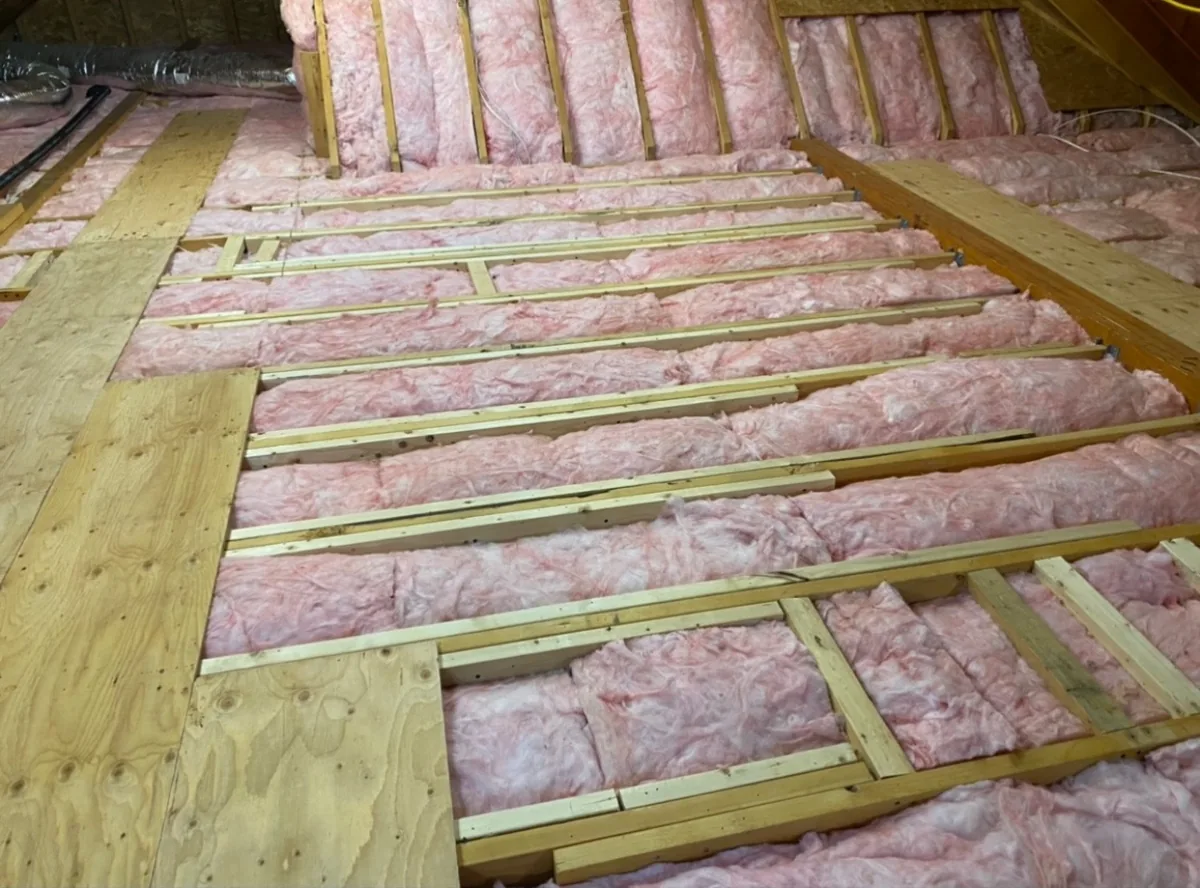
After
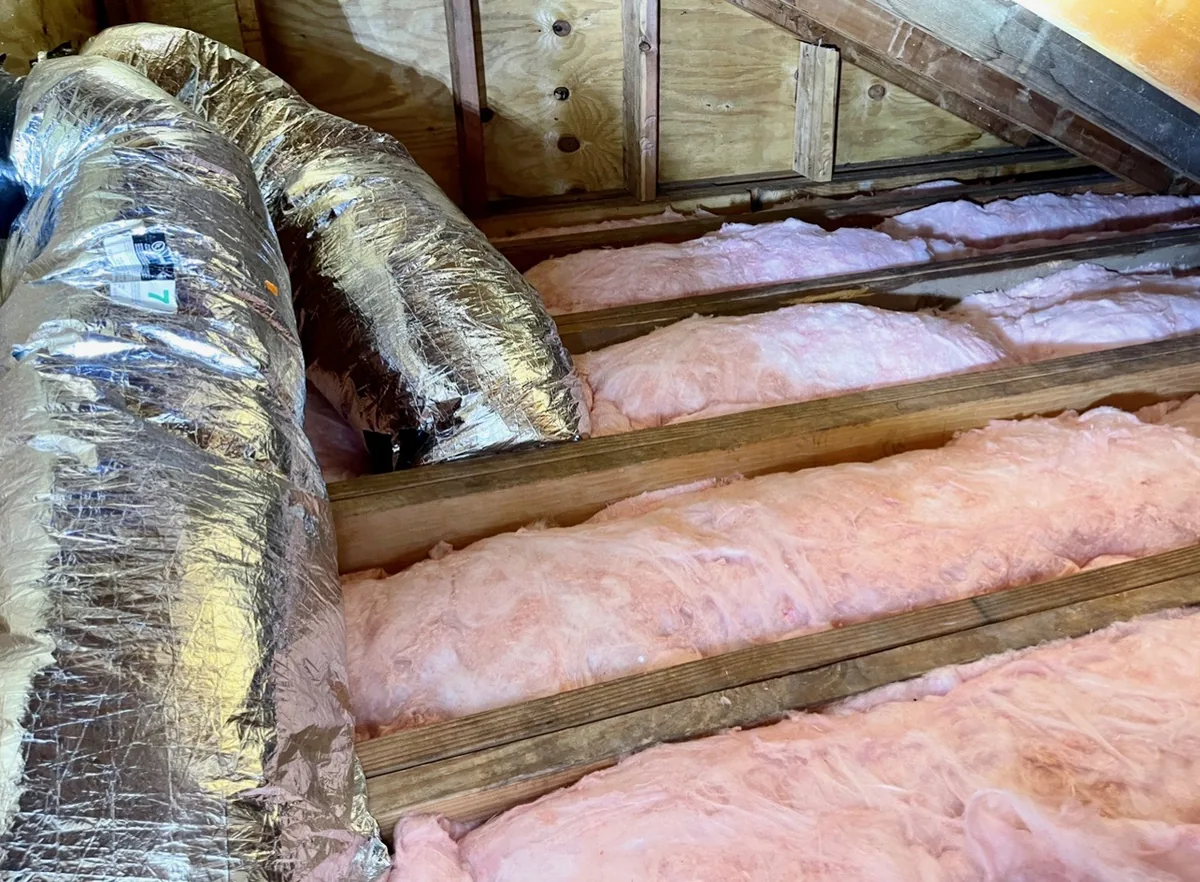
Attic cleaned and insulated
How We Work
Our Cleaning Process
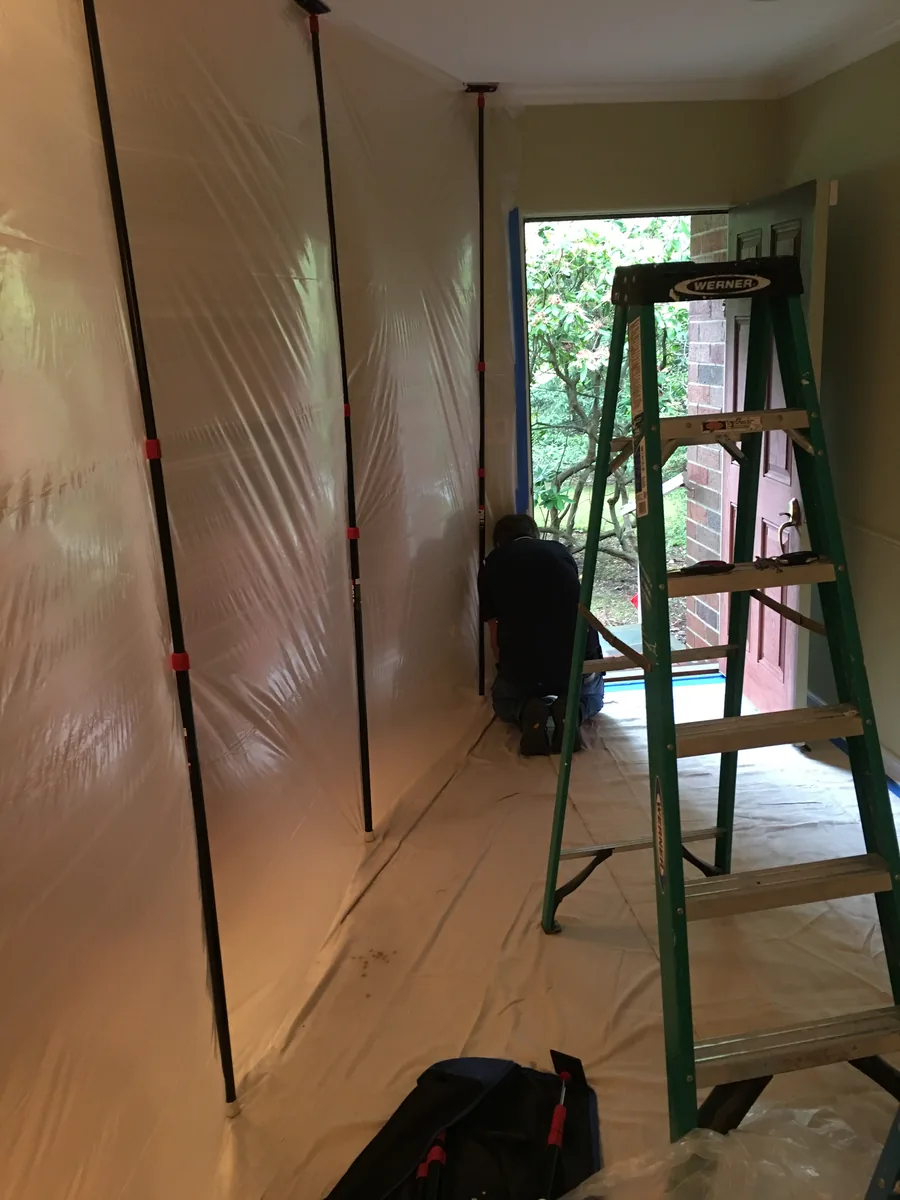
Step 1: Containment. Before we begin any cleaning, the work area is sealed off from the rest of the house using containment barriers. This builds a protected zone from the work area to the exit. Within this zone negative air pressure machines are run to minimize dust and keep particles where they belong. We don't bring any drop cloths or other non-sanitizable gear from someone else's contaminated house into yours. Anything that can't be fully sanitized between jobs gets replaced and purchased freshly for each project.
Step 2: Removal. Dry animal waste is at its most dangerous when it's disturbed, so the insulation is misted with treatment solution before anyone touches it, which helps reduce the quantity of dust that becomes airborne. Crews work in full protective gear, and that gear may be swapped out multiple times over the course of a single job. Contaminated insulation is taken out of the home through the containment barriers in sealed bags for licensed disposal.
Step 3: HEPA vacuuming. With the bulk material gone, commercial HEPA filtration vacuums, which are rated to trap particles down to 0.3 microns, are used for every reachable surface. This step catches what the eye can't see, including residual droppings, spores, and the fine layer of dust that hand work leaves behind.
Step 4: Antimicrobial treatment. Professional-grade antimicrobials are used on every surface in the space. This treatment not only kills bacteria, but also neutralizes odor at its source instead of masking it. Where urine has stained deep into the wood, we apply an encapsulating sealer coat over the staining. When the waste has soaked into wallboard or plaster and it is too far gone to save, we cut those sections out.
Step 5: New insulation. Once the space passes our final check, we install new insulation either to code for our climate zone (at minimum) or to a higher R-value if you'd like the house more efficient than it was before.
Step 6: Repairs and final cleanup. Wherever we had to open a wall or ceiling to reach the contamination, those areas get closed back up and repainted. Every room our containment corridor ran through is sanitized on the way out. The barriers come down last.
Insurance Claims
Insurance Assistance for Animal Damage
Some insurers treat bats and raccoons differently than they treat rodents, birds, and insects. Because they're wild mammals rather than "vermin," the destruction a bat colony or a raccoon family causes is frequently handled like any other covered animal damage, unless your policy specifically excludes them.
We have worked with insurance companies for decades, and can walk you through the process start to finish. When there is ambiguity about coverage, we can read the policy and provide guidance on the specific questions to ask your insurer. If you have coverage, we will photograph the damage, itemize what was destroyed and the cost of restoration, and deal with the insurance adjuster directly. Our documentation gives the claim its best chance.
Our Restoration Work
Photos from Recent Jobs
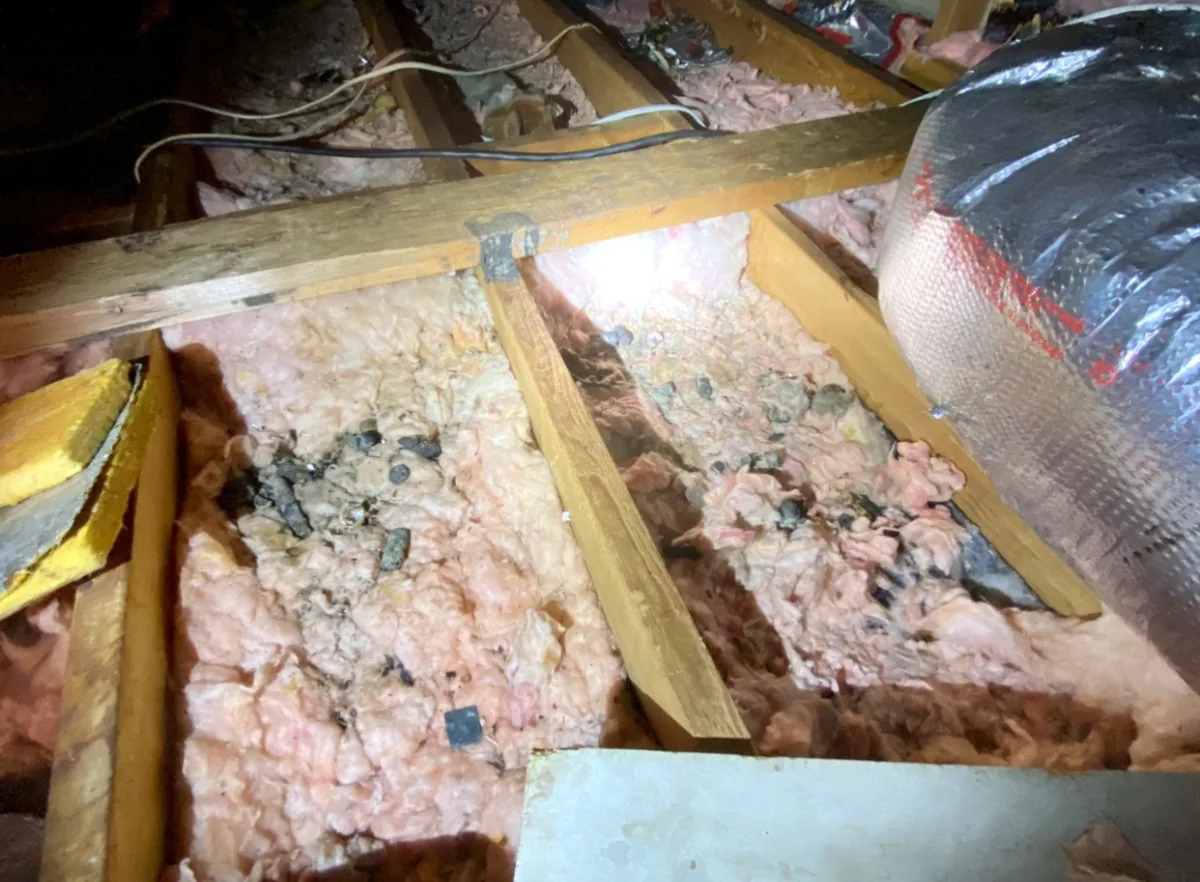
Contaminated insulation
Containment barrier
Attic cleaned
Attic restored & new insulation
When Is This Needed
Situations That Need Decontamination
Bat colonies. During the time a bat is colonizing a home, guano is steadily accumulating. Some of this is visible, and some is hidden. In Middle Tennessee, located right in the area known as the "Histoplasma belt," dried guano is a common growth medium for the Histoplasma fungus. The urine also reduces the R-value of insulation, stains drywall, and gives the upstairs air an ammonia smell.
Raccoon feces. A raccoon tends to repetitively use the same areas for going to the bathroom. This creates concentrated zones in an attic where the insulation is completely filled with urine and covered in feces. This feces can contain a highly dangerous form of roundworm egg that stays viable long after the animal is gone. In some cases these eggs can be infective for more than a year. In addition, the fleas and ticks that may have come in on the raccoon can be hidden throughout the rest of the space.
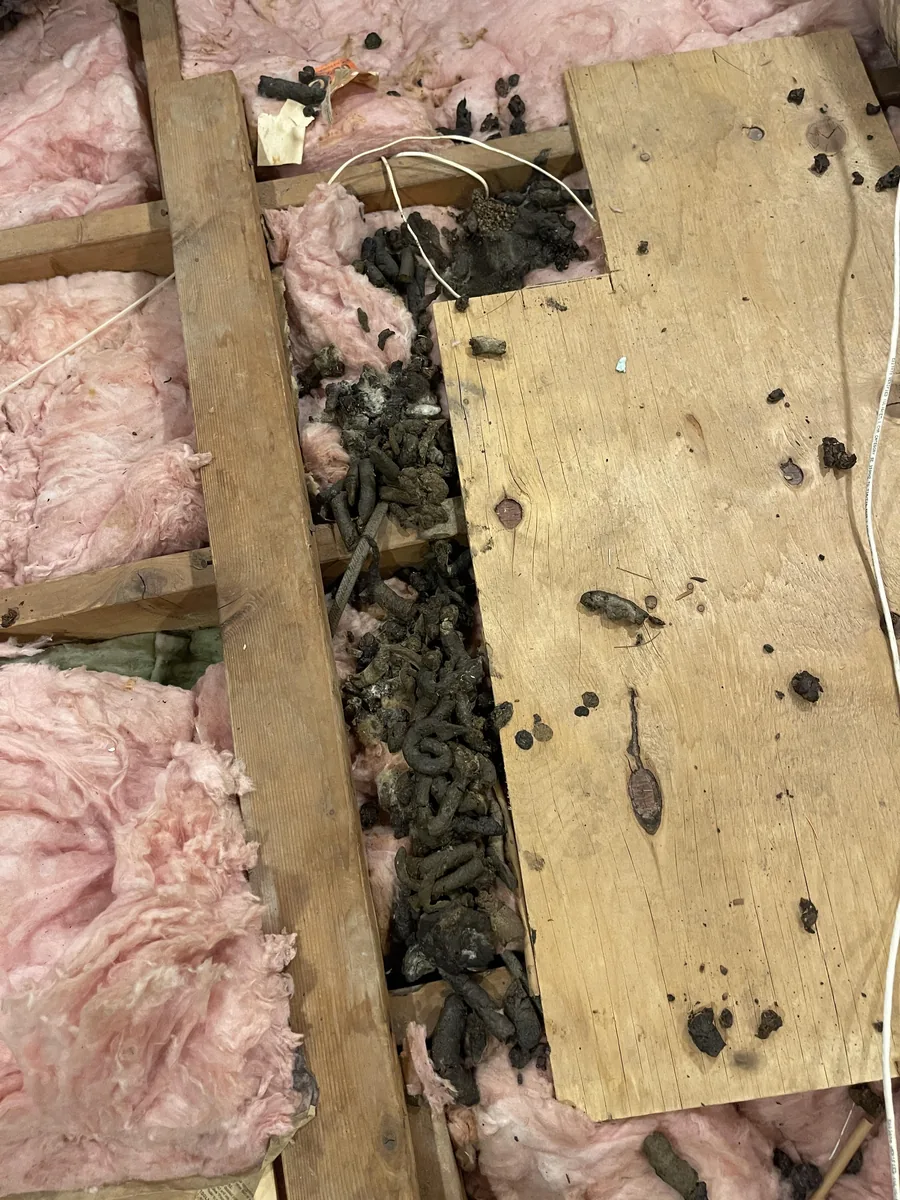
Rodent infestations. Mice go to the bathroom everywhere they walk, so most of the space rodents have been in for a length of time should be considered contaminated. Additionally they will create holes and tunnels throughout the insulation, so the level of waste can be far beyond what is visible. Rodent waste is associated with Hantavirus, Leptospirosis, Salmonella, Lymphocytic Choriomeningitis, and the proteins in their urine rank high among indoor asthma triggers.
Squirrel damage. Squirrels destroy insulation in the process of building nests, and leave droppings and urine scattered throughout the space. Their droppings can carry the bacteria behind Leptospirosis and Salmonellosis. Additionally, the fleas that they sometimes carry can stay in a space long after the squirrels are gone.
Bird nesting. Vents, eaves, and attic corners packed with nesting material carry two problems. The first is mites and other parasites living in the nest. The second is long-accumulated droppings that can hold the same Histoplasma risks as guano. Other diseases bird droppings can spread are Cryptococcosis, Psittacosis, Salmonellosis, and Hypersensitivity Pneumonitis / Bird Fancier's Lung.
The re-infestation loop. Old contamination can attract new animals into a home. Rodent urine in particular carries chemical signals that tell other rodents a den site is available, so an attic that's been emptied of animals but not of waste can keep bringing in new animals. Decontamination removes that signal. Pairing it with Wildlife Exclusion keeps new animals out for good.
Case Study: The Inherited Estate
Our clients had recently inherited their parents' estate, and had been inspecting the house to see what sort of work it would require for a sale, when they walked up into the attic and saw more bat guano than they had thought was possible. They described it as “something you'd see in a movie.” It appeared that their elderly father had been living with the bats in the attic for many years without knowing. They asked us to speak with their parents' homeowners insurance, to make the case that the damage had occurred during the time the policy was active, and that the previous coverage should apply. After thorough documentation and two conversations with their insurer, they agreed to cover the cleaning. Since it was outside maternity season we were able to seal the home and evict the bats within a week, and then begin the process of decontamination. The project was massive, and required two alternating crews over a four-day period. Upon completion the attic looked brand new, and when they listed and sold the home three months later the buyers' inspection turned up no issues and the sale went through.
Beyond the Attic
Crawl Space Cleaning in Middle Tennessee
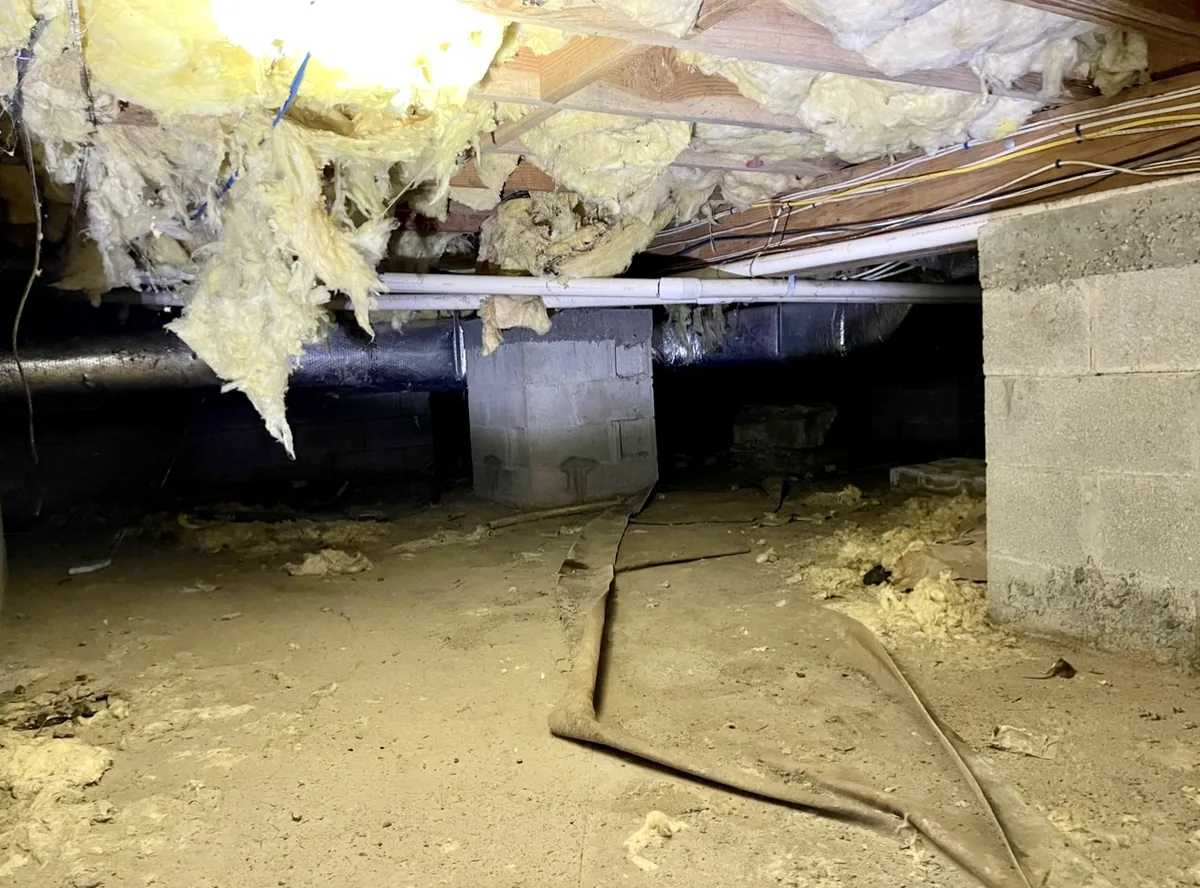
Before
Contaminated crawl space
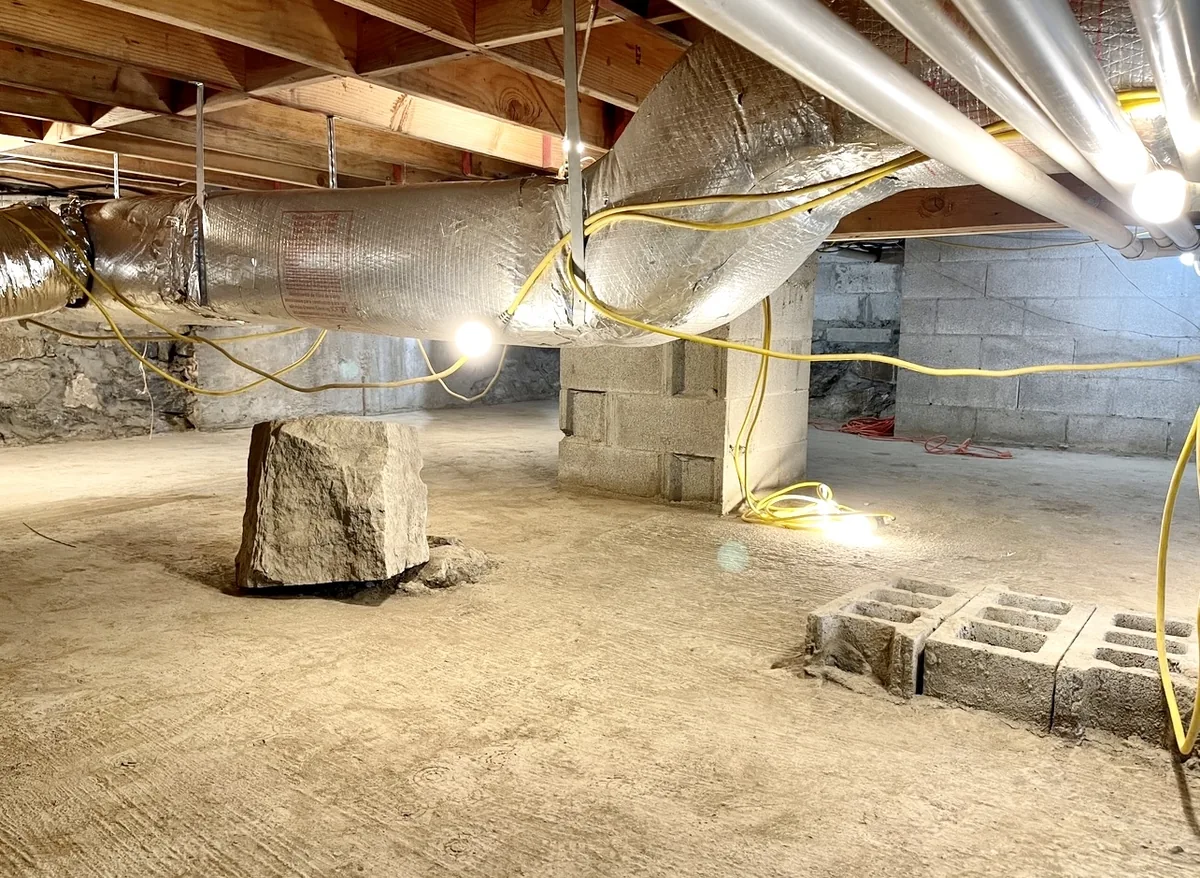
After
Crawl space cleaned
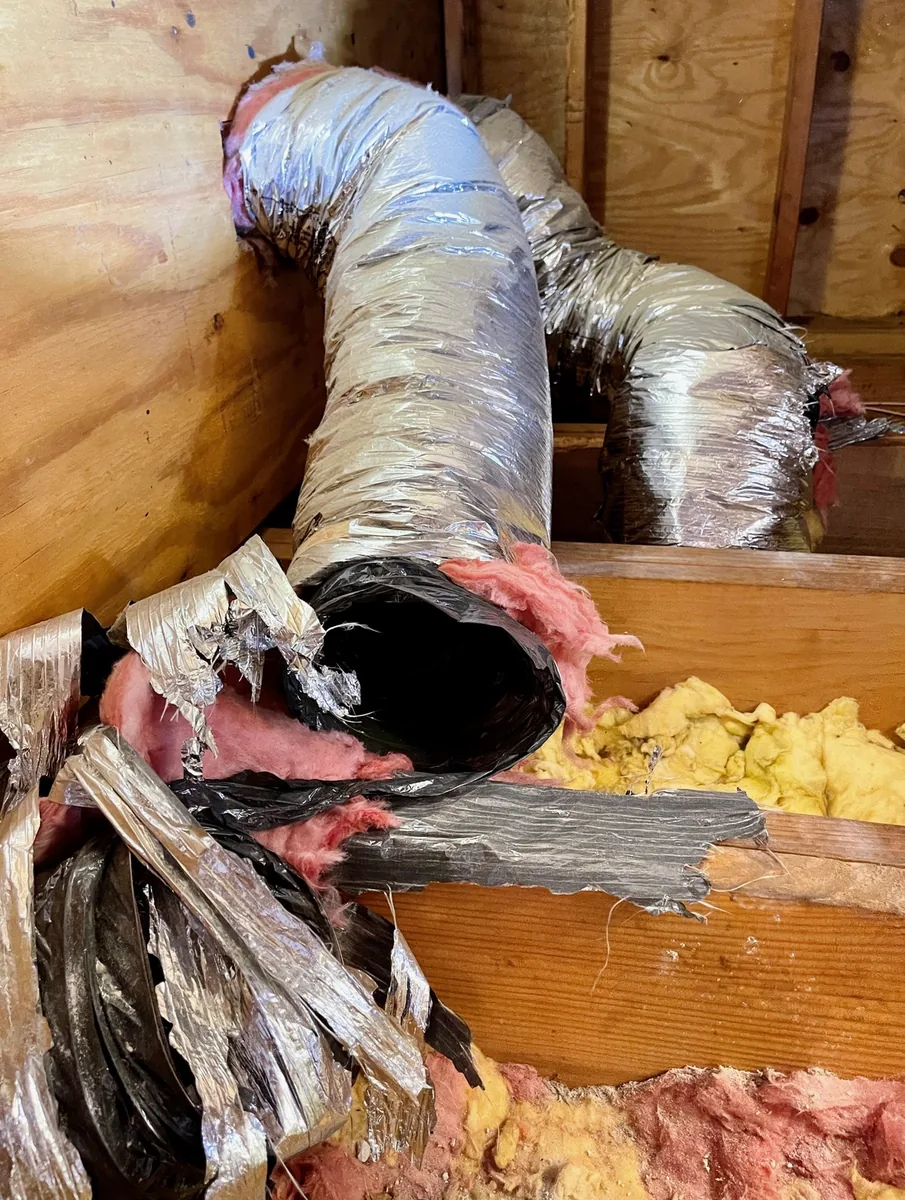
Most Middle Tennessee houses stand on crawl spaces rather than basements. HVAC trunk lines and ductwork often run through the crawl space. Whatever is happening under the floor, the registers upstairs are connected to it. A contaminated crawl space can affect the air the whole house breathes.
The remediation under the house follows the same process we run in the attic. This includes containment, removal, HEPA vacuuming, antimicrobial treatments, and re-insulation where the space calls for it.
Raccoons or rodents will often destroy vapor barriers and insulation hanging between the joists. Animals also crawl into tight, dark spaces when they're sick or dying, so discovering carcasses is more common under a house than above it.
When a skunk den beneath the home has soaked odor into the insulation and the soil, that saturated material may need to come out as well, because deodorizing around it may be insufficient to remove the odor. We also replace torn vapor barriers so that the ground moisture in Tennessee summers stops feeding mold.
Crawl space cleaning falls under the same class for insurance coverage as attics. Damage from raccoons, bats, and other wild mammals may be claimable, and our documentation covers the crawl space with the same photos and written scope as any attic.
Before & After
Bat Guano Cleanup
Before
Bat guano in attic
After
Attic decontaminated
Why It Matters
Dangers of Animal Infestations
Attic cleanup after an animal infestation is a decontamination job. Animal droppings in an attic or crawl space require treatment of every surface they reached, to avoid any of the risks described below. Until trained crews in proper equipment have cleared it, a contaminated space should be kept off-limits.
A Note About Rabies: Rabies needs a living host to survive, and the virus breaks down rapidly in the environment. The rate at which it breaks down depends upon the environment and temperature, but once the animals are out of the building, the risk dissipates dramatically.
Diseases & Health Hazards
Histoplasmosis. The fungus Histoplasma capsulatum is one of the primary risks of guano and bird-droppings. The fungus grows in the droppings and in the soil around homes, provided that the conditions supply sufficient moisture and humidity. When disturbed the spores become airborne, and inhaling them can produce a respiratory illness of fever, chest tightness, dry cough, and deep fatigue. The fungus is most established in the soils of the central river valleys, and Middle Tennessee sits in that zone.
Raccoon roundworm (Baylisascaris procyonis). These parasite eggs are found in the feces of raccoons. An infected raccoon can shed enormous numbers of eggs, millions per day. The eggs are durable and can survive freezing and disinfectants. Cleaning treatments can not kill the eggs. If swallowed, the hatched larvae can travel to the eyes, spinal cord, or brain and cause permanent harm. Toddlers and babies have the highest risk because they put their hands in their mouths and play on the floor.
Hantavirus. Carried by wild mice and found in the dust of droppings, urine, and nests. The infection often begins with body aches and fever and can escalate into the lungs filled with fluid. The severity of this illness makes it one of the most dangerous diseases that rodents transmit in North America. The mortality rate is around 38%. This is why it is extremely important to never sweep up or vacuum mouse droppings.
Leptospirosis. Rats, mice, and squirrels can carry this bacteria in their urine. Infection typically occurs when the bacteria enters a person through cuts in their skin, or through mucous membranes in the eyes, nose, and mouth. Symptoms can include fever, chills, aches, and vomiting. Severe cases can lead to kidney and liver failure, and bleeding in the airway and lungs. Infection most commonly occurs from contaminated water and soil.
Lymphocytic Choriomeningitis (LCMV). Five to ten percent of American house mice are estimated to carry this virus. The virus is found in urine, droppings, and nesting material, and infection usually occurs from inhaling contaminated dust, though it can also enter through broken skin. The first phase of illness brings fever, headache, muscle aches, nausea, and vomiting. A second phase can follow with meningitis or encephalitis. Most healthy adults recover, but infection during pregnancy can cause fetal death, along with hydrocephalus and permanent damage to the child's vision.
Salmonellosis. Rodents, squirrels, and birds shed Salmonella bacteria in their droppings, which can contaminate insulation and anything stored in the space. Infection occurs when the bacteria reaches the mouth, usually from contaminated food, water, hands, or surfaces. Symptoms generally appear between six hours and six days after exposure, and include nausea, vomiting, diarrhea, fever, and abdominal cramps. Most cases resolve within a week. Severe cases can spread from the intestines into the bloodstream, and infants, the elderly, and the immunocompromised face the highest risk.
Psittacosis. Pigeons and other wild birds can carry the bacteria Chlamydia psittaci, which is present in their droppings, feathers, and respiratory secretions. Infection occurs from inhaling dried contaminated dust. Symptoms usually appear five to fourteen days after exposure and include fever, chills, headache, muscle aches, and a dry cough. The illness takes the form of an atypical pneumonia, and untreated cases can affect the heart, liver, and nervous system.
Cryptococcosis. The fungus Cryptococcus neoformans grows where bird droppings have filled the soil and the material around it, and pigeon roosts are the most common source. Disturbing that material sends spores into the air, and inhaling them can cause cough, chest pain, fever, and shortness of breath. In people with weakened immune systems the infection can travel to the brain and spinal cord and cause cryptococcal meningitis, which is life-threatening and requires months of antifungal treatment. The risk is highest when cleaning a badly contaminated roost.
Hypersensitivity Pneumonitis / Bird Fancier's Lung. This is an immune reaction rather than an infection. Proteins in the droppings, feathers, and fine dander that birds shed can inflame the lungs of people who have become sensitized to them. Short exposures can bring on cough, shortness of breath, fever, and chills within hours. Months or years of contact can cause pulmonary fibrosis, a permanent scarring of the lung tissue that does not reverse.
Rodent Allergens and Asthma. Few indoor allergens turn up in American homes as often as the urine proteins of mice and rats. Research has tied them both to children developing asthma and to existing asthma growing worse. The proteins attach to dust and travel throughout the home. Ductwork and wall cavities can carry them from the attic or crawl space into rooms nowhere near the infestation.
Parasites. Fleas, mites, lice, and bat bugs all live on blood, and when the animal they were feeding on is removed, they move toward the living space looking for a replacement. Bat bug bites resemble bed bug bites closely enough that homeowners often seek solutions to the wrong problem. Mites from an abandoned bird nest cause fierce itching and can go months between blood meals, so a vacant nest keeps producing bites long after the birds have gone. The rat flea and the tropical rat mite will both feed on people once their rodent hosts have died off, and a rat flea bite can transmit plague or murine typhus, though that outcome is rare. Cleaning the attic or crawl space typically removes most of the parasite load in the home, and eliminates the source.
Carcasses. Animals die where they lived, sometimes inside a wall, above a ceiling, or under the floor. The remains give off a heavy odor that intensifies for weeks, and they attract flies and other insects that carry disease of their own. When we find remains during a decontamination job we extract them and treat the areas of any remaining bacteria. Removing the carcass also removes the odors.
Fire Risk. Disease is not the only hazard an infestation leaves behind. Rodents and squirrels gnaw through insulation, structural framing, and electrical wiring, and stripped wire resting against dry insulation is how attic fires start. Electrical malfunction accounts for about 24,000 house fires a year according to the U.S. Fire Administration, along with more than $1.5 billion in property losses. Animals that chew wiring are a documented contributor to fires whose cause is never determined. Have a licensed electrician inspect the wiring after any infestation.
Why This Is Not a DIY Job
The risks listed above are the reason that reputable wildlife remediation and cleaning work follow the same safety standards as mold and asbestos abatement. This means containment, negative air pressure machines, HEPA filtration, and disposable protective gear. A shop vac and a dust mask do not clean a contaminated attic. They spread the contamination into the living areas with the family inside. Children and pets should stay clear of the affected area until the material is gone, and adults should stay out too, both to limit exposure and to keep anyone from carrying contamination downstairs on their shoes and clothes. If any other form of work is scheduled before the cleaning work is finished, such as HVAC techs or electricians, tell them what is up there so they can protect themselves and your house. If a company you are vetting is not working to this standard, keep looking.
What Customers Say
Attic & Crawl Space Cleaning Reviews
"We had gotten rid of bats years before by a different company, but the smell had never gone away. I called Wildlife Pros and they stripped out all of the ruined insulation, treated everything, and gave us fresh insulation everywhere. Our insurance claim went through with their photos and paperwork, and the smell upstairs is completely gone."
Mary G.
"Mice had the run of our crawl space for years and my wife's allergies were constant. They cleaned it out in full suits and respirators, replaced the torn vapor barrier, and re-insulated between the joists. Her allergies calmed down after they cleaned it, and the musty smell in the hallway disappeared too."
Jerry Werner
Common Questions
Attic Decontamination FAQ
Sometimes, yes. Many insurers group bats and raccoons with other covered damage rather than with excluded pests, since they are mammals, and coverage usually exists unless a policy names them as an exclusion. We photograph the damage, itemize the restoration work, and deal with the adjuster ourselves. The carrier makes the final call, but many of our customers have paid their deductible and nothing else.
There is no useful number a company can give you before an inspection. The price varies according to square footage, how far the contamination spread, how much insulation and material has to be replaced, and how difficult the space is to work in. When insurance covers the project, what you actually pay may be a small fraction of that number.
An inspection is always needed before a quote can be given. The price varies according to square footage, how far the contamination spread, whether the vapor barrier and under-floor insulation need patching or full replacement, and how difficult the area is to work in. Crawl space damage that has been caused by bats and raccoons may be covered by insurance, in which case the homeowner typically only pays the deductible.
Treat it as dangerous. Histoplasma capsulatum grows readily in accumulated guano, and disturbing a pile sends the spores into the air where they can be inhaled. Infection brings fever, chest pain, cough, and lasting fatigue. Middle Tennessee sits inside the region where this fungus is most established in the soil. Do not sweep or vacuum bat guano. Have it assessed by professionals who have the equipment to handle it safely.
No. Most of these pathogens are at their most dangerous during the cleanup itself, when disturbance puts them into the air, onto hands, and onto whatever gets carried back downstairs. A household vacuum makes it worse, because it does not filter at the particle sizes that matter and blows them back into the room. Doing this safely requires containment barriers, negative air pressure machines, HEPA filtration, respirators, and full PPE that gets thrown away afterward.
No, not typically. The decision depends upon the species, how long the animals were in there, and the degree of damage that was done. Raccoon latrines, heavy bat guano, and extensive rodent droppings are typically the most likely to require cleaning. A short squirrel visit often does not. An inspection can tell you what is currently up there and what each option costs.
Most attic restorations run one to three days. Unusually large or heavily contaminated jobs take longer. You will have the working timeline before we begin.
In most cases, the homeowner only needs to leave during working hours. The containment and negative air keep the contamination inside the work zone, so the living areas stay clean, but crews and equipment move in and out all day and we need the run of the space for liability reasons as well. Jobs that require containment over larger areas, or require longer working hours, may require the homeowner to stay elsewhere overnight. These projects are rare, but they do happen. When insurance is involved they will often cover the costs for a hotel stay when needed.
More than 25 years of family experience across three regions of the country. Five stars on Google. Austin Jahner has been featured on CBS News in New York and ABC News in Philadelphia.
Craftsmanship
Methods created by a master carpenter. Lasting materials chosen for each home's aesthetics. Manufacturer-warranty of 50+ years on sealants.
Transparency
Up-front pricing. No additional costs or charges. Every client receives a detailed explanation of the steps required to solve their problem.
Guarantee
10-year written guarantee on our exclusion work. If an animal gets back in through something we sealed, we fix it free. Industry-leading guarantee length and scope.
Method
Humane eviction and exclusion is always the first option. Humane trapping when required. Mothers and their young stay together, orphans go to licensed wildlife rehabilitators. No poisons.