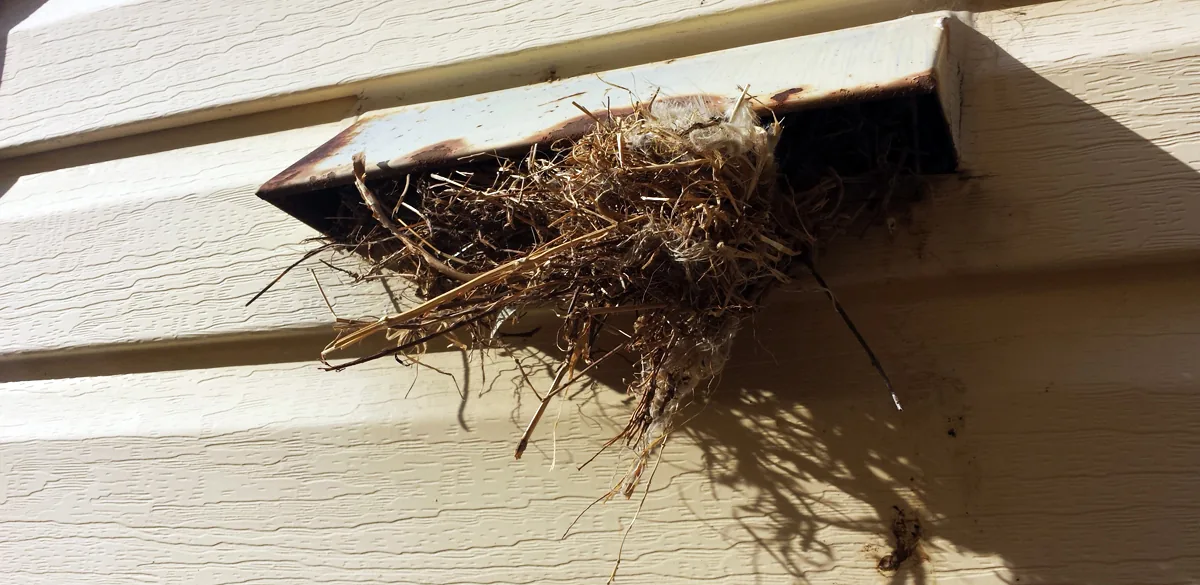
Bird nests are often located in areas that create many risks. They can contain diseases and parasitic mites, they can block and destroy dryer and bathroom vents, and can cover the areas around and underneath them with their feces. Most of Tennessee's birds are federally protected, which makes removal at the wrong time illegal. Wildlife Pros handles bird work for homes and businesses across the six-county Nashville region. We identify the species first, remove nests legally, and install guards and protective barriers so the same areas can't be used again. The openings we protect are backed by our industry-leading guarantee.
"The dryer runs better than it has in years and nothing has nested since."
— Walter Daniels
How We Work
Our Bird Removal Process
1. Species Identification. To begin every project, we attempt to learn the species that is currently inhabiting a structure, and if possible, to get a good look at the nest to see if babies are present. Our company will not move ANY nest with babies in it, whether they are federally protected or not. Moving nests with babies is very often a death sentence for the young. Learning the type of species helps us know if there are any additional regulations we need to follow during the course of removal. Nearly every native bird in Tennessee is protected by the federal Migratory Bird Treaty Act, including the mockingbird, the state bird. The penalties for destroying an active protected nest are real. Some birds, such as black vultures, can't legally be touched without federal permits.
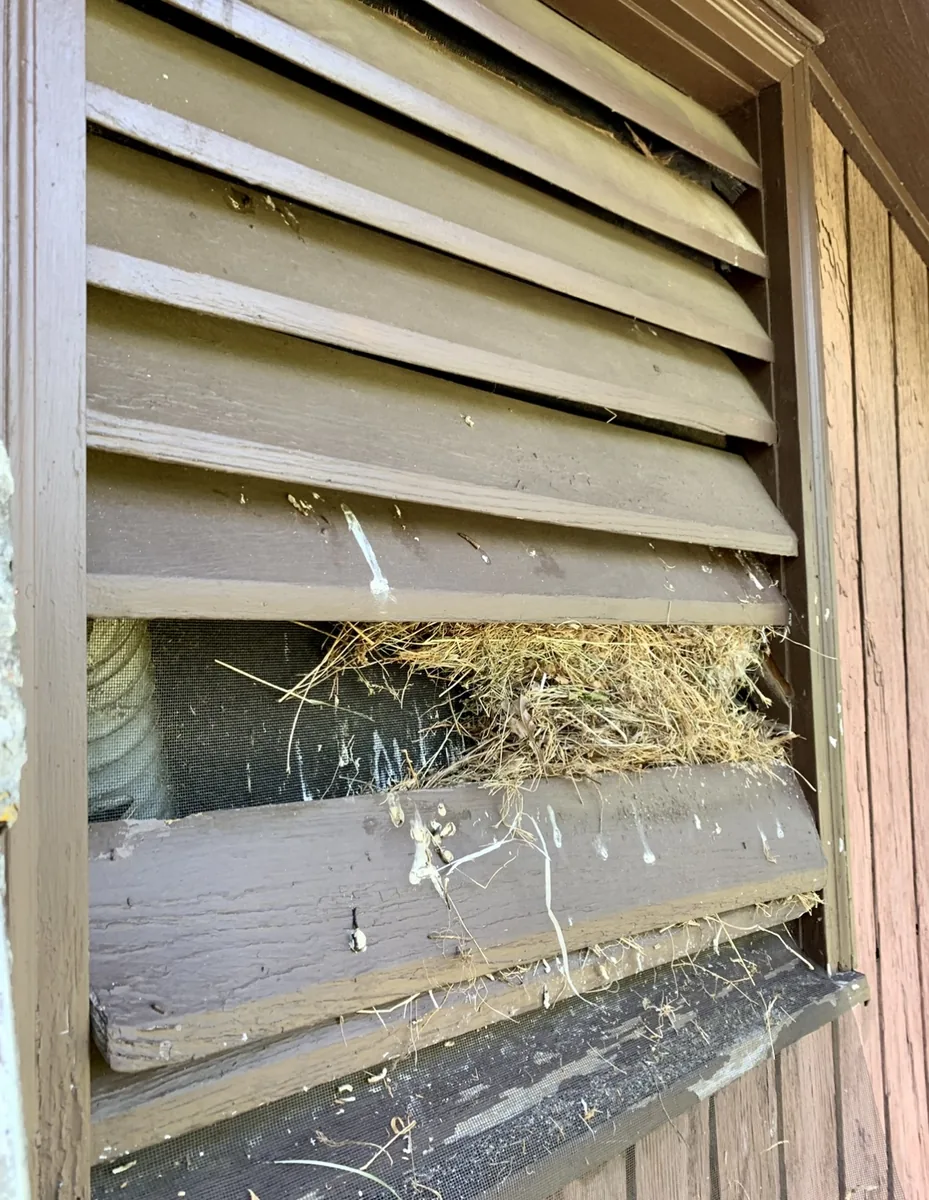
2. Exterior Inspection. The inspection covers the full exterior: every vent, gutter, soffit run, shutter, etc. A house or commercial building that attracted one nest usually has other openings that will attract the next one, and sealing one hole while the others stay open just moves the problem to another area.
3. Preventive Work. All areas the birds are not currently using that are vulnerable are first sealed preventively, to ensure that once they are evicted they will not move into another area. Additionally, deterrents will be installed wherever needed to prevent exterior roosting. On commercial buildings, netting, wire, and other deterrent systems for ledges and loading docks are designed to each specific structure.
4. Bird Eviction. Once we are certain no babies are present, and that we are complying with all federal regulations, the birds will be evicted humanely from the areas they are currently residing. Once they have exited, the nests will also be removed.
Our Bird Work
Photos from Recent Jobs
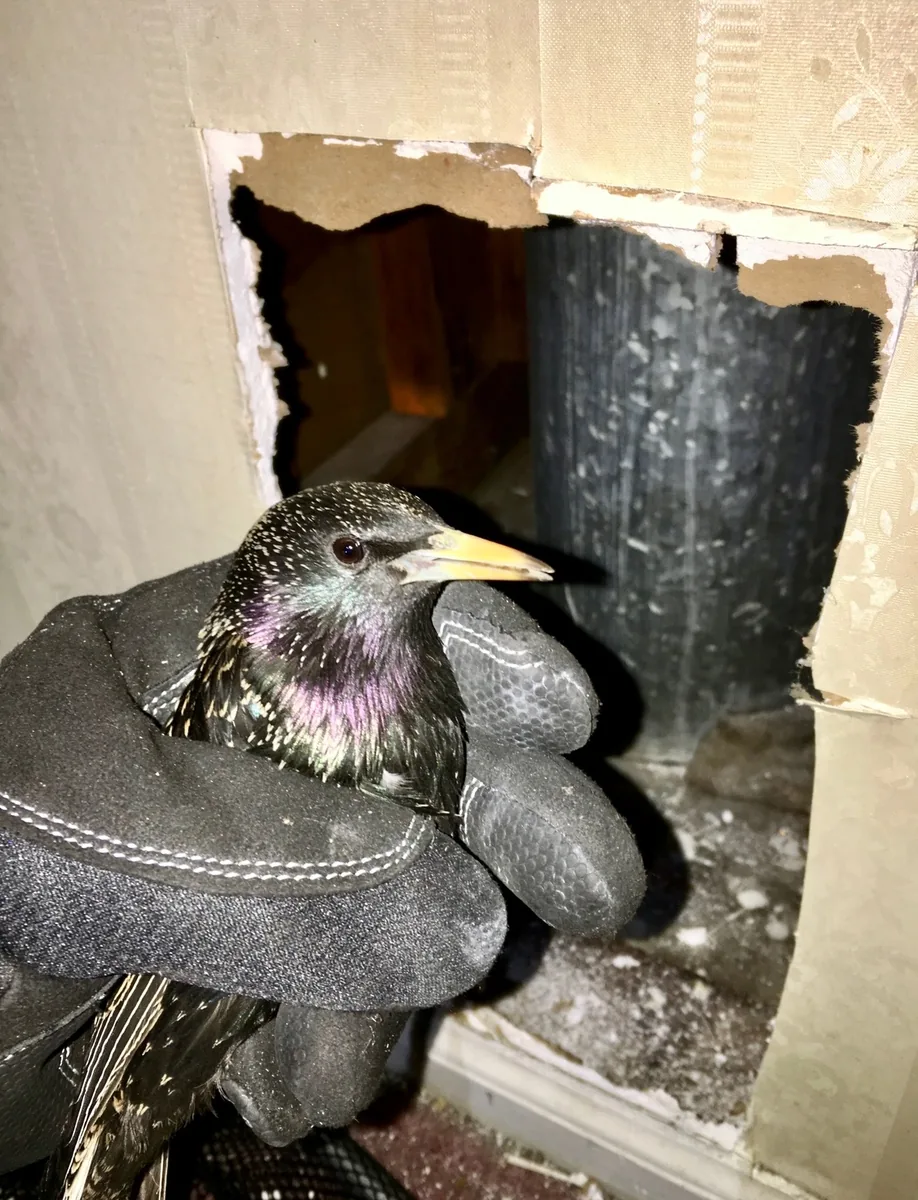
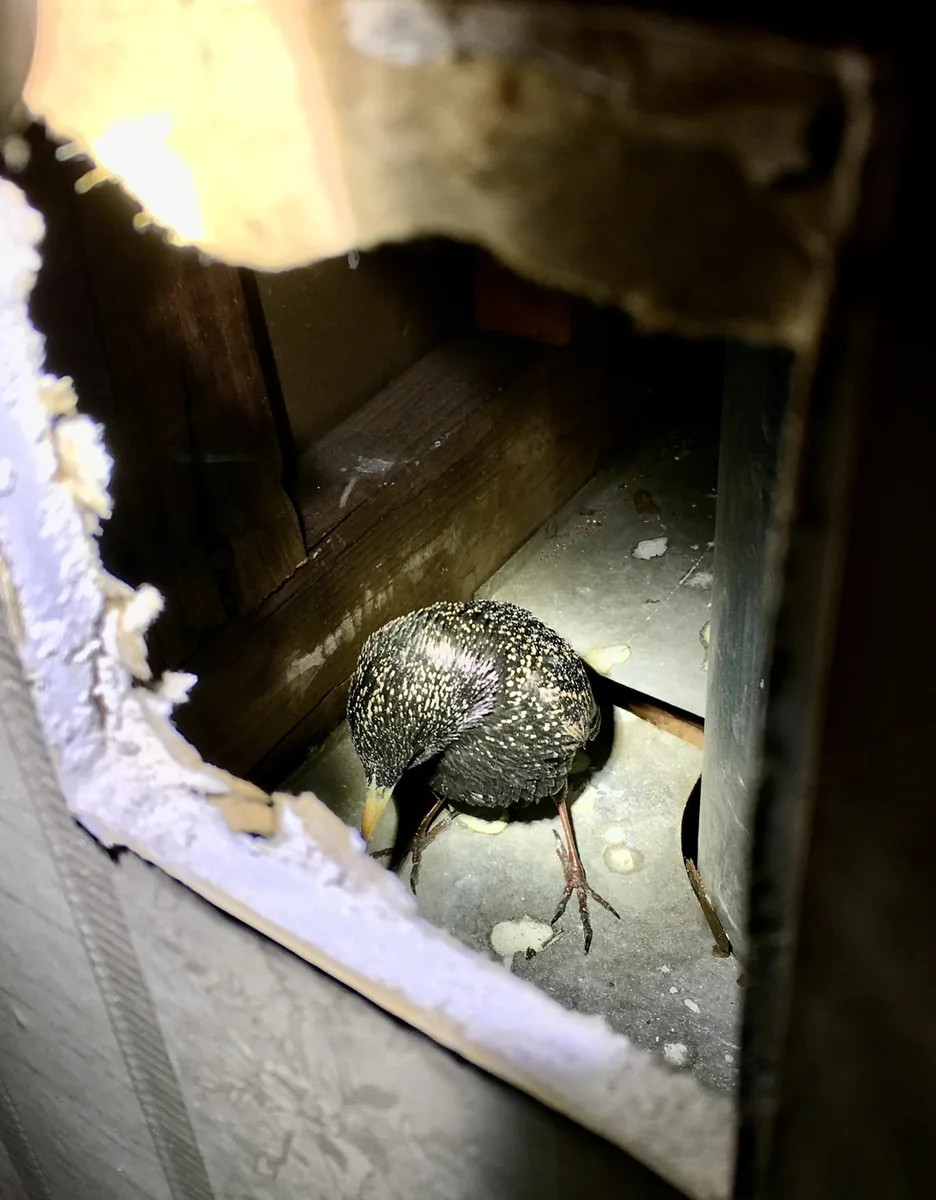
Bird rescued from wall
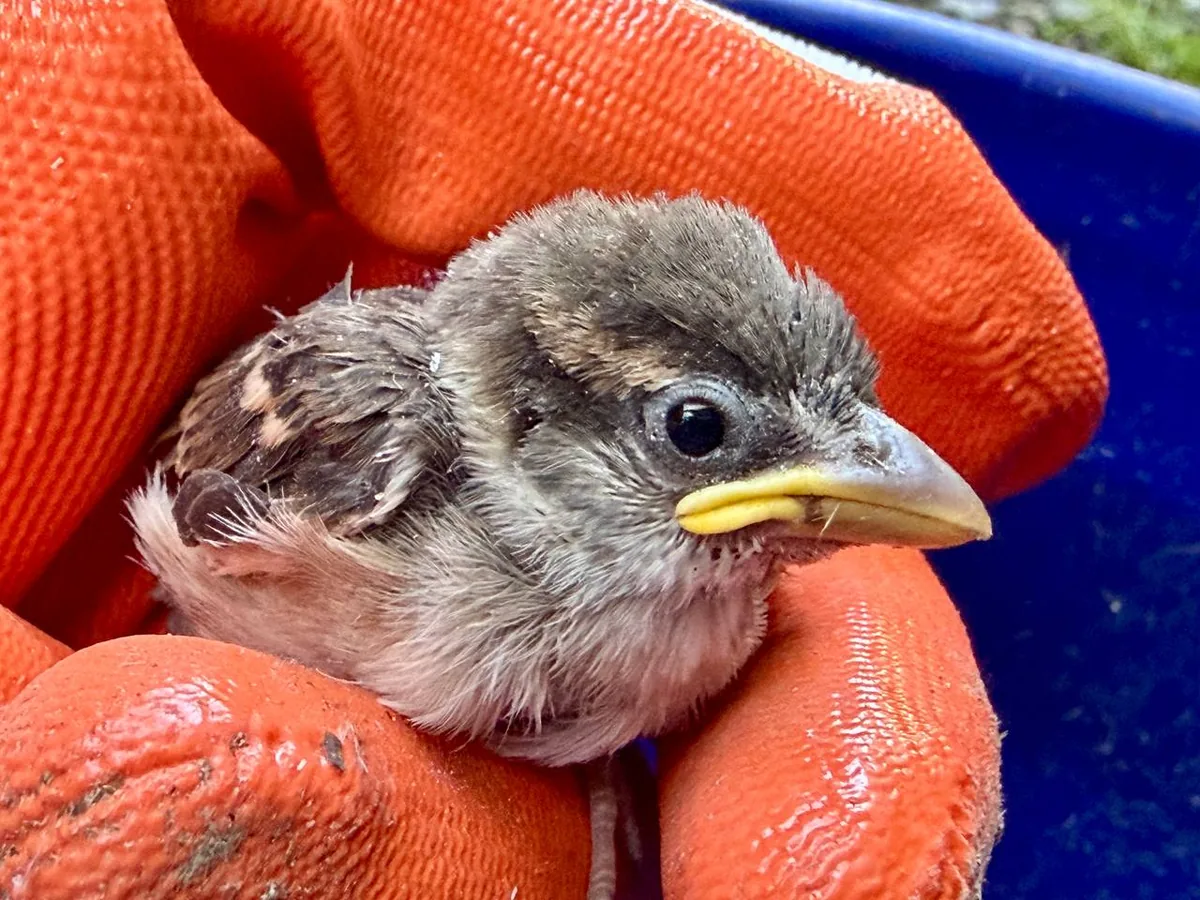
Baby bird rescued
Case Study: Starlings in a Bathroom Vent
A homeowner started hearing scratching near a bathroom fan in the early mornings, and a few weeks later the family began waking up with the sound of chirps coming from the walls. Some small mites had also begun coming through the bathroom fan. Since babies were currently present, we had the homeowner cover the fan with plastic and tape to stop the mites from coming through. They only needed to wait three weeks from the point of our inspection until we determined from camera monitoring that the babies were grown and had left the nest. At this point we proceeded with an eviction process to ensure the adults were out. We also cleaned out the nest and interior duct and protected all of the vents on the home. The mites stopped being an issue shortly afterward, and the birds did not return.
Common Species
Birds in Middle Tennessee Homes
European starlings are behind more of our vent calls in Middle Tennessee than any other bird. They're unprotected, persistent nesters, and a pair can fill a dryer or bathroom vent in a matter of days. Starlings here don't migrate away during the winter, so the calls come year-round.
House sparrows are often found nesting in the seams of a house. Common spots are soffit gaps, the voids behind shutters, holes in fascia, and the corners of store signs. They're also an introduced species and are unprotected.
House wrens are a native species that often turn up where people don't expect them. They're tiny, loud, and known for nesting in anything with an opening, from exhaust vents to porch-light fixtures to an uncovered grill. They're in Middle Tennessee from roughly mid-April to mid-October. They're a federally protected species.
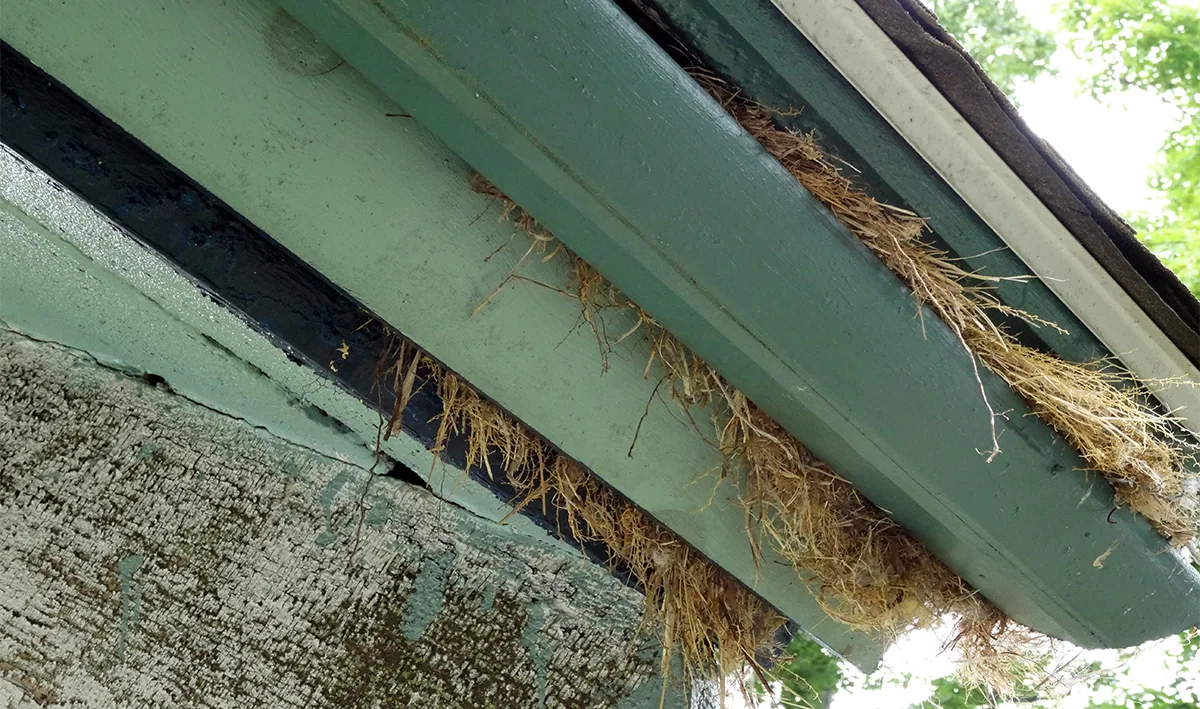
Barn swallows build mud-cup nests on porch beams, under eaves, and over doorways, and the droppings pile up right where people walk. They're a protected species. Nests come down between broods, and the ledge gets modified so next spring's pair builds somewhere else. Birds nesting in gutters or over downspouts get the same treatment before a big storm backs the water up.
Pigeons concentrate on commercial structures. They roost on warehouses, parking decks, church cornices, and the underside of signs. Their droppings are acidic enough to damage paint and mortar over time. Pigeon control relies on exclusion hardware like netting, wire, spikes, and angled ledge systems.
Chimney swifts are often heard fluttering and chattering in an uncapped chimney flue from late spring into summer. They're federally protected while nesting. It is not legal to kick them out. Rather, the proper procedure is to wait until they voluntarily leave to migrate south for the winter, around October. At this point the chimney should be capped so that they can't get back in the following spring.
Woodpeckers don't often nest indoors. The primary damage they cause is drilling: rows of holes in cedar siding, fascia, and trim, usually from feeding or territorial drumming rather than nest-building. They're federally protected, so the approach is repair plus layered deterrents.
Health Risks
Are Birds in Your House Dangerous? Fires, Mites & What Droppings Carry
Fire Risk. A nest in the dryer exhaust can trap heat and lint against dry sticks and feathers, and that combination is a real fire hazard. The National Fire Protection Association reported an average of 14,630 home fires per year involving clothes dryers between 2010 and 2014. About a third of these were caused by failure to clean. When the vent is blocked, it can cause the dryer to overheat. The dried nesting materials and lint in these ducts can be combustible. Additionally, nests that are interwoven with electrical wires in attics and walls can also carry a fire risk.
Bird Mites. These pinhead-sized parasites live in the nest and feed on the birds. At times the mites can go looking for a new host, and the nearest one is usually a person. Unexplained bites with no flea or bedbug evidence can often trace back to a nest in a vent or inside the attic. Mites do not starve out quickly once the birds are gone. They can last a couple of weeks in ordinary indoor conditions, and considerably longer in a cool, undisturbed cavity. Removing the nest and treating the area generally stops the bites.
Droppings. Accumulated bird droppings can carry the fungi behind histoplasmosis and cryptococcosis, and disturbing dried droppings can send spores into the air. Additionally, bird droppings can spread Psittacosis and Salmonellosis. Exposure to droppings, feathers, and dander can also bring about an immune reaction known as Hypersensitivity Pneumonitis / Bird Fancier’s Lung for those who are vulnerable. Large accumulations call for containment and protective gear, the same standard our Attic & Crawl Space Cleaning crews apply to bat guano. Years of accumulated droppings should be approached with caution.
What Customers Say
Bird Removal Reviews
"We had starlings in our dryer vent two years in a row. The first company pulled the nest out and left, and the birds were back by spring. We called Austin the second time and he took care of it for good. He got the birds out humanely. He cleaned the entire duct since it was packed with debris, and put a bird guard on the outside. The dryer runs better than it has in years and nothing has nested since."
Walter Daniels
"We were getting little bites for 2 weeks and nobody could figure out why. Austin found a birds nest in our attic that was the source of the mites. We waited a week for the babies to fly, and then he evicted the birds and cleaned the nest. The bites stopped that same week. It was a huge relief."
Chris C.
Common Questions
Bird Removal FAQ
Have a licensed wildlife company ensure that no babies are present, evict the birds, remove the nest, clean the duct, and install a guard. The process can usually be completed within two visits unless babies are present. Always identify the specific species and ensure that work is being done in accordance with federal and local laws.
Yes. Nests in dryer vents block airflow, which can cause the appliance motor to overheat and ignite trapped lint. Stop using the dryer and have the vent inspected if a nest is present. If you call a professional immediately when you begin hearing noises you can sometimes have the birds removed before the nest is built. Once the nest is built, a typical wait time is 3 weeks for most birds until the babies have grown and left the nest and removal is possible.
Bird mites are tiny nest parasites that feed on birds. Occasionally they can enter a home and begin feeding on humans. Bites that begin right after chicks fledge or a nest is disturbed, in a home with no flea or bedbug evidence, may trace back to a nest in a vent or in the attic. The permanent fix is removing the nest, treating the area it was located, and closing the opening. After that, the biting generally stops.
A bird stuck in a wall cavity or flue is an emergency for the bird and requires a same day emergency service. Don't waste any time. Call every company that lists bird removal services and hire whoever has the bandwidth to get out there that day to open the space and remove it by hand.
Yes. Commercial pigeon work is its own discipline, and we have experience with the full range of pigeon issues that are encountered in Middle Tennessee. Flat-roofed warehouses, garages, and older masonry give pigeons plenty of roosting spots. Roosting flocks are prevented using exclusion hardware. Netting, ledge wire, spikes, and angled deterrents are engineered to the specific building. When installed correctly, the flock generally relocates and the droppings stop accumulating.
You can't trap or remove one. Woodpeckers are federally protected. The fix is figuring out why it's drilling and making your house a less attractive target. Feeding holes can mean insects in the wood, which is worth investigating. Drumming is territorial and seasonal. We repair the damaged siding or trim and layer deterrents like reflective tape, decoys, sound deterrents, and netting over favorite spots, because a single deterrent tends to lose its effect over time.
Every project receives a custom quote depending upon the specific bird problem and the scope of preventive work desired. Our estimates are free. All exclusion work comes with industry-leading guarantees.
More than 25 years of family experience across three regions of the country. Five stars on Google. Austin Jahner has been featured on CBS News in New York and ABC News in Philadelphia.
Craftsmanship
Methods created by a master carpenter. Lasting materials chosen for each home's aesthetics. Manufacturer-warranty of 50+ years on sealants.
Transparency
Up-front pricing. No additional costs or charges. Every client receives a detailed explanation of the steps required to solve their problem.
Guarantee
10-year written guarantee on our exclusion work. If an animal gets back in through something we sealed, we fix it free. Industry-leading guarantee length and scope.
Method
Humane eviction and exclusion is always the first option. Humane trapping when required. Mothers and their young stay together, orphans go to licensed wildlife rehabilitators. No poisons.