Middle Tennessee is cave country, with a rich and diverse bat population. When a colony of bats enters a home it needs to be handled skillfully and thoughtfully. Nashville Wildlife Pros is Middle Tennessee's foremost bat specialist. We capture the bats flying in your bedroom, humanely evict the colony in the attic, seal the structure top to bottom, and make the house safe again. Every exclusion carries a 10-year industry-leading guarantee.
"Austin was fantastic to work with. He eliminated our bat problem and put our families concerns at ease..."
— Joe DePaulo
How We Work
Our Humane Bat Removal Process
Bat work happens mostly at the roofline. This work usually requires tall ladders, and sometimes scaffolding and boom lifts are needed. Bats can fit into the smallest of gaps. If the tip of your little finger fits into an opening, a bat fits too. Our technicians are rabies-vaccinated and trained specifically for bat work.
Prior to eviction the majority of the home gets sealed and protected. If you evict while other gaps are still open, the colony will re-enter through the next gap over. In some cases they will crawl around the home for multiple nights seeking out gaps to regain access.
We examine every inch of the structure as we begin our sealing work: drip cap, gable and attic vents, chimney flashing, fascia seams, soffit returns, brick gaps, etc.
We look for subtle evidence that tells us which entrances the colony actively uses. All openings that are not currently in use are sealed with durable, exterior-rated materials first. Also, in order to provide a long-term guarantee we focus not just on what is open today, but on what can open up tomorrow. Areas vulnerable to future opening are fortified.
In the majority of bat infestation projects, this preliminary bat proofing is the majority of the job.
Once the preliminary seal is complete, we mount one-way devices over the active entrances. This allows the bats to exit at dusk as they always have, but when they return the following dawn they cannot re-enter. No bat is touched, trapped, or harmed. The colony ends up outside, where Tennessee's protected bats belong.
Once the structure is empty, we remove the devices and close the final openings. The house is now bat free.
Before hiring anyone for this work, ask the following questions: How long is your warranty? Does the warranty cover the whole structure or only the specific holes you sealed? How long are materials manufacturer warrantied for?
When companies who seal a home for bats only warranty the specific areas they sealed, this means that if they missed anything important, you have no guarantees for the areas they missed. Furthermore, new openings are created all the time as homes expand and contract seasonally. When companies are only sealing the current open holes that they've spotted, they are choosing not to do the extra preventive work that will keep new holes from opening up over time. The full standard is laid out on our Wildlife Exclusion page.
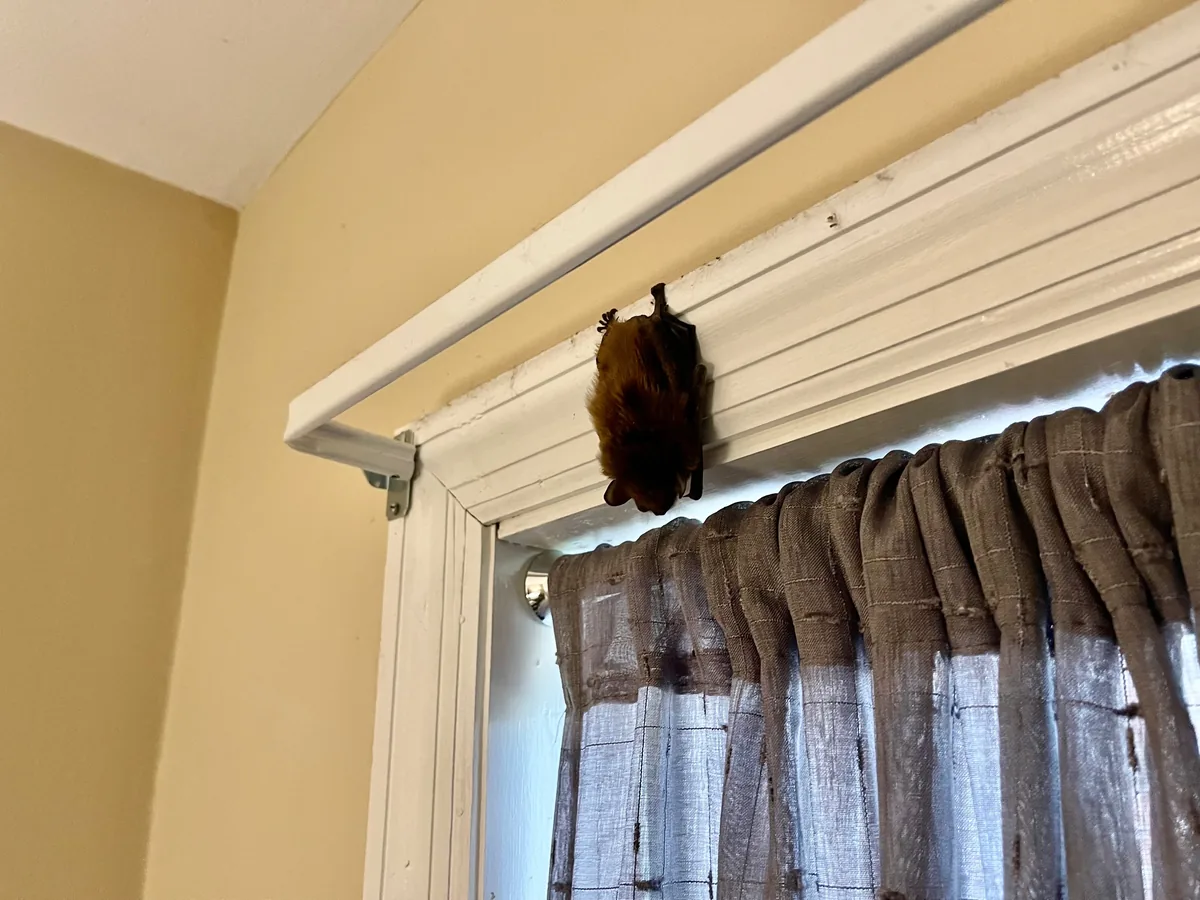
Our client called in January after she spotted a bat on her bedroom curtain. She was confused as to where it could have come from, assuming bats migrate for the winter. The health department wanted to test it for rabies, and we came out and captured it. It was a big brown bat. We then explained that a single big brown bat in a home during the winter is indicative of a colony hibernating in the house. This one had likely awoken prematurely. We took an hour to go through the interior with her to help her identify all the areas that bats in the walls could squeeze through to access the living space, so that they could be closed in case any others woke up prematurely. We began the process of sealing the exterior immediately on days when the weather was warm enough to work. This way we were prepared for eviction as soon as the spring eviction window opened. By early April all of her bats were gone.
Know Your Bats
Cave Country: Bats That Move Indoors
Tennessee has more documented caves than any other state in the nation. Our limestone geology is full of caves, and caves mean bats: sixteen species statewide, including the federally endangered gray bat, a cave-dweller you will almost never find in a building. Two species account for nearly every attic colony we see today, though a third was common here not long ago.
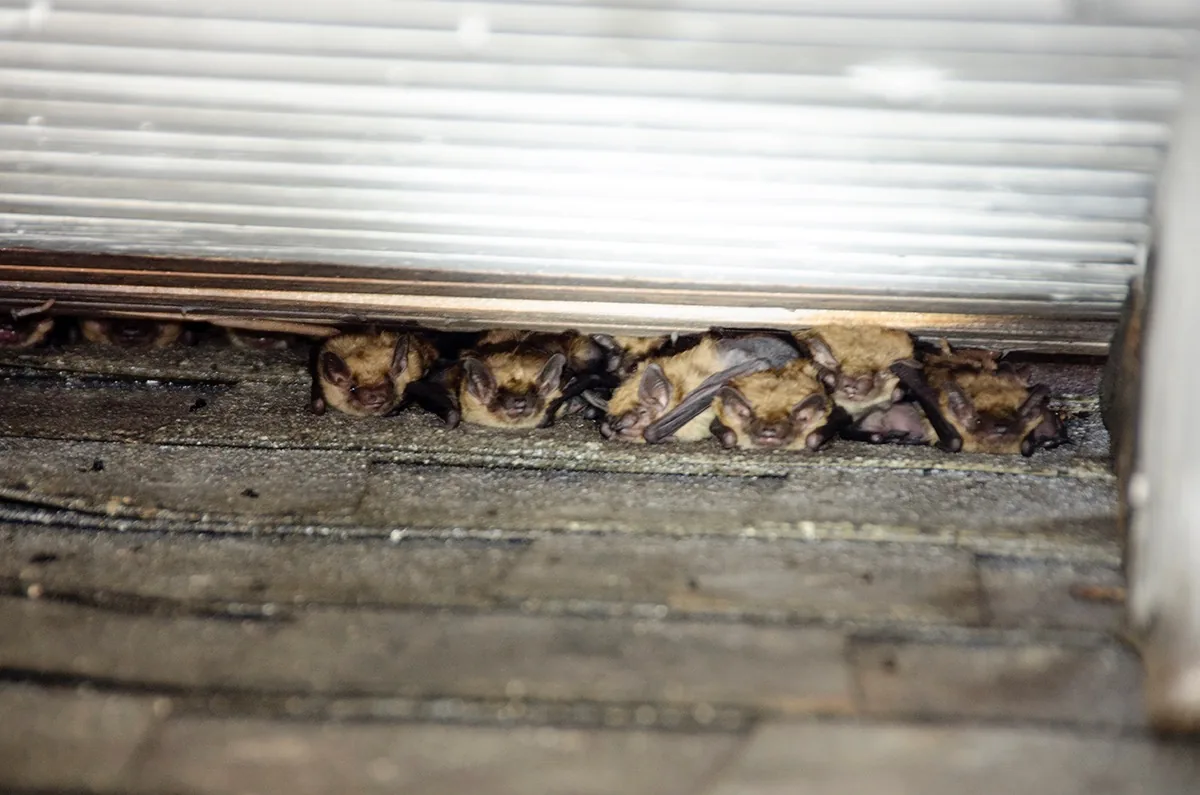
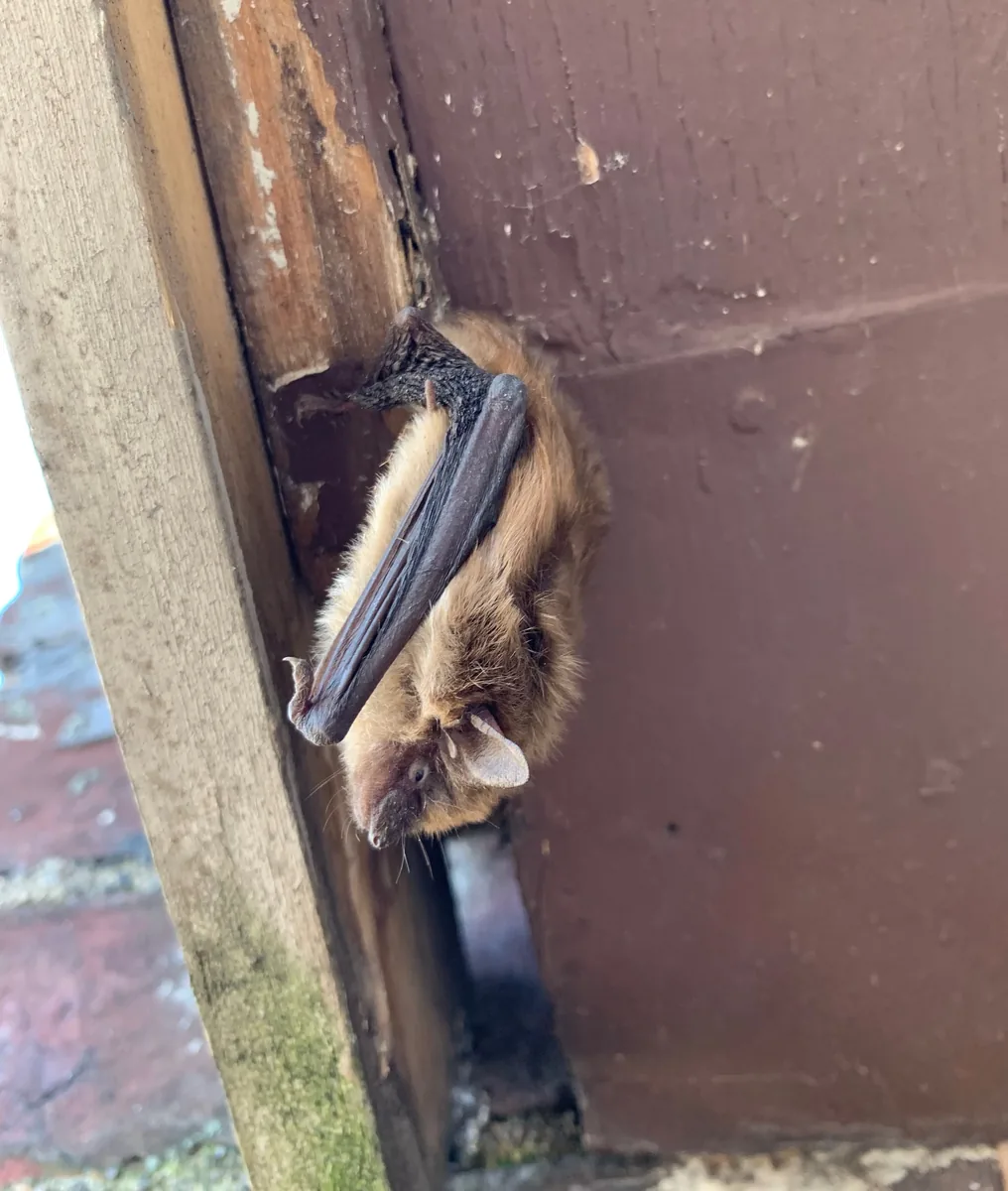
The big brown bat occupies many of the attics we clear. It's hardy and it doesn't migrate. In Middle Tennessee's mild winters a big brown colony hibernates in the home and picks up where it left off each spring. Once a colony has chosen a house, it will stay and grow indefinitely until the structure is sealed.
The evening bat is commonly a summer resident. Females gather to form maternity colonies in attics and barns to raise their pups through the warm months, then fly south for warmer climates in the winter. If your bats disappear in October, the problem isn't over. The colony returns to the same spot in the spring, with last year's pups grown and roosting alongside them.
The little brown bat used to be one of the most common attic bats in this part of the country, and attics were a standard maternity site for them. They hibernated in caves, and fell victim to white-nose syndrome, which dramatically killed off their population. They aren't gone, and we still find them, but far less often than we once did.
Detection
Signs You Have Bats in the Attic
A bat inside the house. A bat indoors is almost never alone. Unless a door or window was open and unattended after dark for an extended period, that bat typically came from inside your own structure. Depending on the time of year the bat could be a juvenile that took a wrong turn, a bat that awoke early from hibernation, a sick bat that is confused, or a hungry bat that doesn't want to go outside and deal with harsh weather. Treat every bat in the bedroom or living space as a strong signal that a colony is currently present or in the act of moving in.
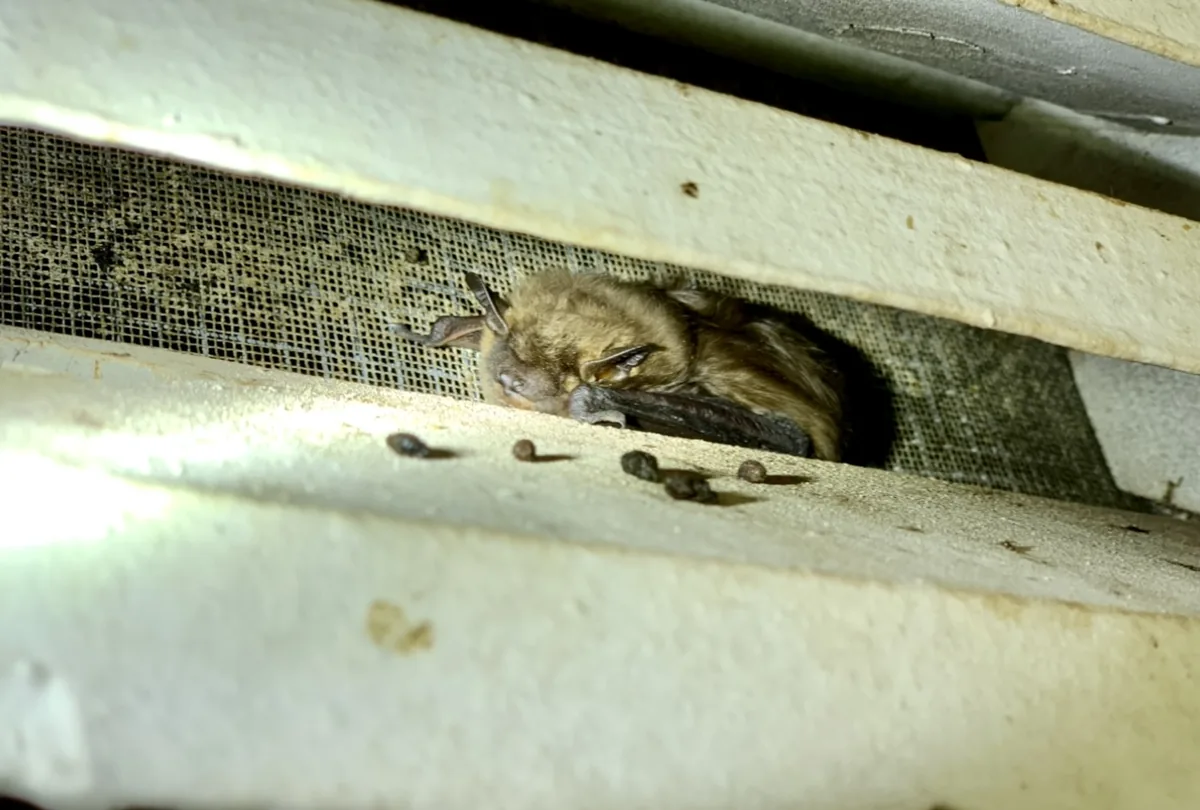
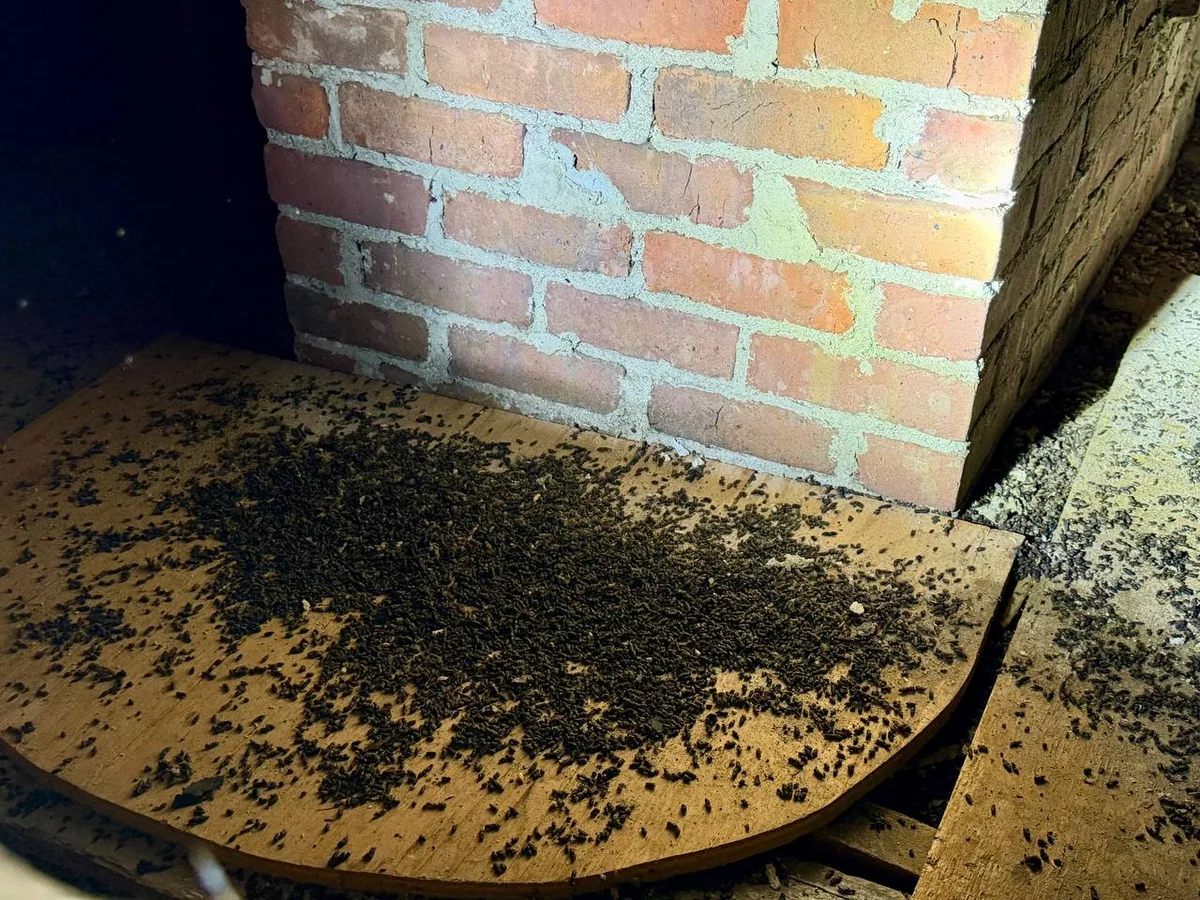
Droppings. Bat guano is similar to mouse droppings, and many pest control technicians confuse the two with one another. There are some differences between them that a bat expert can spot almost immediately. Bat droppings will usually crumble with slight pressure. Its appearance will sometimes have a slight sparkle or shine due to reflective insect wings inside. The shape will also tend to be rough with segmented or irregular ends. Guano may also collect beneath roost spots and under entry points. Oftentimes bat droppings will remain out of sight in wall cavities and under insulation for years before a client notices them. If any bat droppings are visible, even just a few, it very often points to a larger problem.
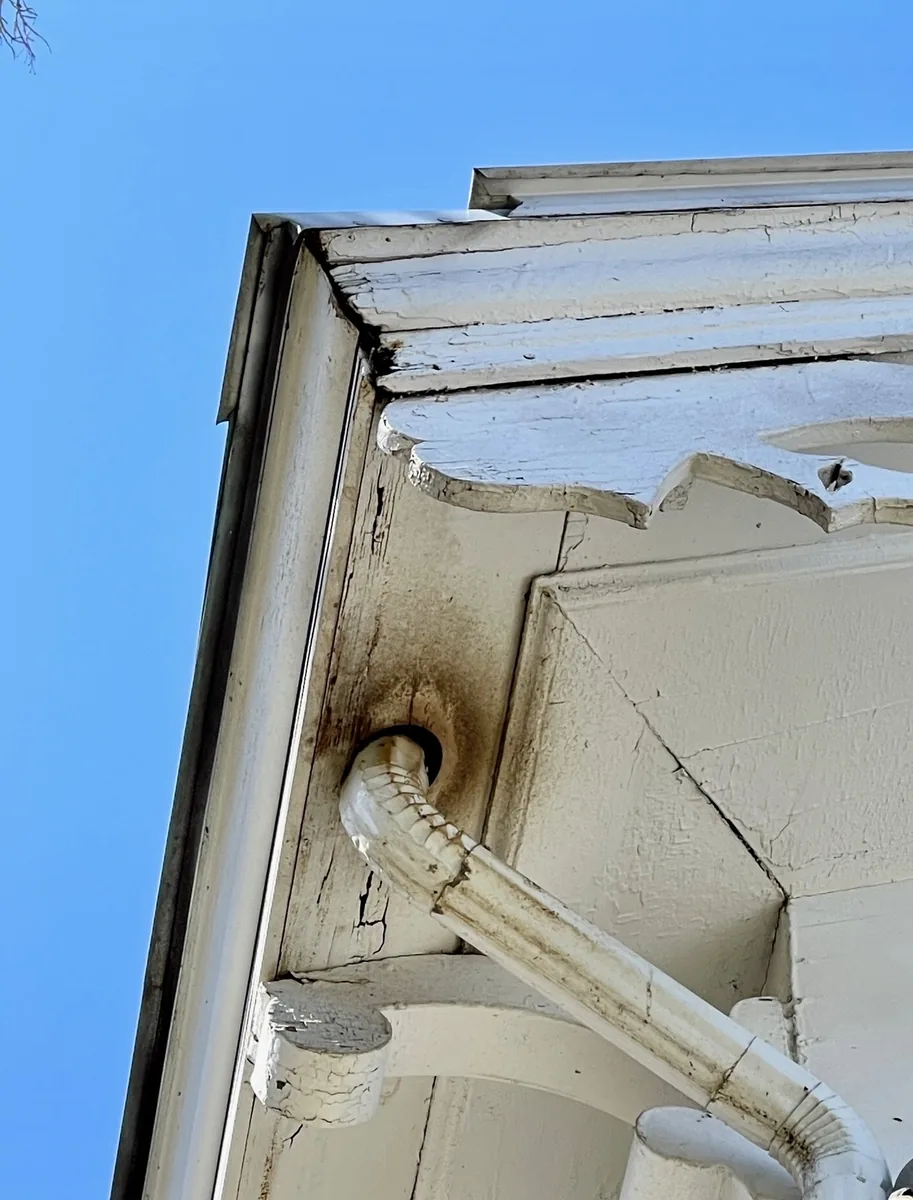
Rub marks. Bats squeeze through the same gap thousands of times, and their fur can begin to leave a brown-black rub mark around it. Staining like that is not always present, but it is a virtual guarantee of bat activity if spotted.
Dusk activity. Though most bat colonies are too quiet to detect, some will make squeaking or rustling sounds near sunset, and again before dawn, as they exit and return from feeding. Some homeowners will stake out the house around these times of day and night to attempt to spot them, but this requires watching every face of the house at once, night after night, morning after morning, and even then bats are easy to miss. An inspection by a bat expert will settle the question.
Health Risks
Are Bats Dangerous? Rabies, Histoplasmosis & Bat Bugs
Rabies. The majority of U.S. human rabies deaths trace back to bats. That's why health officials want bats that are found in a living space to be captured and tested rather than released back outside. In cases where a possible exposure could have occurred, if a bat is not tested, a hospital visit for post-exposure prophylaxis is usually required. A negative test result spares your family the post-exposure vaccine series, which can be an expensive and unpleasant experience.
Histoplasmosis. Middle Tennessee sits inside the country's histoplasmosis belt. The Histoplasma fungus is native to soils across the Ohio and Mississippi river valleys, and it grows readily in accumulated bat guano. Disturbing piles of guano can cause the spores to become airborne which can lead to inhalation and infection. Never sweep, vacuum, or crawl through suspected guano. Guano cleanup should always be performed by experts using containment barriers and proper protection, as covered on our Attic & Crawl Space Cleaning page.
Bat bugs. A roost carries parasites, and the worst are bat bugs. Bat bugs are cousins of bed bugs. You'd need a magnifier to tell them apart. These bugs can occasionally move down into the living space looking for new hosts. When these parasites are present a cleaning may be needed.
Seasonal Restrictions
Maternity Season: Tennessee's Bat Removal Blackout
Bats are protected under Tennessee law, and there's a stretch of the calendar when eviction in most states is not allowed: maternity season, generally May through August depending on the state, while pups are too young to fly. If a company evicts during this time of year the mothers get locked out while the pups starve inside the walls. It's inhumane, illegal, and causes even larger and more expensive problems.
During the protected periods we can still inspect, plan, and complete preliminary sealing of every opening the colony isn't using. Typically even slow developing pups are flying by mid-to-late August. This is why we time our evictions to begin at the start of September. At this time the one-way devices used for eviction can be installed and the job will be finished quickly. Every step is handled humanely and in accordance with Tennessee Wildlife Resources Agency regulations. In most cases our company standards go beyond what the law requires.
An important warning: never hire a bat exterminator. Killing bats is illegal, and an exterminator's license doesn't cover this work. Bat eviction calls for a licensed wildlife control operator. In Tennessee the license is known as an ADC license, which stands for Animal Damage Control. If a company offers to "get rid of" your bats in the middle of June, report them to the TWRA.
Case Study: Bats Discovered in June
Our clients discovered they had a colony of bats in their attic by spotting piles of guano that were forming around the exterior window ledges on the gable end of their home. They had a full maternity colony inside, as well as bats that we discovered behind some of the shutters on the side of the house that stayed shaded. These were likely some of the male bats that had left the colony when the females gave birth. Since the blackout window was in effect, we could not evict them at this time. Rather, we began the systematic process of preliminary sealing. Almost every inch of their roof line was open, as well as their soffits, attic vents, chimney counter flashing, and roof returns. They also had no drip cap flashing behind their gutters and the gaps there were massive. Additionally, we sealed all of the shutters that were not currently inhabited by male bats. The process of sealing their home took over two weeks, but once it was finished they were fully prepared for a fall eviction. When fall came the eviction was rapid and effective.
Emergency
Bat in the House Right Now? Do This First
If possible confine the bat to one room and lay a rolled towel or something heavy across the gap under the door. Taping it up is even better if duct tape is available. Don't open a window and let it out. If the bat is in an open area, shut all the other doors in the home so that a wildlife company will have the areas it may be hiding narrowed down.
If anyone was sleeping in the home while it was present, the health department may want that bat caught and tested for rabies, and releasing it will squander your best chance to skip the vaccine series. Give us a call at (615) 422-5923. If we can't get there until morning, and you can't find another company to come out tonight, leave the doors shut. The bat will often settle onto a curtain or wall and fall asleep and can be retrieved the following day.
After Bat Removal
Guano Cleaning, Decontamination & Insurance
A bat colony can leave a mess behind: guano in and under the insulation, urine soaked into drywall and plaster, parasites in the roost, and even a lingering odor.
After the final bat is gone, the roost area may need to be assessed to see if it requires cleaning. This decision should not be taken lightly. If a company says they are going to "throw in" an attic cleaning for a few thousand dollars, you are either being scammed, or dealing with an unserious company who is going to put your home in harm's way for a quick dollar.
All forms of animal cleaning, including bat guano cleaning, should be treated with the same care and consideration as other serious hazardous cleaning.
The work requires containment barriers to protect the home and family, full protective gear, and a rigorous protocol that bags and removes all insulation, HEPA-vacuums and disinfects the surfaces, and installs fresh insulation to spec. The full process is on our Attic & Crawl Space Cleaning page.
Bats are mammals, and that classification puts bat damage inside the coverage language of several (though not all) homeowners policies. We will help you review your policy to see if you have coverage, and if so will photograph and document the damage properly, and work with the adjuster directly.
What Customers Say
Bat Removal Reviews
"Austin was fantastic to work with. He eliminated our bat problem and put our families concerns at ease with his professionalism, explanations, and follow ups. Austin is responsive and has great communication about what exactly you are dealing with. I would recommend to anyone who has a wildlife problem at home."
Joe DePaulo
"Austin eliminated our bat infestation and cleaned our attic out 3 years ago, and the attic is still bat-free and spotless to this day."
Nicole M.
Common Questions
Bat Removal FAQ
There is no fixed price as every home requires a custom solution. All homes receive a free quote based on how complex the sealing work is, the quantity of vulnerable areas, and whether the attic needs decontamination. We offer free quotes for every project.
Hire a licensed wildlife professional. This is one job with no good DIY version. Bats are protected by Tennessee law, so killing or trapping them is a crime. Also, sealing gaps yourself is a project that is easy to mess up, ending up with colonies of bats stuck inside the walls, and either dying and causing a larger issue, or breaking through into the living space. Bat removal professionals are trained in the art of sealing and evicting in a way that keeps you and your home safe.
Eviction is legal when performed correctly by a trained and licensed professional. Evictions must be performed outside of maternity season, and are disallowed during the weeks pups can't fly, roughly May through August in most parts of the country. A licensed professional will keep you compliant and keep the bats alive.
Close the door with the bat inside, block the gap beneath it with a towel, and call us at (615) 422-5923. Don't open a window to release it. If anyone was asleep in the home or could have touched the bat, the health department will most likely want it captured and tested for rabies. Keeping it contained preserves your family's chance to skip the vaccine series if the test is negative.
Probably not. The big brown bat, Middle Tennessee's most common house bat, doesn't migrate. It hibernates in the home through our mild winters and resumes flying in spring, so a big brown colony never truly vacates. Evening bats do fly south in the fall, but they return to the same roost every spring. Either way, waiting doesn't solve it.
If you call outside of maternity season most jobs run one to two weeks start to finish: preliminary sealing first, then one-way devices over the active entry points, several evenings for every bat to clear out, and then a final seal of the eviction areas last. A single-bat emergency capture is usually resolved the same night you call. During maternity season there will be a time gap between preliminary sealing and eviction.
Sometimes, yes. Because bats are mammals, the contamination and structural damage a colony causes falls under some homeowners insurance policies where rodent damage wouldn't. We photograph everything, help you read your policy's language, and work with the adjuster directly.
If the home has been sealed properly, bats will not enter again in the future. Bats are strongly loyal to a roost, and an evicted colony will test its old entrances. That's why our exclusion covers the whole structure rather than just the holes they were using, and why the work carries a 10-year industry-leading guarantee. If a bat gains access in the future, we come back and fix it free of charge.
More than 25 years of family experience across three regions of the country. Five stars on Google. Austin Jahner has been featured on CBS News in New York and ABC News in Philadelphia.
Craftsmanship
Methods created by a master carpenter. Lasting materials chosen for each home's aesthetics. Manufacturer-warranty of 50+ years on sealants.
Transparency
Up-front pricing. No additional costs or charges. Every client receives a detailed explanation of the steps required to solve their problem.
Guarantee
10-year written guarantee on our exclusion work. If an animal gets back in through something we sealed, we fix it free. Industry-leading guarantee length and scope.
Method
Humane eviction and exclusion is always the first option. Humane trapping when required. Mothers and their young stay together, orphans go to licensed wildlife rehabilitators. No poisons.