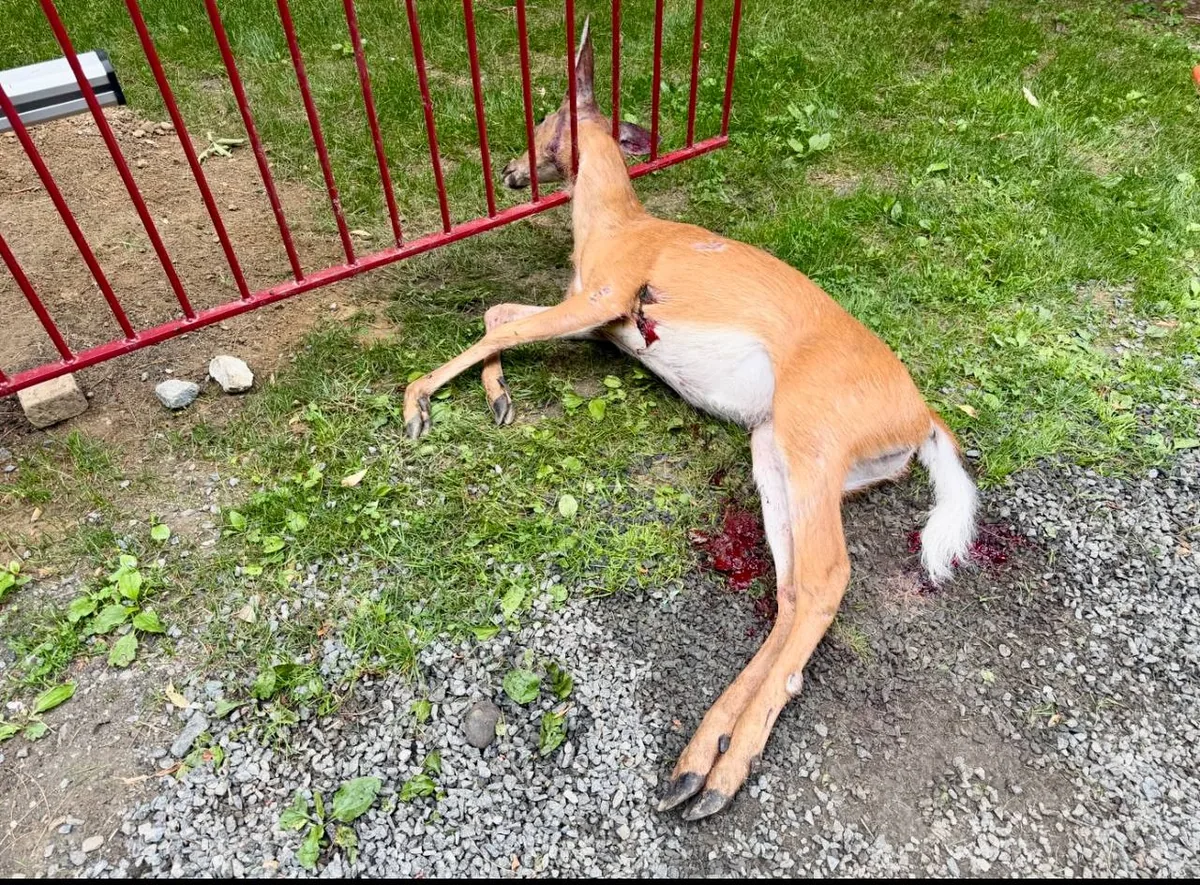
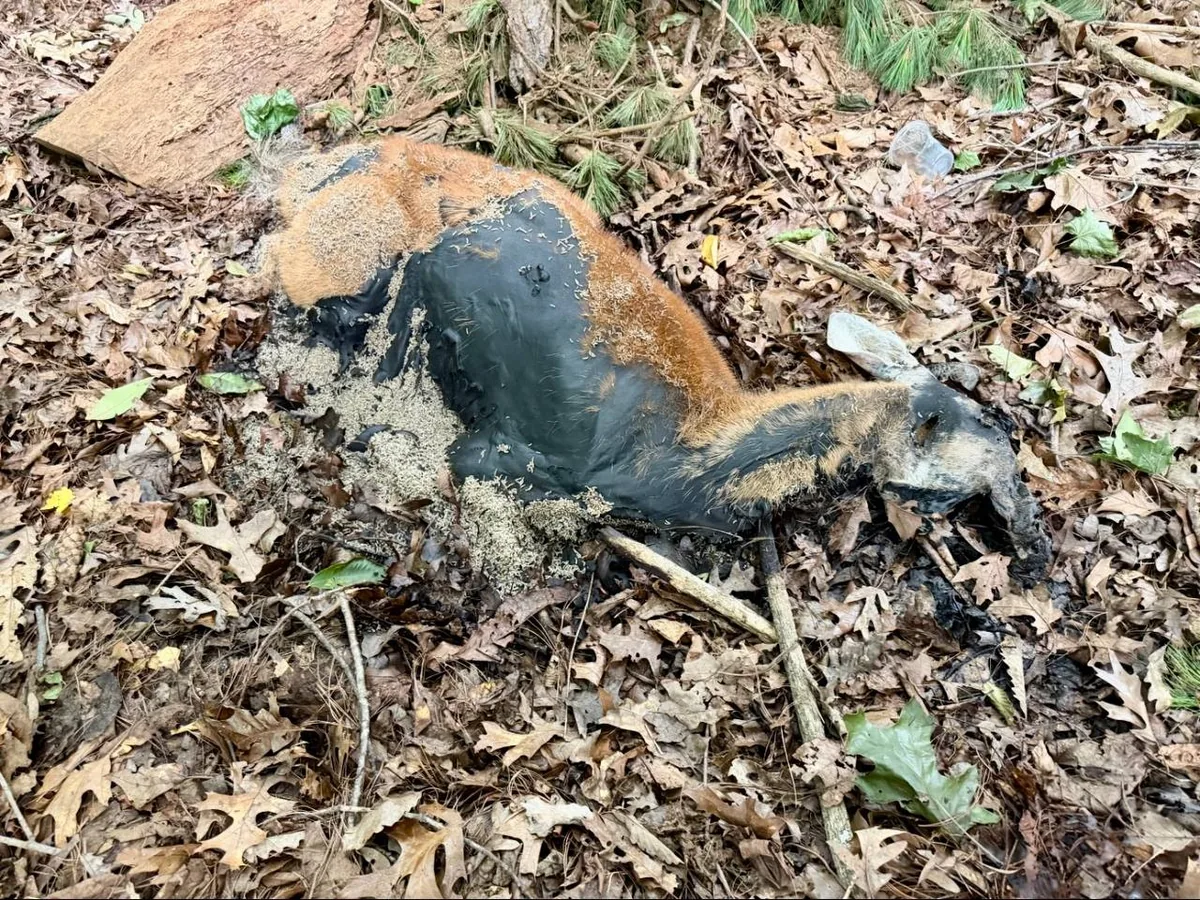
A dead deer on private property is an emergency situation. Most cities and counties will not take it off private land, the trash service will not touch it, and a full-grown dead deer is too heavy and filled with bacteria for a homeowner to safely remove themselves. Wildlife Pros removes dead deer from lawns, driveways, pastures, and wooded lots across the six-county Nashville region. When a homeowner's town offers to collect the deer from the curb, we also offer a lower-cost option: we move it to the roadside and the road crew takes it from there.
"Austin said he'd handle it, priced it over the phone, and had the deer gone by mid-afternoon."
— Tracy Stenson
How We Work
Dead Deer Removal Process
Call us with details on the deer: where is it located, what condition is it in, how long has it been there for, how close is it to the nearest road, and how large does it appear to be. If there is any confusion we may ask you to text us a photo of the deer. At this point we will give an upfront quote over the phone.
When we arrive, we will have all the necessary gear to remove the deer from your property. Whether the deer is stuck on a fence, decaying under a deck, or freshly dead on the front yard, we have the tools needed for the job. After the paperwork is signed, we bring the deer to the truck, load it, and take it away. We handle the disposal fully and include the cost in the upfront quote.
If the town you are living in is willing to dispose of the deer from the roadside, then we also offer a lower cost option to take the deer to the curb and leave it there for the town to come take away.
Either way, you never have to touch the animal or figure out where a deer can legally go.
Please Note: If you are not sure the deer is dead, or if it is alive and suffering, call your local police department first. Officers can euthanize the animal and end its suffering. Once the deer has passed, we take it from there.
Our Work
Photos from Recent Jobs
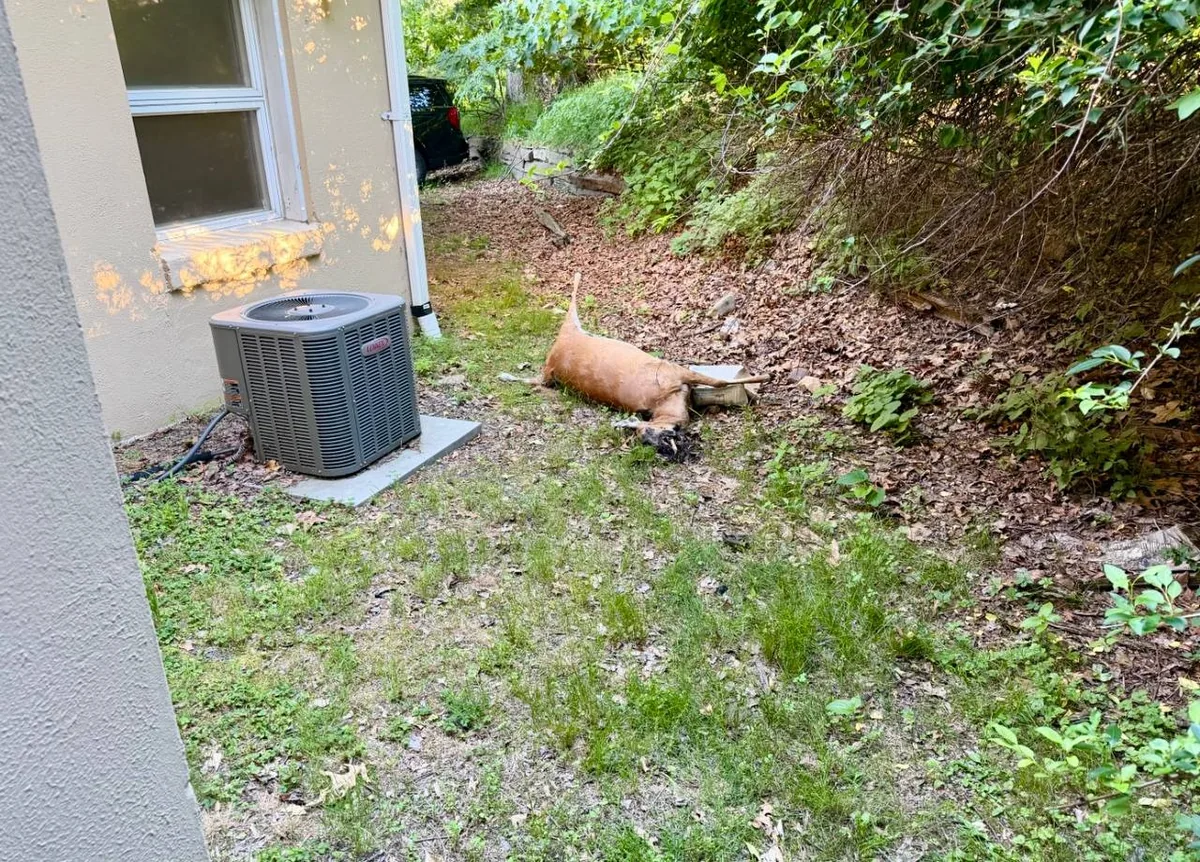
Deer in backyard
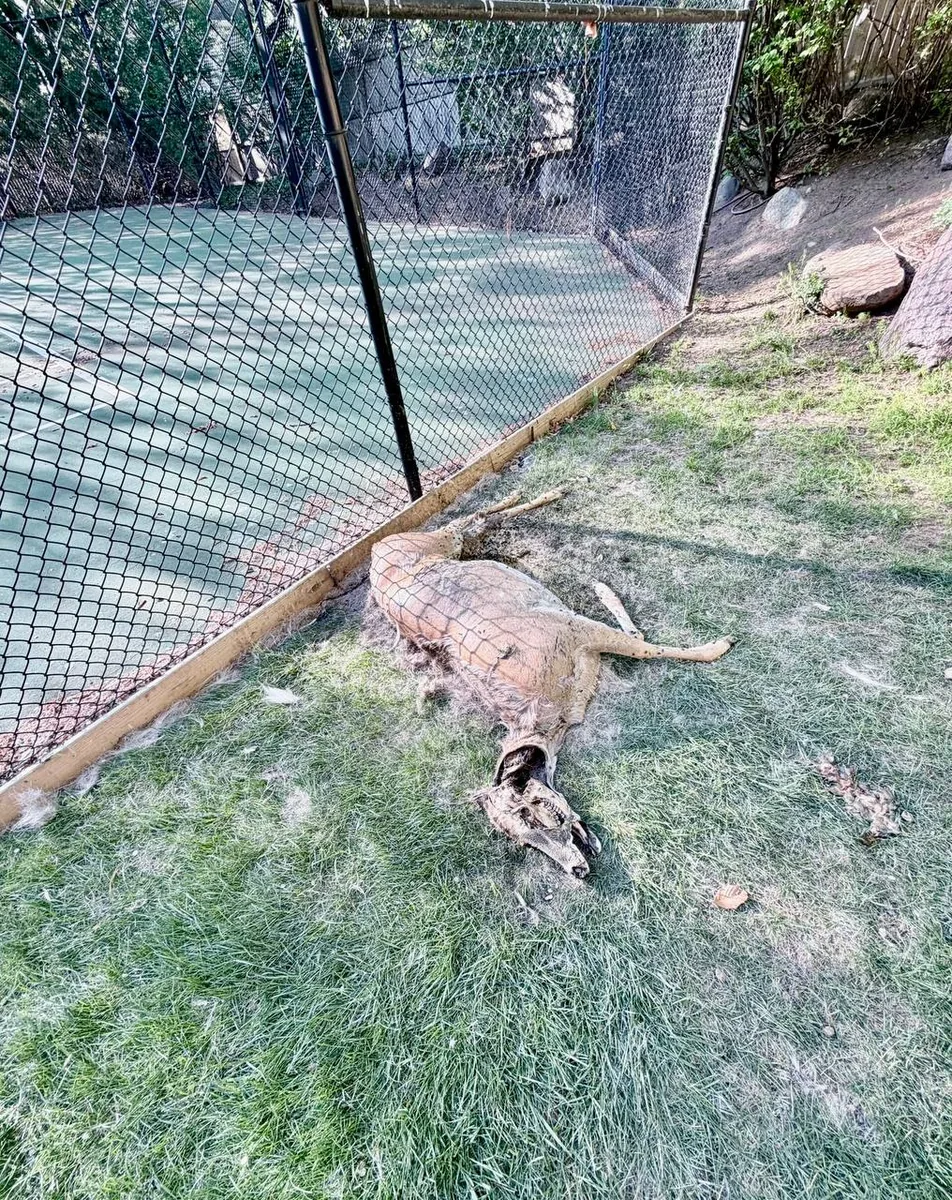
Deer by fence line
Case Study: Dead Deer at the Lake
A homeowner on a lakefront property found a dead doe at the edge of the water in late summer. We determined that the likely cause was Epizootic hemorrhagic disease (EHD), since the fever it causes drives sick deer to water to cool down, and so we see many dead deer near bodies of water in the summer. She tried calling the local town, and was told that they did not handle dead animals on private property. After being turned down by two other companies she called us, and we gave her an appointment time for that same afternoon. When we arrived we put on protective gear, worked the carcass out of the water, wrapped it in a tarp, and used a hunting sled to get it to the truck. Once it was loaded we took it to a legal disposal facility.
Calling a Professional
Dead Deer Are Not a DIY Project
Weight. A mature whitetail is roughly the weight of a grown adult, and once it bloats it becomes heavier and harder to grip. Trying to haul one across the yard without equipment can injure your back, and dragging a carcass can spread fluids, hair, and parasites across the lawn.
Ticks. Adult ticks of nearly every species need a large mammal to feed on and to find mates, and a deer moving through brush and woods edges is a perfect host. A single Middle Tennessee deer routinely carries hundreds of ticks. These include Lone Star, American Dog, and Black-legged ticks.
Ehrlichiosis and alpha-gal syndrome are spread by the Lone Star tick. Alpha-gal is a lasting allergy to red meat and mammal products including dairy, and Middle Tennessee has some of the highest recorded rates in the country. Rocky Mountain spotted fever is mainly carried by American Dog ticks, though others can transmit variations of the bacteria. Lyme disease is present here as well, spread by the Black-legged tick. Once the body of a dead deer goes cold those ticks start looking for a new host, and whoever handles the carcass is the nearest target available.
Disease. Chronic Wasting Disease is established in Tennessee. Though the disease has not yet been found to have spread to humans, the CDC advises keeping away from a dead deer's head, spine, and lymph nodes, since those tissues hold the most prions. Additionally, decaying animals are often filled with maggots, flies, and various forms of bacteria. If you do not know a deer was healthy when it died, and it is not a fresh kill, it is unwise to approach without training.
Can't Put in Trash. Curbside pickup and most convenience centers won't take a carcass, and backyard burial has problems of its own. A grave dug too shallow can be dug back up by scavengers. A grave dug too close to a well or creek can create a groundwater problem. And where CWD exists, burial risks leaving prions in your own soil.
Most Towns Won't Take It. In Tennessee most towns will only take dead deer from public roads, not private property. TDOT clears carcasses from state routes and interstates. City and county road crews handle their own local streets. In Davidson County, Metro Public Works handles the Metro roadways. Removing a deer from private property usually requires a private service. If the deer is close to the road, ask your town if they will take it. If it is not close to the road, but they will take it if it is brought to the curb, our lower-cost roadside option is the optimal solution.
How This Happened
Why a Deer Ended Up on Your Property
We remove deer year-round, but the calls tend to follow a seasonal pattern.
October into January: rut and hunting season. Breeding season sends bucks across roads at first and last light with little caution, leading to many deer that are killed by cars. Additionally, once the state's hunting season opens, a wounded deer that isn't immediately killed can cover a lot of distance before it drops. Oftentimes these deer will end up on private property before they die.
July into October: EHD season. Epizootic Hemorrhagic Disease, carried by biting midges, raises a deer's fever so high that the animal heads for water to cool off. That's why late-summer carcasses so often turn up in and near ponds, pools, creeks, and lake shorelines. Tennessee sees EHD flare-ups in warm, dry years. It's harmless to people and pets, but it puts carcasses in and around the water.
Late winter into early spring: winterkill. A hard stretch of winter takes fawns and older deer, and the bodies turn up as the weather warms. Many are found during spring yard cleanups.
May and June: fawns and dispersal. Fawns that fail to thrive, plus young bucks pushed out to find their own territory, can also end up on residential properties, most often in wooded areas where tall grass can hide a downed animal for days.
Chronic Wasting Disease
Chronic Wasting Disease Is in Tennessee
Chronic Wasting Disease kills every deer that catches it, and there's no vaccine, treatment, or cure. It's caused by misfolded proteins called prions, which don't break down the way germs do. Once prions settle into the soil, they can stay a threat for years, even decades.
CWD is present in Tennessee. TWRA first confirmed it in the state's wild deer in West Tennessee in 2018 and has managed it since through a designated CWD zone, mandatory testing, and rules on moving high-risk deer parts. The disease has since been detected in counties across the state, including parts of Middle Tennessee, and TWRA continues to test and monitor statewide. That spread is why we treat every job the same regardless of where the call comes from.
A deer carrying CWD can look completely normal for a year or more while still spreading prions. The one on your grass might have been hit by a truck, killed by EHD, or worn down by a hard winter, or it might be infected with no visible sign. The CDC advises against handling a dead deer's head, spine, or lymph nodes.
With CWD established in Tennessee, proper disposal is about more than odor. It is about containing the disease and minimizing exposures.
What Customers Say
Dead Deer Removal Reviews
"We called around all morning. The county said call the city, and the city said private property is the owner's problem. We started calling wildlife companies but most said no. Austin said he'd handle it, priced it over the phone, and had the deer gone by mid-afternoon."
Tracy Stenson
"A buck got clipped by a car and ended up dying in our flower bed. I was mortified about it rotting and scavengers coming. Austin sent someone from his crew the same day who took care of the whole thing without any issues, and left the spot clean. We saved their number, though I hope we never need it."
Brad W.
Common Questions
Dead Deer Removal FAQ
If the deer is on private property, call a licensed removal service. Your city or county most likely will not collect it off your lawn. Road crews clear the roadway itself. TDOT handles state routes and interstates, your city or county handles local streets, and Metro Public Works handles Metro roadways in Davidson County. TWRA does not do carcass pickups. For a deer in your yard, drive, or wooded lot, a private service like ours is the usual answer. Same-day service is often available, and we quote the job before we head out.
Call your local police department. Officers are equipped to euthanize a badly injured deer and end its suffering, and that is the fastest and most humane option. We only remove deer that are already dead. Once the animal has passed, call us and we'll handle the removal from there.
Yes, when the situation allows it. If your town confirms that they will collect it from near the road, we can handle the task of moving it there for less than a full removal and disposal cost.
We quote each job over the phone based on its size, where is it located, what condition is it in, how long has it been there for, and how close is it to the nearest road. Whether the right choice is full removal with disposal or the lower-cost roadside option factors into the quote as well. You'll get the price before we head out, and that is the price you pay. We don't add charges when we arrive.
We advise against it. Doing it right means digging deep and staying clear of wells and creeks, which is more digging than most people expect. A grave dug too shallow often gets dug back up by scavengers. With CWD established in Tennessee, burial also risks leaving persistent prions in your own soil. Professional disposal avoids these problems.
In Middle Tennessee's summer heat, bloat and strong odor can set in within one to three days, and by the end of that first week you may be dealing with flies and maggots as well. Cold weather only delays it. A deer that goes down in winter will start to smell once the weather warms. Scavengers like vultures, coyotes, and raccoons usually find a carcass within a day or two, so it is best to call early.
More than 25 years of family experience across three regions of the country. Five stars on Google. Austin Jahner has been featured on CBS News in New York and ABC News in Philadelphia.
Craftsmanship
Methods created by a master carpenter. Lasting materials chosen for each home's aesthetics. Manufacturer-warranty of 50+ years on sealants.
Transparency
Up-front pricing. No additional costs or charges. Every client receives a detailed explanation of the steps required to solve their problem.
Guarantee
10-year written guarantee on our exclusion work. If an animal gets back in through something we sealed, we fix it free. Industry-leading guarantee length and scope.
Method
Humane eviction and exclusion is always the first option. Humane trapping when required. Mothers and their young stay together, orphans go to licensed wildlife rehabilitators. No poisons.