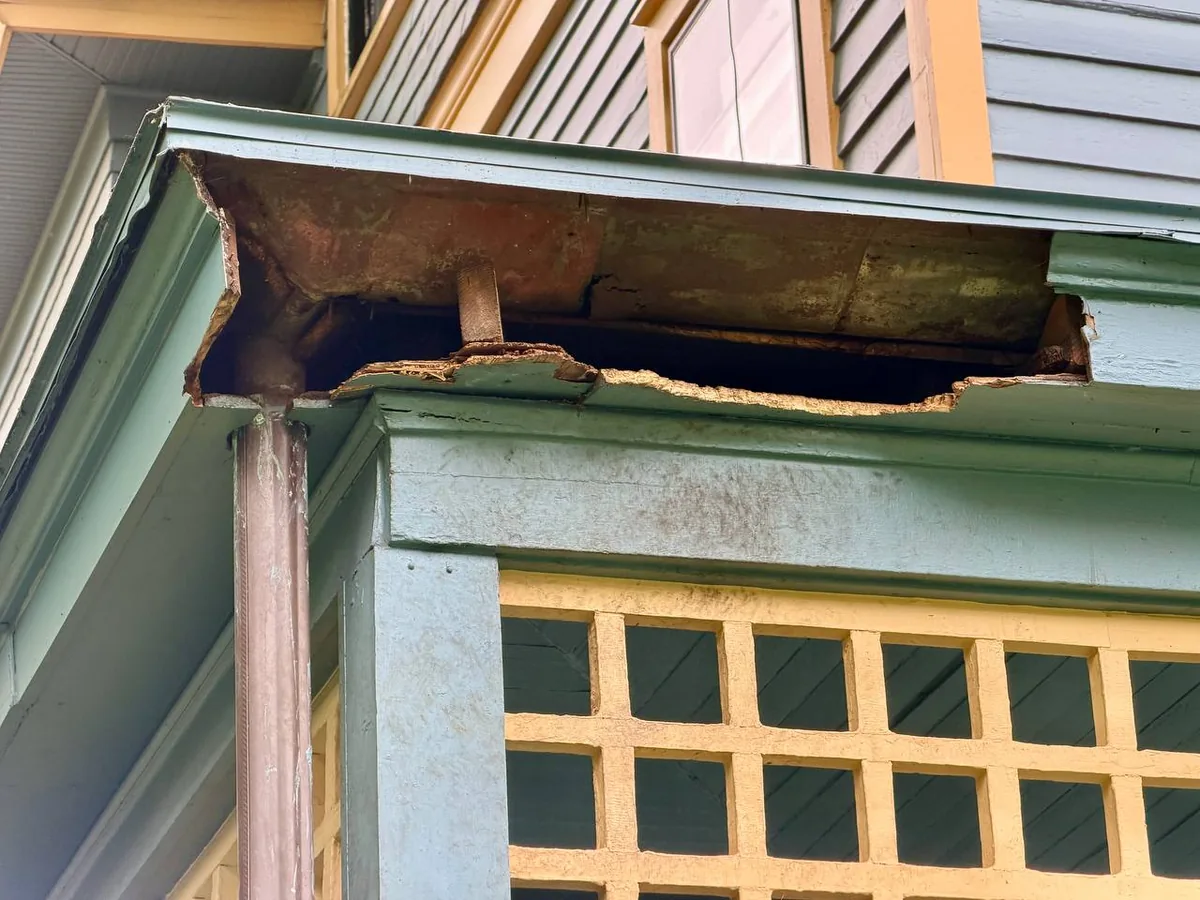
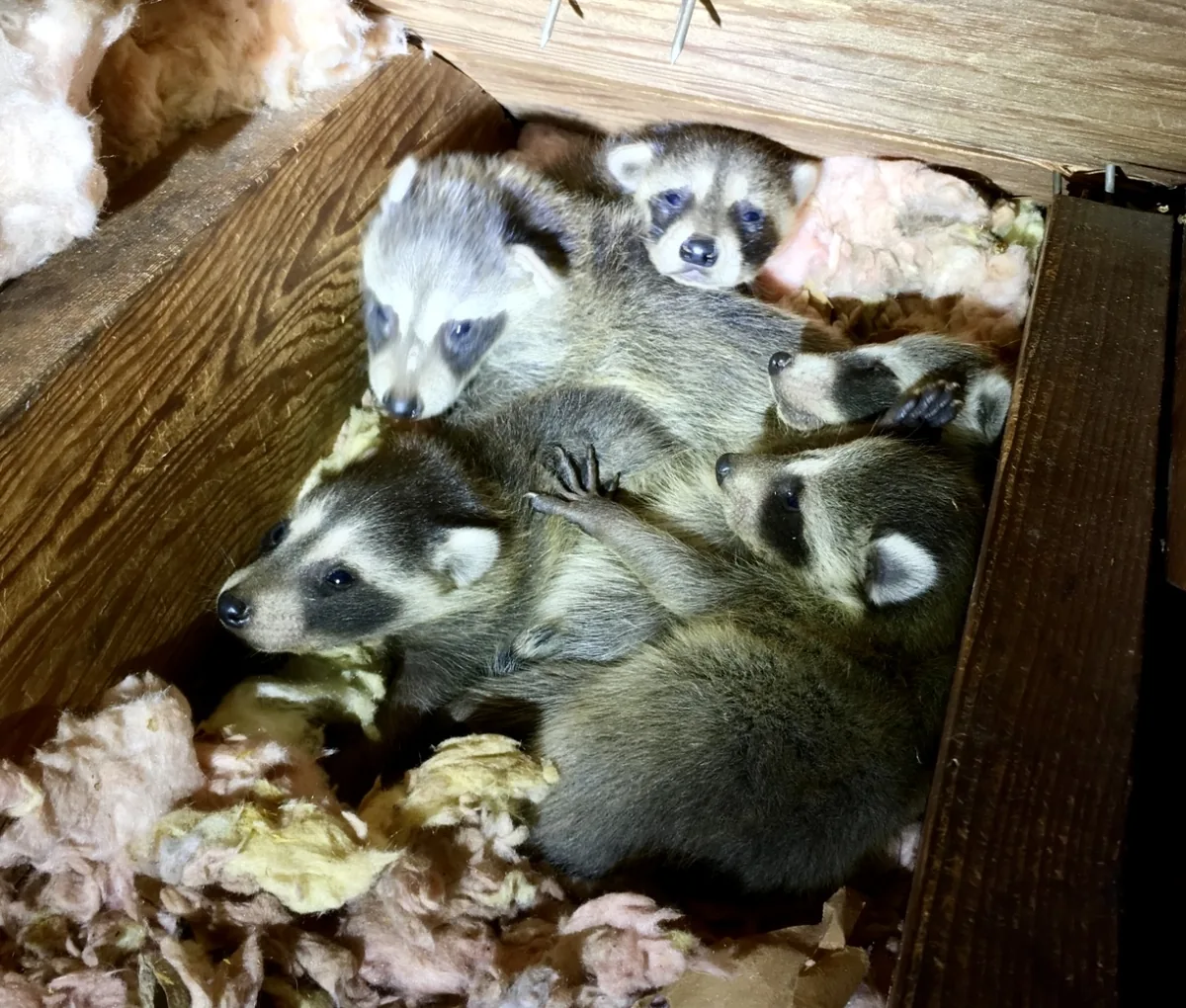
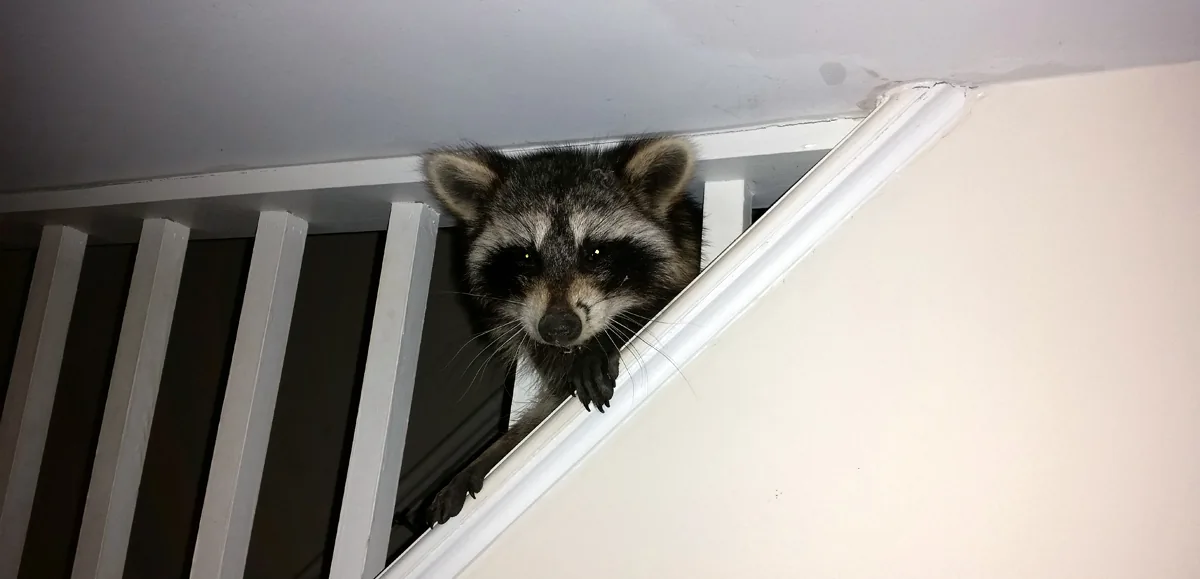
Raccoons generally cause more damage per animal than anything else we remove in Middle Tennessee. Their front paws work almost like hands. They can pry soffit panels loose, bend fascia, rip vents open, and force their way into anything a builder attached lightly. Their feces can also contain highly dangerous parasites. Wildlife Pros handles the job start to finish. That includes humane eviction or trapping, babies removed by hand during baby season, raccoon damage repair, and attic and crawlspace cleaning when it's needed. The exclusion work is backed by an industry-leading guarantee. We're a family-owned company, and our family has been solving raccoon problems since 1998.
"His repair work looked great and kept them from coming back."
— Dawn W.
How We Work
Our Humane Raccoon Removal Process
1. Full Home Inspection. We first inspect to find out where the raccoons are coming in and whether a litter of babies is present. We check the attic, the roofline, and the lower sections of the home. Many Middle Tennessee homes sit over crawl spaces, and raccoons are just as likely to enter a house through the bottom as through the top. Our trappers are licensed, and from late winter into summer we treat every job as a maternity job until an inspection proves otherwise.
2. Humane eviction and trapping. Eviction is always preferred when feasible, though there are times when cage trapping is needed. If trapping is the appropriate solution, cage traps go directly on the openings and travel routes the animal is already using, and they're checked promptly or monitored by camera. Raccoons are relocated where permitted and always handled in accordance with TWRA regulations.
3. Babies removed by hand. When there's a litter, no trapping or eviction happens until we've located it. Our preference with all evictions is to wait until the end of baby season, but due to the extensive damage raccoons can cause it isn't always safe to wait. Since young can't walk for roughly their first 4-6 weeks, they aren't able to leave the home with the mom, so they're lifted out by hand and staged where the mother can be safely reunited with them outside.
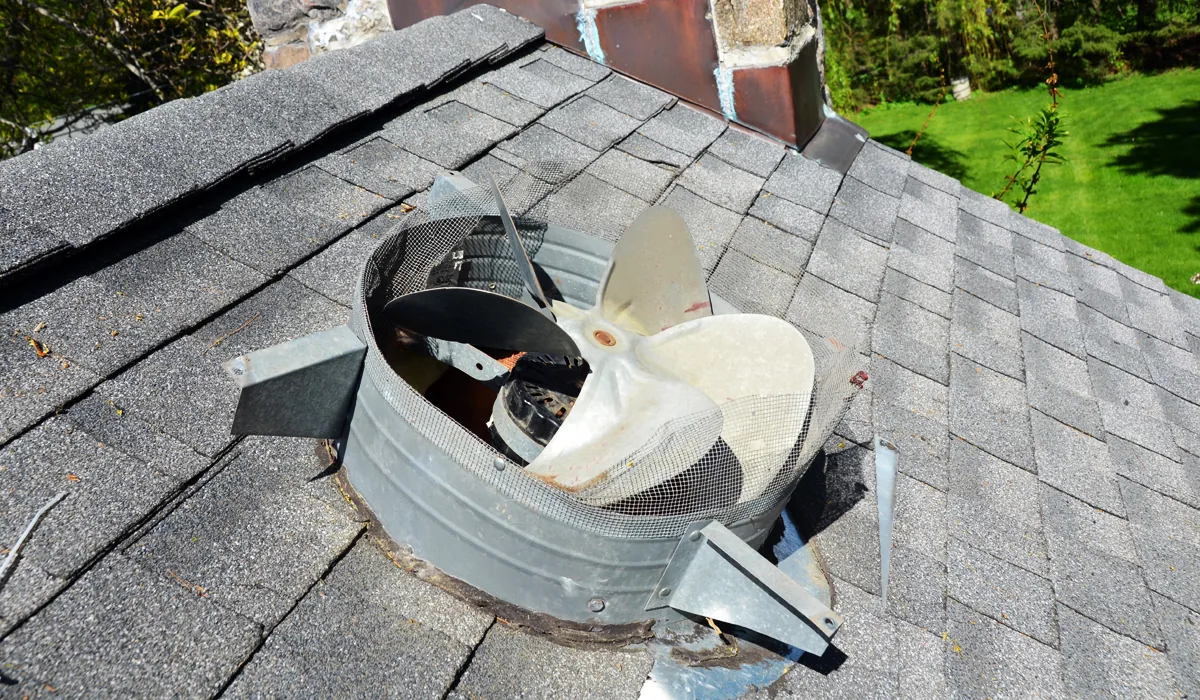
4. Permanent exclusion and repairs. Getting rid of raccoons permanently means closing every entry point. Pried soffits are reframed, crushed vents are replaced with heavy-gauge metal, chimneys are fitted with stainless caps, and every repair is finished to match the house. When evicting instead of trapping it is important to do additional preventive work so that the raccoons will not force their way into a new area. If the attic or crawl space needs decontamination, this will be estimated once the raccoons are confirmed to be gone and the home is protected.
Our Raccoon Work
Photos from Recent Jobs
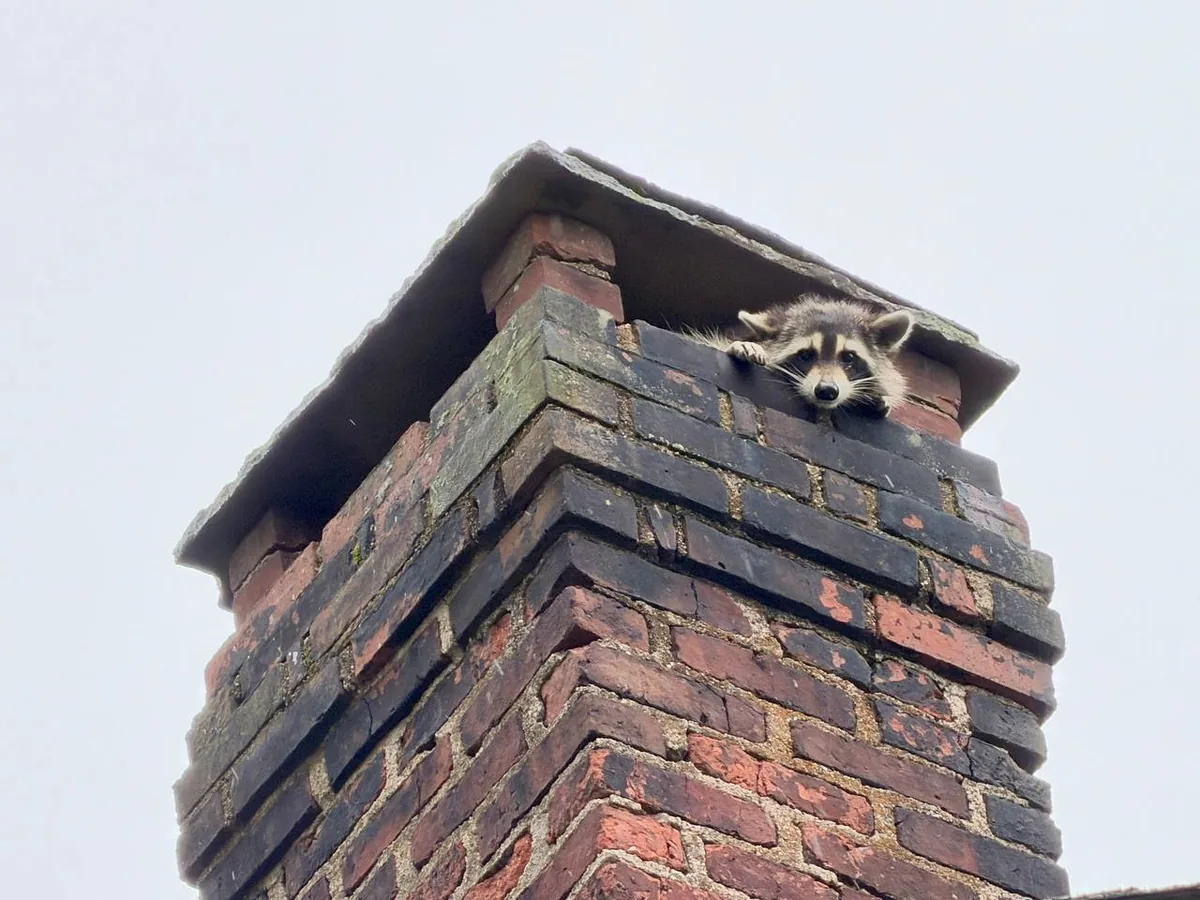
Raccoon peeking out chimney
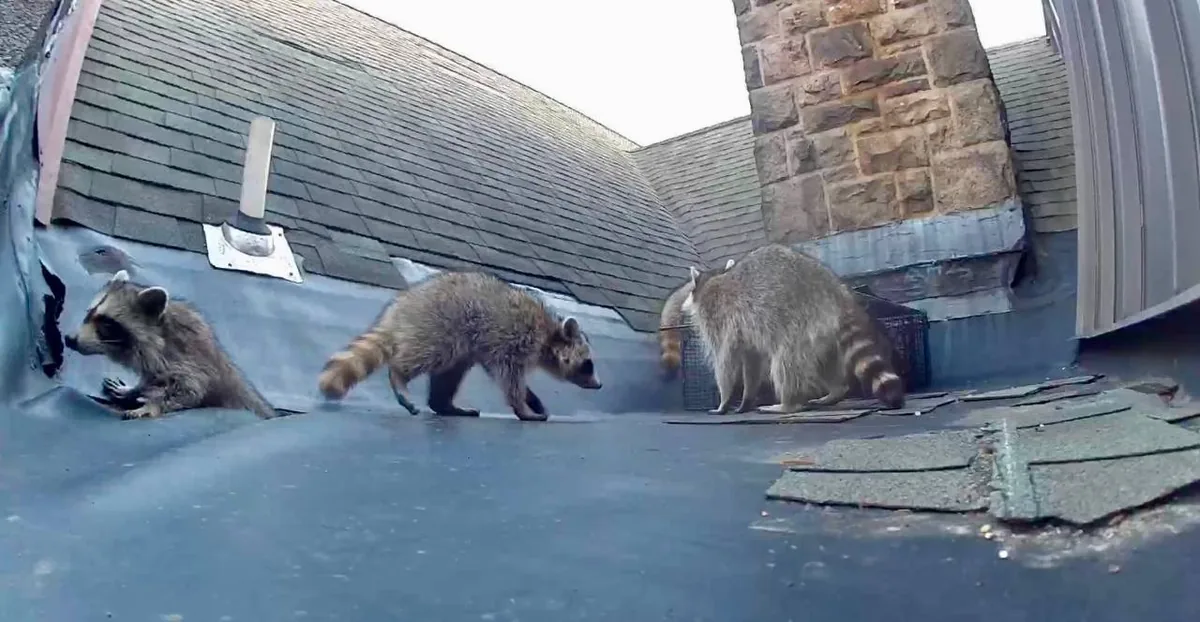
Raccoons on roof cam
Case Study: The Raccoon That Was Out in Daylight
Our client had called us after watching a raccoon cross their back yard in the middle of the afternoon for multiple days in a row, afraid that it was sick. Since it seemed otherwise healthy, and it was baby season, we discussed the possibility of it being a nursing mother who was out feeding while the babies slept. They asked us to come investigate and upon walking around the property we saw that one of their attic vents was bent and discolored. They were shocked to learn they'd been living with a family of raccoons in their attic without even realizing it. After talking about the options they decided their preference was to wait until the babies were grown and to perform an eviction. We came back around ten weeks later to set a camera and watch. When we were confident the babies were old enough we performed an eviction and sealed off not only that vent, but fortified all the other vents on the house. Since then the house has been raccoon free.
Warning Signs
Signs of Raccoons in the Attic
Noises in the attic at night: Common sounds are slow, heavy footsteps and motion, with dragging and thudding. During baby season the telltale chittering of the young is an immediate giveaway.
Exterior damage: Torn soffits, bent fascia, vents that are ripped open. Raccoons are rarely subtle when they enter a home, though occasionally the damage is less noticeable.
Smudged, dark staining: Raccoons tend to use the same entry over and over, and their fur darkens the framing around it.
Concentrated odor: An odor from one spot in the attic or through floor registers can sometimes indicate a latrine. Raccoon latrines can even cause the drywall to become soaked and stained overhead.
Raccoon sightings: Oftentimes a homeowner will spot a raccoon on the roof at dusk, or will see an adult out in the daytime during baby season, when nursing mothers are out feeding.
Know Your Raccoons
Biology & Behavior
Procyon lotor has front paws that grip, rotate, twist, and pull. They are dexterous enough to open a latch and strong enough to peel construction apart. Adults can run anywhere from fifteen to forty pounds. Materials that stop a squirrel or a bird often will not stop a raccoon.
Raccoons are nocturnal, active dusk to dawn, which is when the noise inside a home often happens. They're habitual about entry points, using one opening over and over until the framing around it is darkened and smudged. Pregnant females have an affinity for attics and chimneys. An open masonry flue works like the hollow trees she dens in naturally, and the smoke shelf is large enough to hold a litter. Crawl spaces are also common, especially where old foundation vents have rusted loose.
Tennessee's mild winters keep them active nearly year-round. Raccoons don't hibernate. They will often stay inside through a cold snap and come back out when the weather warms, so there is no real off-season here, just a spring peak. A raccoon in your yard in broad daylight deserves attention but not panic. It may be a nursing mother, an animal displaced from a den, or, at times, a sick animal. Keep your distance in every case.
Litters arrive in spring: usually two to five kits, born helpless and unable to walk for over a month.
Health Risks
Are Raccoons Dangerous? Rabies, Roundworm & Real Damage
Rabies. Tennessee ranks the raccoon among its top rabies carriers, and the state runs an oral rabies vaccination program aimed at its raccoon population. The rules are simple. Never approach, never corner, and never handle one. Daytime activity alone doesn't mean rabies, but staggering, disorientation, or an animal that seems oddly unafraid can. Get people and pets inside and make a phone call to the local police immediately.
Roundworm. Raccoon droppings can carry Baylisascaris procyonis, the raccoon roundworm, and its eggs are often present in their feces. Swallowed eggs hatch into larvae that migrate through the body and can damage the brain, the eyes, and the organs. Children playing where a latrine has been are the highest-risk group. The eggs are durable and can survive in soil and water long after the raccoon is gone. A latrine near a pool or pond can contaminate the water itself, and fixing that generally means draining and sanitizing. Never attempt to clean raccoon feces without consulting with a trained professional and your local health department. Cleanup should be done with protective equipment by someone trained for it. It is preferable, when possible, to give the feces a long period to desiccate prior to cleaning.
Structural Damage. Even a healthy raccoon is destructive. In one season a denning female can flatten and contaminate the insulation, tear the wrap off ductwork, gnaw whatever's chewable, and leave an entry hole that lets rain in behind her. At times a wildlife problem can also turn into a rot and mold problem when water gains entry through the damaged areas.
Seasonal Patterns
Raccoon Baby Season: March Into Early Summer
From March through June, most of the raccoons breaking into Middle Tennessee attics, chimneys, and crawl spaces are pregnant or nursing females looking for a warm, dry, and secluded den. By the time the noise gets your attention, the kits have usually arrived.
Effective raccoon control in these months depends on the litter. The kits need to come out by hand since they are unable to walk on their own. If the mother is trapped and the job stops there, the litter is left behind with no way out. If she is evicted with a one-way device while the kits stay behind, she may tear at the roof trying to get back to them. Companies that skip the litter check are leaving part of the job undone. The work calls for a licensed wildlife professional who traps or evicts properly, hand-retrieves the young, repairs the entry, and guarantees the seal.
After the Raccoons Are Gone
Latrine Cleanup, Decontamination & Insurance
Raccoons return to a communal latrine, and when they den indoors, the latrine is indoors too. Weeks and months of accumulation can create the roundworm risk described above, so once the animals are out, the cleanup is a job in its own right. Ours runs under strict containment. The contaminated area is isolated from the living space, soiled insulation leaves the house in sealed bags, surfaces get HEPA-vacuumed and treated, and new insulation goes in last. Full details live on our Attic & Crawl Space Cleaning page.
This work is sometimes covered by insurance. We photograph and document the damage in the language adjusters use, and give you the information your insurer will ask for.
Case Study: Raccoons in the Attic
A homeowner called about an odor she'd been smelling and a noise she'd been hearing intermittently that sounded like a dog walking around in her ceiling. Our inspection found multiple adult raccoons inside her attic who had already ripped up large amounts of insulation, and made a large latrine area. We immediately told her to quarantine the attic for the time being. After evicting the raccoons we spoke with her insurance company and found out she had coverage for a cleaning. We scheduled the cleaning eight months later in order to allow the roundworm eggs in the feces to desiccate. After a full cleaning, the attic looks brand new.
What Customers Say
Raccoon Removal Reviews
"I had a MAJOR raccoon problem in my attic, Austin quickly returned my call, gave me more information than anyone should expect about raccoons, making sure I had the right information to speak with my insurance about it and started the process of evicting the raccoons and cleaning up. All that was done with a professionalism that would cause Austin to stand out amongst any competitors."
Joseph Gardner
"We had some raccoons coming and going from our attic every night and using the insulation as a toilet. It was disgusting. Austin checked for babies first, and then evicted them in a humane way. His repair work looked great and kept them from coming back."
Dawn W.
Common Questions
Raccoon Removal FAQ
Raccoon jobs vary more in price than any other species we handle, so we don't guess at a number prior to a consultation. The price varies according to how long the raccoons have been present, the extent of the damage they've done, and whether or not cleaning is required once they're gone. Every job receives custom solutions and a firm quote before work begins.
Due to both local regulations and common sense safety concerns, raccoon work must be carried out by a licensed wildlife professional. Raccoons combine rabies risk, parasite-filled droppings, and, in spring, hidden litters, so homeowners should never attempt to solve this problem on their own. A trained professional will locate the litter of babies if one exists, trap or evict the raccoons, and close the opening in materials they can't pry back open. Always ask for a written guarantee when hiring a wildlife professional.
They stay together. When possible eviction waits until the babies are old enough to get out on their own with the mom. When this isn't possible, they are carried out by hand and staged safely nearby where the mother can retrieve them. Do not attempt DIY solutions for raccoons. Do not block anything, don't set a hardware-store trap, and don't wait for them to leave. Call a licensed professional for assistance.
Sometimes, yes. Though they will often return over and over again in the future and the damage will escalate with each entry. Other times they do not leave, and there is no reprieve from the damage. Waiting to see if they leave or not is a dangerous gamble. Always call a licensed professional as soon as you see evidence of raccoons in your home.
In the state of Tennessee homeowners are not legally allowed to relocate raccoons. We strongly recommend that you do not attempt to trap them on your own. Once they are captured, there is no guarantee that you will be able to get a professional to come take them away, and you are not allowed to leave them in cages for an extended period of time. This means you may be obligated to undertake the dangerous process of releasing them on the property yourself. Raccoons in a cage can be dangerous, and there is always a risk of being attacked. Furthermore, the raccoon you capture could be a mother with babies somewhere that you are leaving to starve and die. This is work for a licensed professional, without exceptions.
Dark tubular droppings, two to four inches long, blunt at the ends, and often studded with seeds or berry skins. They can look similar to a small dog's droppings. The giveaway is the pile. Raccoons return to a communal latrine, so the droppings concentrate in one spot, such as an attic corner, a deck footing, or the base of a tree. Treat any such pile as hazardous and leave it undisturbed.
Sometimes, yes. Damaged structures and contaminated insulation from raccoons fall within many policies. We can't promise what your carrier will decide, but we prepare the claim properly, and walk you through every step from your very first call to your insurer until project completion.
More than 25 years of family experience across three regions of the country. Five stars on Google. Austin Jahner has been featured on CBS News in New York and ABC News in Philadelphia.
Craftsmanship
Methods created by a master carpenter. Lasting materials chosen for each home's aesthetics. Manufacturer-warranty of 50+ years on sealants.
Transparency
Up-front pricing. No additional costs or charges. Every client receives a detailed explanation of the steps required to solve their problem.
Guarantee
10-year written guarantee on our exclusion work. If an animal gets back in through something we sealed, we fix it free. Industry-leading guarantee length and scope.
Method
Humane eviction and exclusion is always the first option. Humane trapping when required. Mothers and their young stay together, orphans go to licensed wildlife rehabilitators. No poisons.