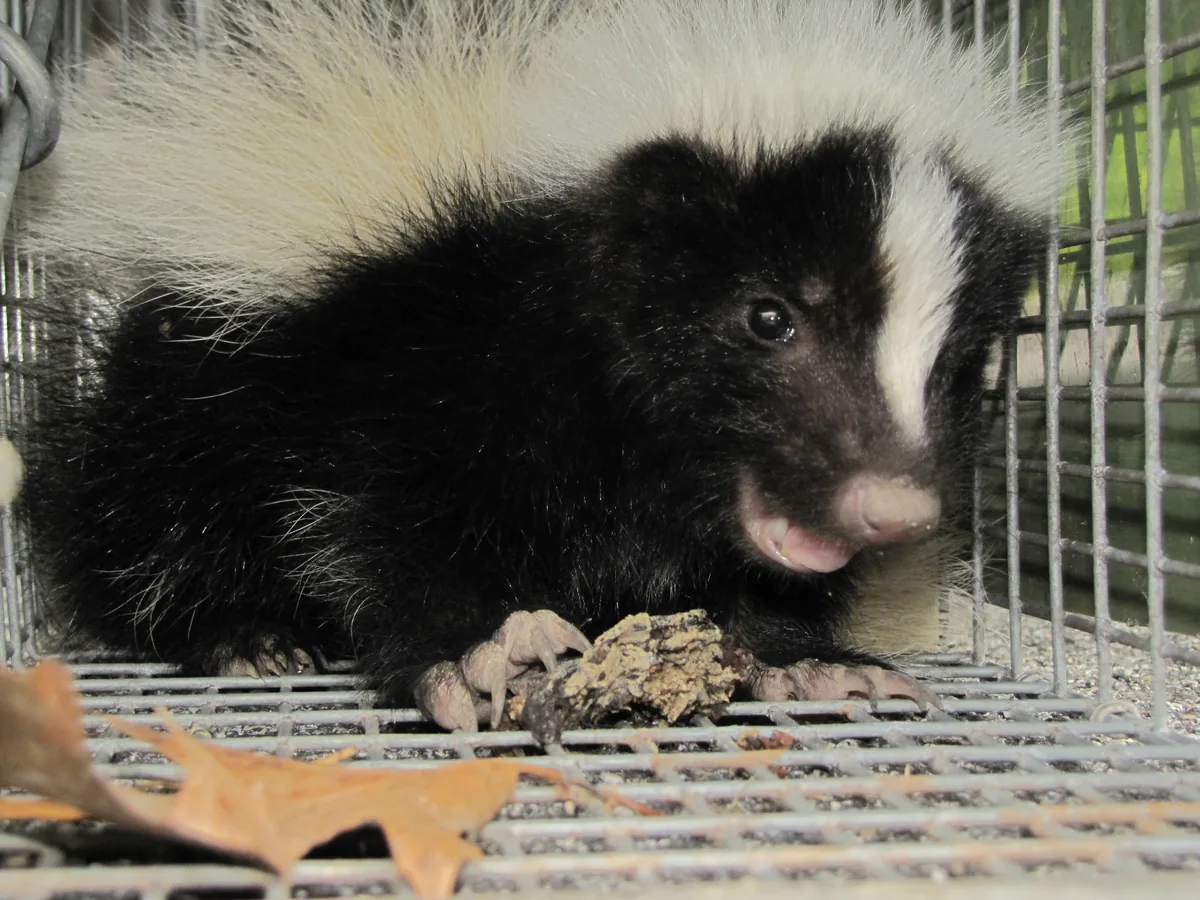
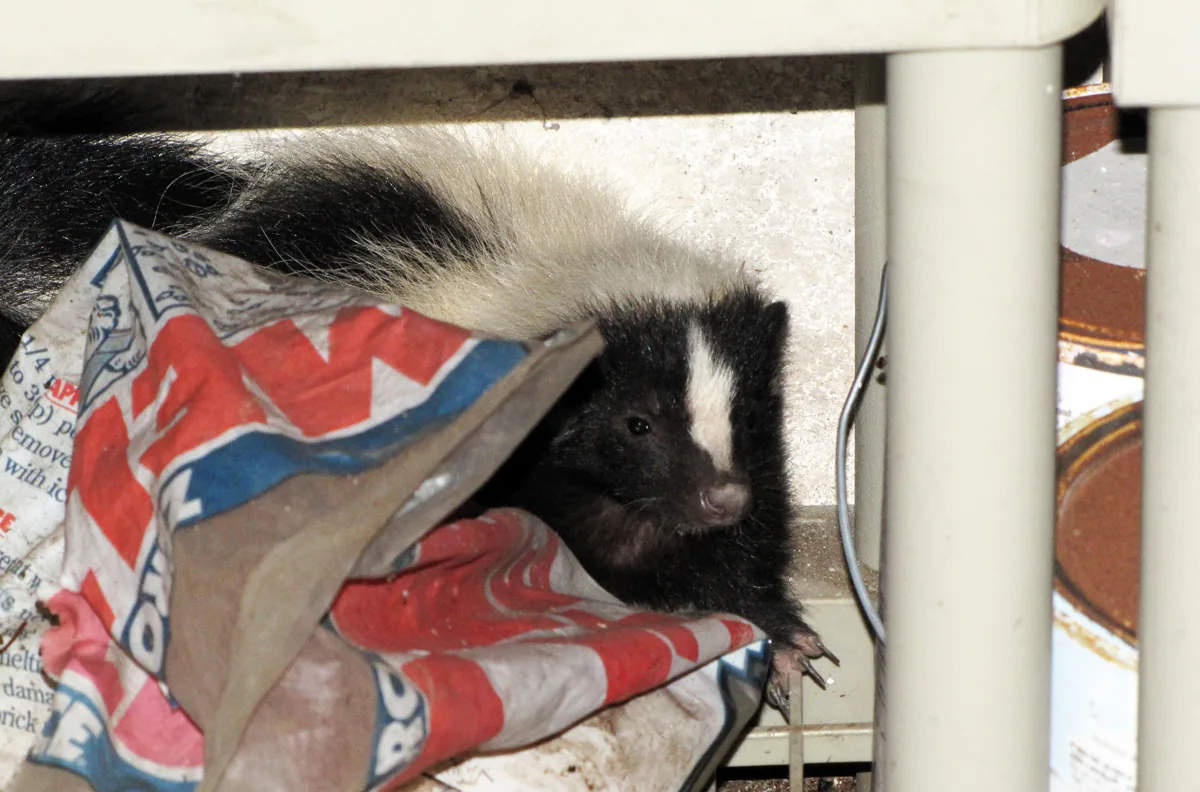
Skunks are diggers, and the dark, quiet areas inside crawl spaces and under decks, porches, and sheds are exactly the kind of dens they look for. They are also a rabies vector species, and can create foul and long-lasting odors when they spray. Our removal methods are humane and start with eviction: we get the skunks out of the den, seal the area so they cannot re-enter, and treat any remaining odor. After this we advise on deterrents and removing food sources. If an evicted skunk stays on the property, and it is still a threat, we can trap and remove it. Our preventive exclusion work is backed by our industry-leading guarantee.
"They sealed the perimeter, put a one-way door on the hole, and the skunk let itself out that same night."
— Laura N.
How We Work
Humane Skunk Removal Process
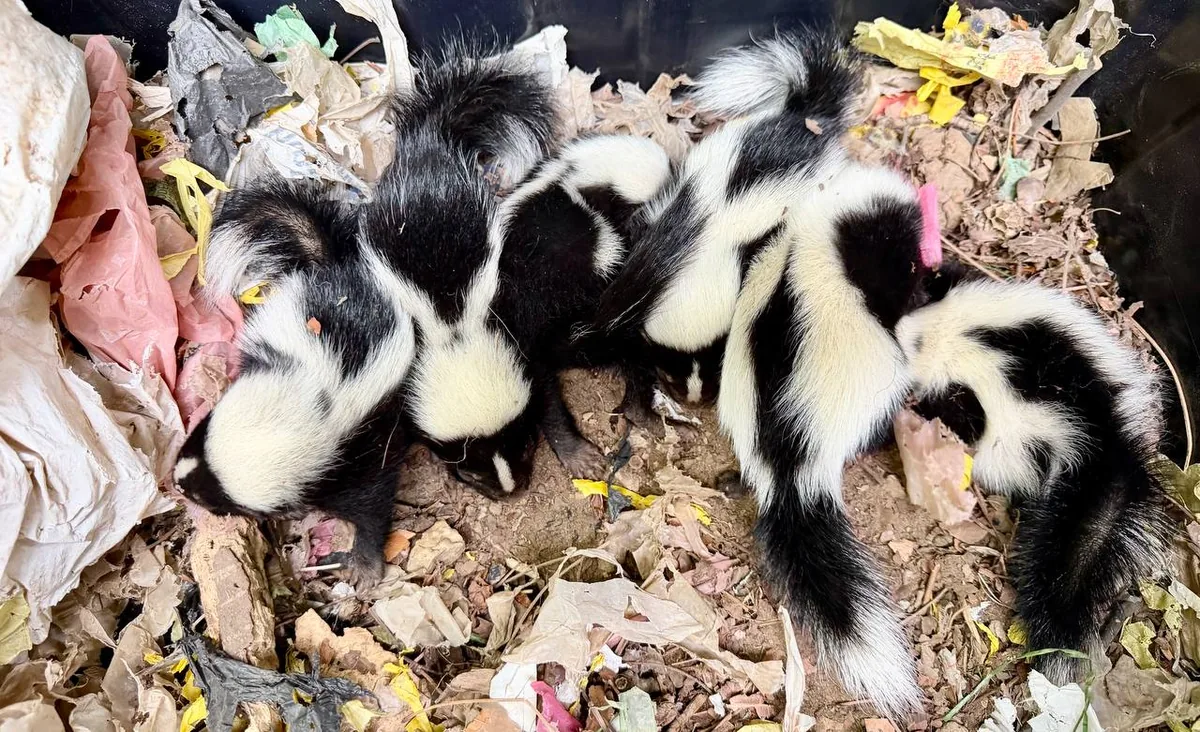
The most humane way to solve a skunk problem is with eviction, exclusion, and deterrents. The first step is to learn where the skunk has taken up residence on the property. If it is baby season, it is always necessary to discern if the den currently has babies in it. If babies are present, we either delay the job until they are old enough to follow their mother out, or confirm they can be removed by hand and kept with her.
Eviction and Exclusion
Most skunk jobs can be solved without a trap. We first protect the structure with preliminary exclusion. This includes both above-ground preventive repairs and barriers, painted to match the aesthetics of the structure, and below ground barriers to prevent digging. After this preliminary work is completed, an eviction device is installed over the remaining openings that lets the skunks exit but not get back in. Once the den is empty, the space gets an odor-neutralizing treatment and the final opening is sealed.
Deterrents and Prevention
After the den is protected and the skunks are removed from the structure, skunk deterrents are utilized around the property to discourage the skunks from denning elsewhere. We recommend every client continue using non-toxic repellents and deterrents until the skunks have chosen a home elsewhere.
In addition, if the skunks have been digging around in the yard, this is often a sign that the yard is filled with grubs and insects. We recommend homeowners have their lawns treated to remove these food sources by a qualified lawn care professional.
Trapping
Though trapping for skunks seems like an easier approach than the methods listed above, it very often solves nothing. The reasons these skunks chose to live on your property are the reasons the next skunks will do so as well. If trapping is needed because the skunk is a threat, or because a determined skunk will not leave the area, it should only be done after the steps above are completed.
Our Skunk Work
Photos from Recent Jobs
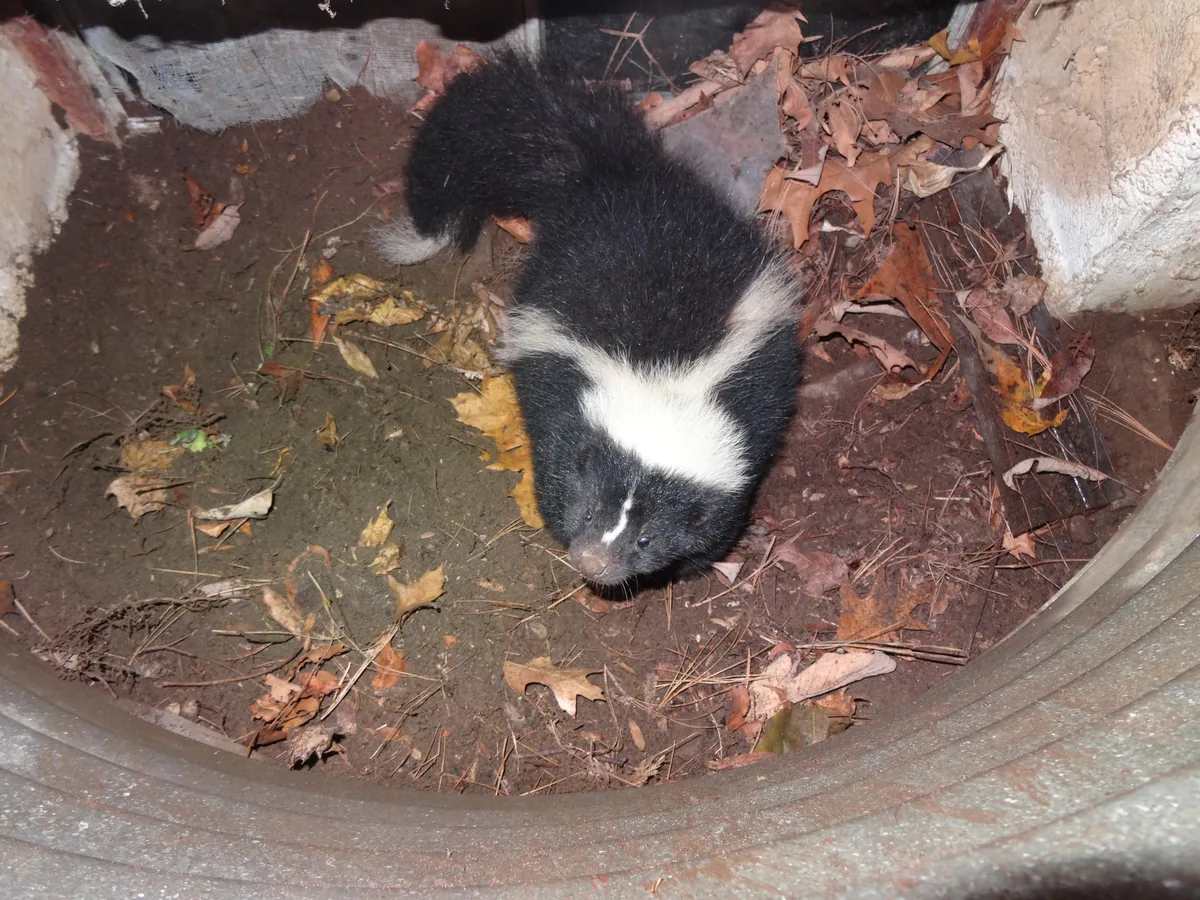
Skunk in window well
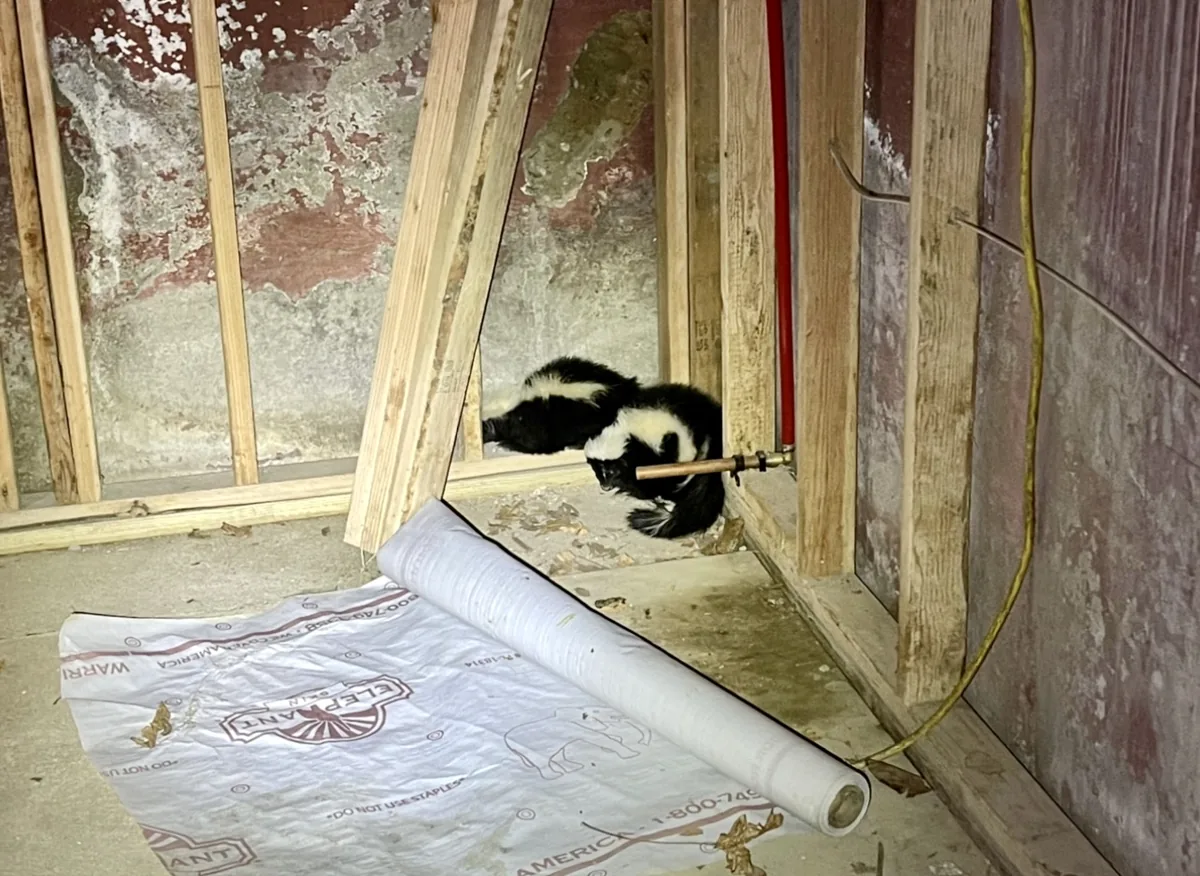
Skunk in basement
Case Study: Skunk in Crawl Space
A homeowner called after several nights of skunk odor coming up through the floor registers. A striped skunk had dug in under the crawl space skirting, and her dog had already been sprayed once in the yard. The skunk, a female with no kits yet, was evicted, and the entire crawlspace was protected with permanent underground barriers. The crawl space got an oxidizing treatment during the same visit. The smell cleared within a day. Afterward, the client followed our guidance for deterrent measures and the skunk left the area and hasn't been seen since.
Know Your Skunks
Two Species
The striped skunk is the one most homeowners encounter. It is about the size of a house cat, with bold white stripes and a fairly calm temperament. Striped skunks are nocturnal omnivores, feeding heavily on grubs and insects through spring and summer and more on plant matter later in the year. They're also skilled diggers, which is how they end up denned beneath porches, sheds, stoops, and crawl spaces. Before spraying the striped skunk will typically give a warning by stomping their feet, twisting or fluffing their tail, and shuffling with an arched back while staying on all four paws.
The eastern spotted skunk is the smaller and rarer of the two. It is slimmer, with swirled markings instead of stripes, and, ounce for ounce, a more potent sprayer. Sightings in our six counties are uncommon but they do happen. Before spraying spotted skunks give a unique warning display: a full handstand with the tail up.
Neither species truly hibernates. In Tennessee's mild winters, skunks slow down into stretches of torpor rather than sleeping through the season, and several animals will sometimes share one winter den. A skunk problem discovered in January can involve more than one animal.
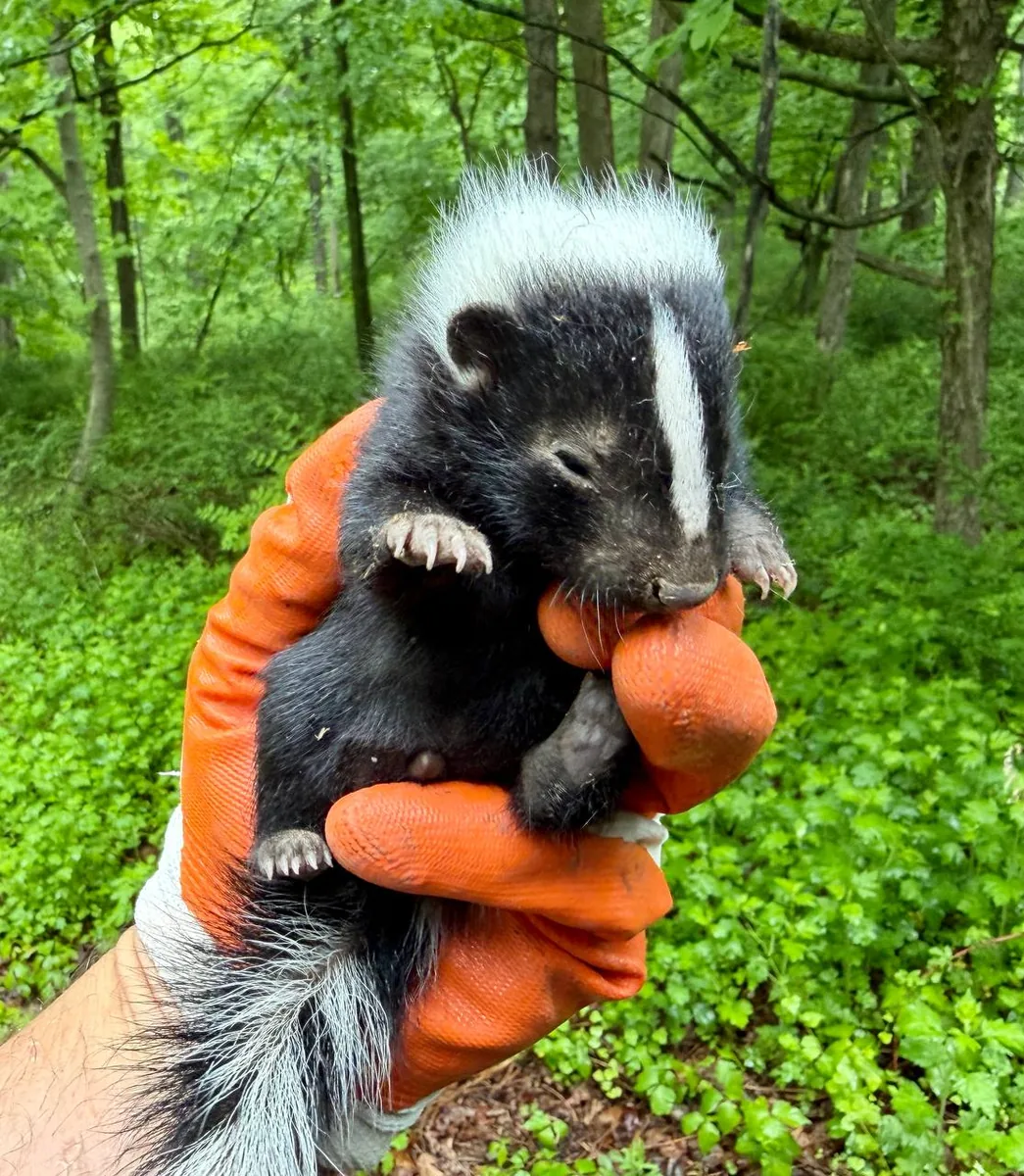
Skunks breed in late winter. Males leave their winter dens in February and March and roam for mates, and odor complaints peak in those months, since the smell of territorial spraying can carry across a neighborhood. Litters arrive once a year, typically in May or June, and the babies (known as kits) stay den-bound for roughly eight weeks. From May into midsummer, any den under a structure gets checked for babies before any work is decided upon, and when kits are present the job typically waits until the family can leave together.
Health Risks
Are Skunks Dangerous?
Rabies. Skunks are one of Tennessee's primary rabies carriers. Though the majority of skunks at any given moment are not rabid, always keep your distance to be safe. If you see a skunk wandering around in daylight, or a skunk that is stumbling, or showing no fear of people, treat it as a possible rabies case. Keep kids and pets inside and call your local police or the Tennessee Wildlife Resources Agency for help. Never crowd or corner a skunk.
Skunk Spray. In addition to smelling foul and being difficult to remove, the spray itself can be a health risk. Skunk musk is built from sulfur compounds called thiols, strong enough at close range to cause temporary blindness, nausea, and burning in the airway. When the spraying happens under a home with a crawl space, which describes most of Middle Tennessee, the odor doesn't stay under the house. It moves through the ductwork and floor penetrations and settles into every room upstairs.
Digging Damage. Den burrows can undermine stoops, walkways, and slab corners over time, and a skunk digging your lawn for grubs can damage the yard. Homeowners often find shallow, cone-shaped holes scattered across the turf in the morning.
An exterminator is not the right call for any of this. Poison and kill traps don't close a burrow, and a poisoned skunk that dies under the house creates a worse odor problem than the one you started with. Skunks need licensed live trapping, careful handling, and a sealed den site.
Odor Removal
How To Get Rid of Skunk Smell
Home remedies like tomato juice generally don't work, they only mask the smell. Thiols bond to wood, soil, ductwork, and fabric, and the odor tends to return when humidity rises. That's why a spray under the house can seem to fade and then come back with the next rain. The first step to remove the odor is to remove the source of the odor, the skunks who are spraying. After the skunks are gone, what works is oxidizing agents, and enzymatic odor neutralizers. Professional-grade agents break the thiol molecules apart instead of masking them. On a job where a skunk sprayed under the house, that means treating the crawl space soil and framing, the foundation walls, and, in a heavy saturation, fogging the interior spaces the ductwork has already carried the odor through. If the spraying is rampant, and if contaminated insulation or vapor barriers need to come out of the crawl space afterward, our Attic & Crawl Space Cleaning service takes care of it.
What Customers Say
Skunk Removal Reviews
"A skunk was living in our crawlspace for weeks and the smell some nights was unbearable. They sealed the perimeter, put a one-way door on the hole, and the skunk let itself out that same night. The cleaning treatments they used eliminated the odor completely and their deterrent advice worked, because we haven't seen it in the yard since."
Laura N.
"Our dog got sprayed twice and we were panicked. Austin found a skunk den under the shed. He got the skunks out and did exclusion so they couldn't get under there anymore. He also showed us that our yard was full of grubs, and once we had the lawn treated the skunks stopped coming around entirely."
Kathy Wilson
Common Questions
Skunk Removal FAQ
Call a licensed wildlife company. Due to the risk of diseases and spraying, attempting a DIY solution can be dangerous. The sequence that works best is the one described on this page: confirm no babies are in the den, protect the structure with preventive barriers, install an eviction device that lets the skunks out but not back in, treat the odor, and seal the final opening. Once the den is closed, deterrents and the removal of food sources encourage the skunk to move on entirely.
It depends on where the den is located and how much sealing and follow-up odor treatment the property needs. Every job starts with a free customized quote before any work is started.
If the burrow stays open, another animal will most likely move in eventually, and not just skunks. A vacated den under a structure gets reused by whatever animals need shelter next. That can be another skunk, possums, raccoons, rodents, or even a groundhog moving into a ready-made burrow. That's why the dig-proof barriers are a key part of the job. Our Wildlife Exclusion page goes into further detail on our home exclusion methods.
We strongly advise against it, and in Tennessee it's a legal question as well as a practical one. Beyond the strong chance of getting sprayed and the fact that skunks are a rabies-vector species, Tennessee law makes it illegal for a homeowner to possess or transport a live skunk (T.C.A. § 70-4-208), so trapping one leaves you with an animal you cannot lawfully move. This is work that requires a license, and every job is carried out humanely and in accordance with Tennessee Wildlife Resources Agency regulations.
A smell that keeps returning, especially after rain or on humid days, usually means the spray soaked into something, most often under the house. After removing the skunks first, the compounds called thiols that skunk spray leaves behind must be broken down with professional oxidizing agents and enzymatic neutralizers. Interior fogging handles odor the HVAC has already spread. Home remedies only mask the smell, and it comes back.
Yes, on two fronts. A face-on spray can leave a dog temporarily blinded, drooling, and miserable, and most dogs don't learn to avoid the next skunk. The more serious risk is a bite, because of rabies. If your dog tangles with a skunk and has any wound at all, call your vet about whether a rabies booster is needed.
More than 25 years of family experience across three regions of the country. Five stars on Google. Austin Jahner has been featured on CBS News in New York and ABC News in Philadelphia.
Craftsmanship
Methods created by a master carpenter. Lasting materials chosen for each home's aesthetics. Manufacturer-warranty of 50+ years on sealants.
Transparency
Up-front pricing. No additional costs or charges. Every client receives a detailed explanation of the steps required to solve their problem.
Guarantee
10-year written guarantee on our exclusion work. If an animal gets back in through something we sealed, we fix it free. Industry-leading guarantee length and scope.
Method
Humane eviction and exclusion is always the first option. Humane trapping when required. Mothers and their young stay together, orphans go to licensed wildlife rehabilitators. No poisons.